


TLDR
- JetBlue shares rebounded 3% after a sharp four-session decline.
- Trading volume stayed far below average, weakening confidence in the recovery.
- Analysts remain cautious as fuel costs and leisure demand risks persist.
- Revenue improved, but rising expenses pushed JetBlue deeper into losses.
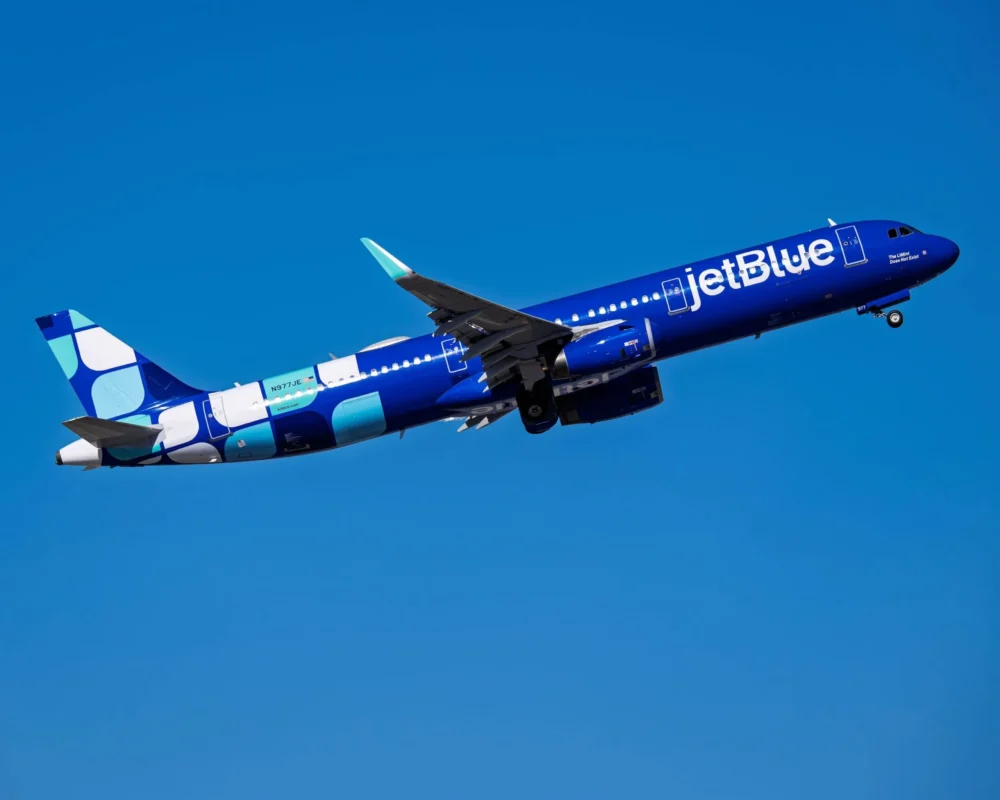
JetBlue Airways shares staged a modest rebound on Tuesday after suffering a steep four-day selloff, but the recovery failed to convince many traders as activity remained unusually light.
The airline’s stock rose 3.01% to close at $5.81, recovering only a fraction of Monday’s 7.08% decline. Despite the bounce, JetBlue remains more than 12% below its recent August peak, underscoring that investor sentiment has not fully stabilized.
What stood out most was not the price gain, but the lack of participation behind it. Roughly 17.1 million shares changed hands, barely half of the company’s 50-day average trading volume. In technical terms, rebounds supported by weak volume are often viewed as less reliable because they suggest that large institutional investors have not yet returned aggressively to the stock.
JetBlue Airways Corporation, JBLU
Weak Volume Raises Doubts
The recovery came during a relatively strong session for airline stocks. United Airlines, Delta Air Lines, and Southwest Airlines also posted gains, while the broader Nasdaq Composite ended lower on the day.
JetBlue’s stronger performance versus its peers may appear encouraging at first glance. However, the stock is still well below the $6.62 intraday high reached on August 4, which marked a 52-week peak.

The recent price action reflects a market struggling to decide whether JetBlue’s operational improvements can outweigh mounting cost pressures. Traders appear willing to buy the dip cautiously, but not with enough conviction to confirm a durable trend reversal.
Analysts Turn More Cautious
Wall Street has become increasingly skeptical about JetBlue’s near-term outlook.
Citigroup recently downgraded the stock from Neutral to Sell, citing geopolitical uncertainty, persistent inflation, and the carrier’s significant exposure to leisure travelers. The analyst argued that much of the expected operational improvement had already been reflected in the share price.
Other major firms have also maintained cautious or bearish views. Goldman Sachs and Bank of America continue to rate the stock Sell, with price targets of $4.50 and $4.00 respectively. Susquehanna is more neutral with a Hold rating and a $6.00 target, while Raymond James also carries a Sell recommendation.
The cluster of conservative ratings suggests that many analysts believe JetBlue still faces a difficult path to sustainable profitability, even after recent restructuring efforts.
Revenue Growth Meets Cost Pressure
JetBlue’s second-quarter results showed a company experiencing solid demand but struggling to control expenses.
Operating revenue increased 14.5% year over year to $2.697 billion, while unit revenue climbed 10.9%. Those figures indicate that pricing and passenger demand remained relatively healthy.
The problem was on the cost side. Unit costs rose 17%, and the average fuel price surged 76% from a year earlier to $4.23 per gallon. The result was a swing from a small operating profit a year ago to a $141 million operating loss.
Chief Executive Joanna Geraghty said the airline was able to recover nearly half of the higher fuel costs through stronger demand and commercial initiatives, a better outcome than management had initially expected. Even so, fuel remains the single largest variable shaping JetBlue’s valuation.
Fuel Outlook Remains Critical
Management has reinstated its 2026 guidance, forecasting unit revenue growth of 10% to 12.5% and an adjusted operating margin between negative 5% and negative 2%.
Longer term, JetBlue is targeting at least $1.00 in earnings per share by 2028, assuming fuel prices average around $3.00 per gallon. That assumption now looks increasingly important.
The airline consumed about 215 million gallons of fuel during the second quarter. A relatively small change in fuel prices can translate into hundreds of millions of dollars in annual expense differences, making energy markets a major driver of future earnings.
Investors are also watching broader economic indicators, including inflation data, producer prices, retail sales, and weekly petroleum reports, all of which could influence both travel demand and fuel costs.
For now, JetBlue’s rebound appears more like a pause after heavy selling than a confirmed recovery. The stock has shown that buyers are willing to step in near recent lows, but the absence of strong trading volume suggests that confidence remains fragile. Until investors see clearer evidence of improving margins and better cost control, JetBlue’s recovery may continue to face turbulence.
Get 3 Free Stock Ebooks
Discover top-performing stocks in AI, Crypto, and Technology with expert analysis.
- Top 10 AI Stocks - Leading AI companies
- Top 10 Crypto Stocks - Blockchain leaders
- Top 10 Tech Stocks - Tech giants


