


Key Takeaways
- Burry believes AI’s foundation is flawed due to its language-first design philosophy
- He presents “Ballard’s Test” — authentic intelligence must function independent of language
- The investor claims the sector is trapped by endlessly expanding flawed architectures
- He identifies an irreconcilable tension between Nvidia’s growth needs and hyperscaler cost goals
- Burry has opened short positions targeting Nvidia, Tesla, and a chip sector ETF
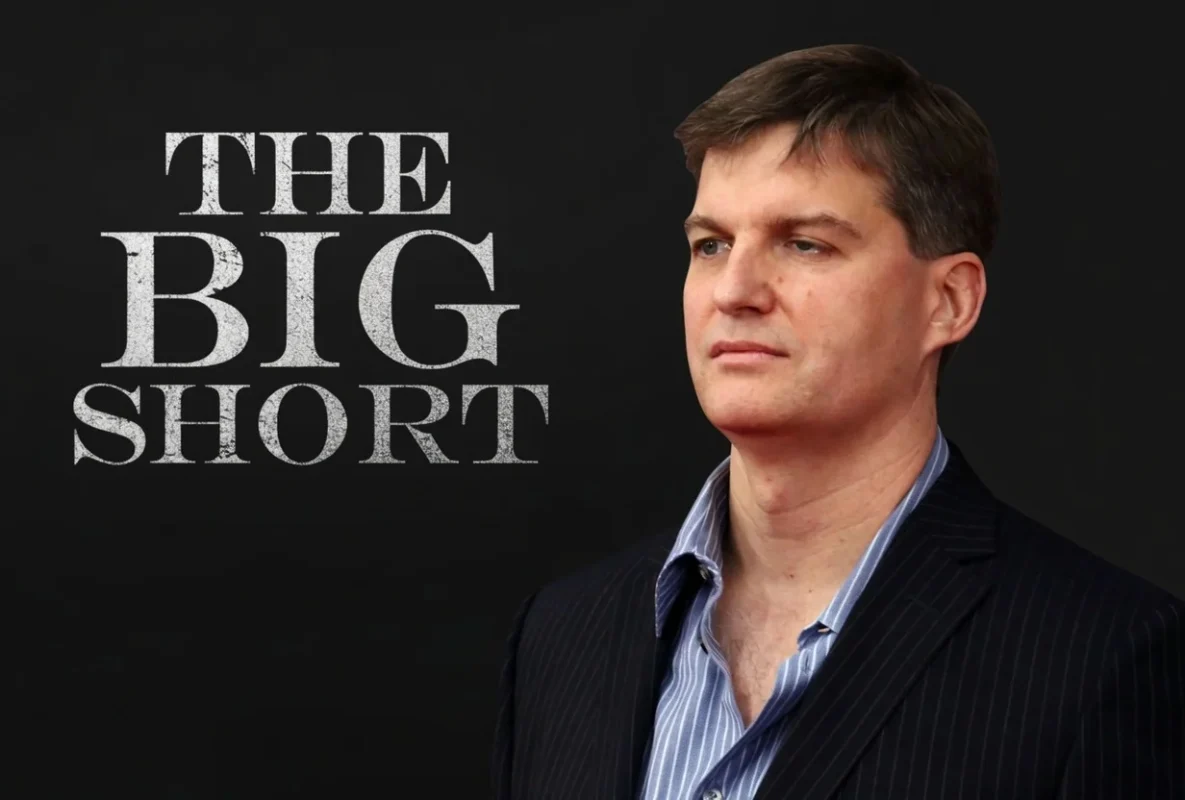
Michael Burry, the legendary investor who foresaw the 2008 financial meltdown, is now sounding alarms about artificial intelligence — specifically targeting the corporations profiting from it.
Through his Substack publication “Cassandra Unchained,” Burry presented dual critiques: one examining AI’s fundamental architecture, the other dissecting the economics sustaining it.
Burry Claims AI Was Built on a Faulty Foundation
Burry unveiled what he terms “Ballard’s Test.” This framework suggests that authentic intelligence demands reasoning capabilities that exist independently of linguistic processing.
According to Burry, AI research initially aimed to create this type of pure reasoning capability. When that objective proved unattainable, researchers pivoted to language-centric models.
Burry characterizes this pivot as a “known flaw” and a “bad start.” From his perspective, the industry chose to bypass rather than repair this foundational weakness.
The consequence, he argues, is what he dubs a “parameter trap.” Rather than addressing the underlying issue, companies keep scaling up identical flawed architectures.

He emphasized that this strategy requires extraordinary computational resources — “zillions of power-hungry chips,” in his words.
The Fundamental Nvidia Dilemma
Burry then pivoted to AI’s economic reality, identifying what he sees as an unsolvable contradiction.
Nvidia requires perpetual expansion in AI chip demand. This continuous growth validates its revenue trajectory and supports its stock valuation.
Hyperscalers — giants like Meta, Amazon, and Microsoft — require precisely the reverse. They need capital expenditure cycles to conclude within three to four years to reduce operational expenses.
“The hyperscalers are promising permanent demand growth and temporary spending over 3-4 years all in the same breath,” Burry observed.
He contends these outcomes are mutually exclusive.
Burry also highlighted that free cash flow among leading hyperscalers is approaching zero. While earnings reports appear healthy, extended depreciation timelines obscure actual capital consumption.
He suggests AI optimists envision a “third door” — a scenario where demand persists while expenditures decline, delivering universal profitability.
Burry’s response is unambiguous: “There is no third door.”
He recently reinforced his position with capital, establishing short positions against Nvidia, Tesla, and the iShares Semiconductor ETF.
Regardless of whether his timing proves accurate, his thesis presents a fundamental challenge — who ultimately profits from AI, and can semiconductor manufacturers and hyperscalers simultaneously succeed?
Burry’s answer is emphatic: they cannot.
Get 3 Free Stock Ebooks
Discover top-performing stocks in AI, Crypto, and Technology with expert analysis.
- Top 10 AI Stocks - Leading AI companies
- Top 10 Crypto Stocks - Blockchain leaders
- Top 10 Tech Stocks - Tech giants


