


Key Takeaways
- Valuation premium for the Magnificent 7 versus the S&P 500 has shrunk to just 10%, marking the lowest level in more than ten years
- Every Magnificent 7 stock except Alphabet has lagged the S&P 500 in 2026, with Alphabet gaining 14.5%
- AI-related capital spending by Big Tech is expected to surpass $700 billion this year, representing a 70% increase
- Morgan Stanley identifies the stocks as undervalued, pointing to a 45% earnings growth premium over the broader market
- Semiconductor equities have rallied approximately 85% year-to-date as capital flows out of the Mag 7
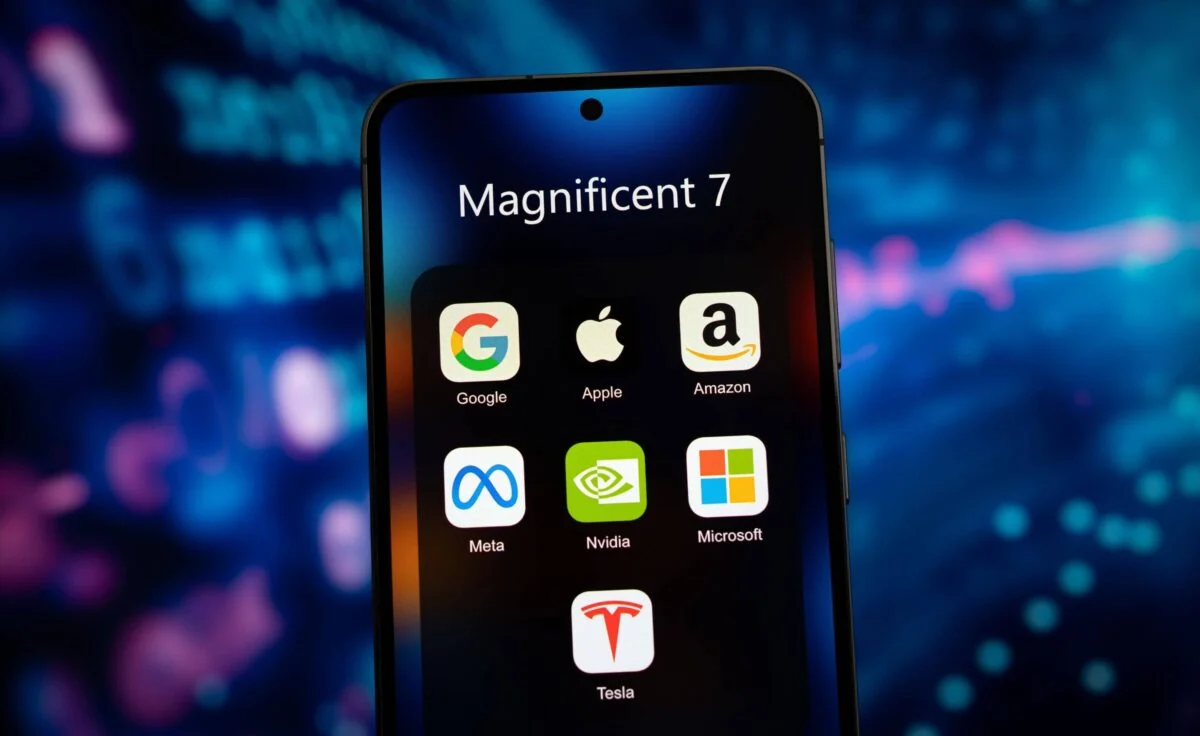
The elite group of technology stocks known as the Magnificent 7 is currently experiencing its most attractive valuations relative to the broader S&P 500 in over a decade, based on recent research from Morgan Stanley.
This influential cohort comprises Nvidia, Microsoft, Alphabet, Amazon, Meta Platforms, Apple, and Tesla. Historically, these companies have commanded substantial valuation premiums compared to the wider market. That premium has now contracted dramatically to merely 10%, a steep decline from levels exceeding 30% throughout most of the early 2020s.
While the S&P 500 has delivered approximately 9% returns year-to-date, the Roundhill Mag 7 ETF, which provides exposure to this group, has slipped marginally into negative territory during the same timeframe.
Alphabet stands as the sole outlier. The search and advertising giant has climbed 14.5% in 2026, outpacing the broader index’s 8.8% advance.

Massive AI Infrastructure Investment Weighs on Sentiment
The primary concern centers on unprecedented capital outflows. These technology giants are deploying enormous sums into artificial intelligence infrastructure, encompassing everything from advanced data centers to cutting-edge GPU hardware.
Combined AI capital expenditure across the Magnificent 7 is forecast to exceed $700 billion this year, representing a substantial 70% year-over-year increase. This aggressive spending is significantly impacting free cash flow generation, which analysts expect to decline notably from its 2024 peak.
Deutsche Bank’s strategist Jim Reid highlighted “growing apprehension regarding the capex spend by the largest hyperscalers.” Market participants have yet to witness tangible returns on these massive investments, creating uncertainty that continues to pressure valuations.
Additional concerns exist around a possible Federal Reserve interest rate increase later this year. Elevated borrowing costs would make financing AI initiatives more expensive, introducing another headwind for these capital-intensive projects.
Wall Street Firm Identifies Compelling Entry Point
Despite recent underperformance, Morgan Stanley maintains an optimistic outlook. Lisa Shalett, who leads the firm’s global investment office, believes the hyperscalers represent significant value at current price levels.
The investment bank emphasizes the group’s remarkable 45% annual earnings growth advantage compared to the rest of the S&P 500 as compelling justification for accumulation.
Morgan Stanley isn’t advocating for blanket exposure through index funds. Instead, the firm recommends selective positioning in specific companies during the second half of 2026, particularly those with adaptable AI architectures integrated with leading cloud computing platforms.
Alphabet, Amazon, and Microsoft are specifically identified as prime beneficiaries of an emerging transition from computationally intensive AI frameworks toward more streamlined hybrid methodologies.
Nvidia currently trades at approximately 18 times forward earnings—substantially below its historical average valuation multiple of 36 times.
The semiconductor sector has experienced an explosive rally of roughly 85% year-to-date as investors have pivoted toward hardware manufacturers directly. Morgan Stanley recommends fading this recent trend and reallocating capital back into the Magnificent 7.
Reid observed that despite robust global enthusiasm for AI technology, “leadership in the market has shifted away from the Mag 7 for now.” Nevertheless, Morgan Stanley and several other prominent Wall Street institutions maintain constructive outlooks on the group over the coming twelve months.
Get 3 Free Stock Ebooks
Discover top-performing stocks in AI, Crypto, and Technology with expert analysis.
- Top 10 AI Stocks - Leading AI companies
- Top 10 Crypto Stocks - Blockchain leaders
- Top 10 Tech Stocks - Tech giants


