


TLDR
- NVIDIA DSX deepens its role in AI factory design and operations at scale now.
- NVDA stock rises as NVIDIA expands its DSX AI infrastructure stack further.
- DSX MaxLPS targets higher power efficiency for large AI factory operators now.
- NVIDIA adds DSX OS to manage scheduling, resiliency, and automation layers.
- CoreWeave, Lambda, and Nebius are deploying DSX components across cloud sites.
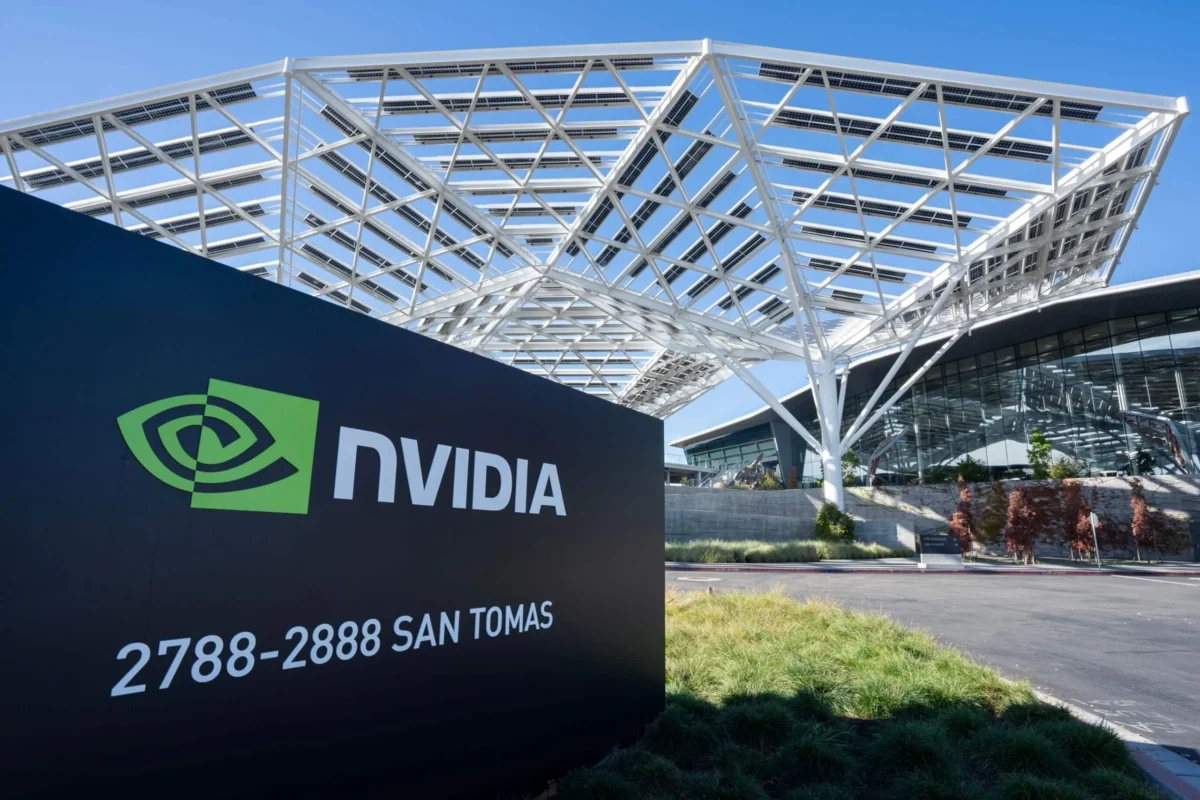
NVIDIA Corporation (NVDA) shares advanced its AI infrastructure push as NVDA traded at $217.79, up 1.42%, during market hours. The stock recovered from the $211 to $212 support area and moved above the earlier $214.75 level. The move came as NVIDIA expanded its DSX platform for AI factory design, deployment, and operations.
NVIDIA Builds a Wider AI Factory Stack
NVIDIA is moving beyond chip sales as demand for large computing systems continues to reshape data center planning. The company now offers tools that help builders design, test, and operate AI factories. This shift places NVIDIA deeper inside the infrastructure layer that supports large-scale computing.
The company announced the NVIDIA DSX platform on June 1, 2026. The platform combines open-source software libraries, APIs, reference designs, accelerated computing systems, and partner technologies. As a result, builders can manage complex AI factory projects through one connected framework.
DSX supports factory planning before companies commit capital to physical infrastructure. It also helps operators test power use, cooling needs, and system performance before deployment. Therefore, NVIDIA is positioning DSX as an operating layer for next-generation computing facilities.

DSX Adds New Software for Power and Operations
NVIDIA added two open-source software layers to the DSX platform. DSX MaxLPS focuses on token performance per megawatt within a fixed power budget. It combines 45-degree Celsius liquid cooling with in-rack optimization tools.
The company said DSX MaxLPS can help operators run up to 40% more GPUs efficiently. The system targets better energy use while limiting the impact on workloads. This matters because power availability has become a major constraint for large computing projects.
NVIDIA also introduced DSX OS for AI factory operations. The software supports lifecycle management, intelligent scheduling, health automation, resiliency, and multi-tenant operations. Meanwhile, these features help operators manage complex sites with greater control and consistency.
Cloud and Hardware Partners Support DSX Rollout
The wider DSX platform also includes DSX Sim, DSX Flex, and DSX Exchange. DSX Sim allows operators to model infrastructure decisions before building physical systems. DSX Flex connects AI factories with power grid services for dynamic workload adjustment.
DSX Exchange links compute, energy, and cooling signals across information technology and operational systems. This creates a shared operating view for facilities that run high-density computing workloads. It supports coordination between hardware, software, energy, and cooling systems.
Cloud providers CoreWeave, Lambda and Nebius are deploying DSX components. Dell Technologies, HPE, Lenovo and Supermicro are also building DSX-ready systems for enterprise customers. With these partnerships, NVIDIA is extending its role across the AI infrastructure buildout and supporting factory-scale computing demand.
Get 3 Free Stock Ebooks
Discover top-performing stocks in AI, Crypto, and Technology with expert analysis.
- Top 10 AI Stocks - Leading AI companies
- Top 10 Crypto Stocks - Blockchain leaders
- Top 10 Tech Stocks - Tech giants


