



Key Highlights
- Bitcoin surged to $64,400 overnight before retreating to approximately $63,170, maintaining a weekly increase of roughly 6%
- Strategy executed its biggest sale since reversing its permanent hold strategy, offloading 3,588 BTC for approximately $216 million
- Ether climbs 11.6% weekly, while XRP and Solana preserve the majority of their week-over-week advances
- A missile attack targeting a gas vessel near the Strait of Hormuz elevated oil prices and intensified geopolitical worries
- US equity futures declined Tuesday following Monday’s Dow record, with Nasdaq 100 futures retreating 0.9%
Bitcoin retreated from its overnight peak on Tuesday while maintaining strong weekly performance. Simultaneously, US equity futures trended downward after Wall Street’s record-breaking session, and fresh oil market volatility surfaced from Middle Eastern tensions.
The leading cryptocurrency climbed to $64,400 during early Tuesday trading before sliding back toward $63,170. This positioned it essentially unchanged for the day while preserving approximately 6% in weekly gains.
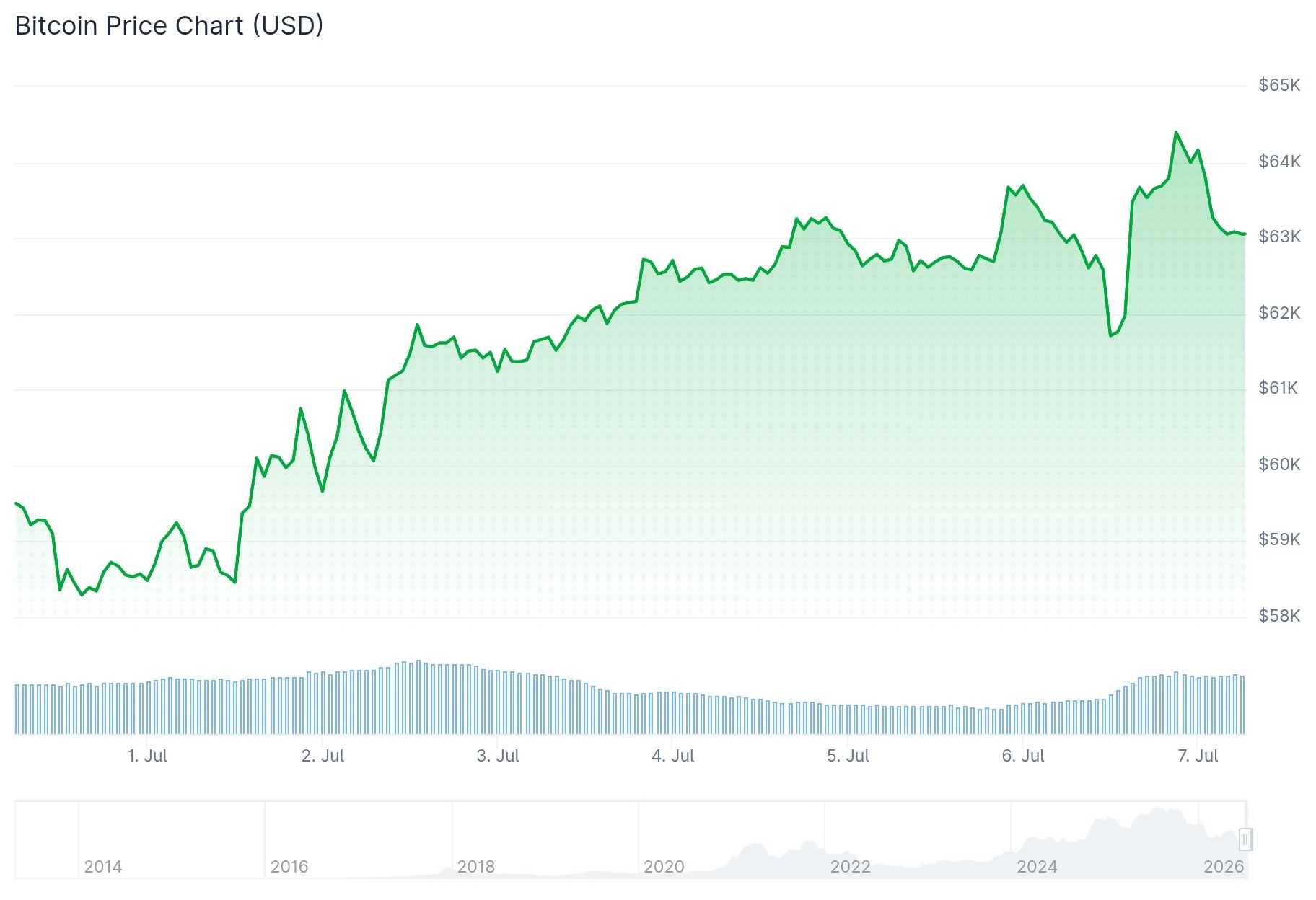
The price action occurred despite Strategy’s announcement of selling 3,588 bitcoin valued at approximately $216 million. This represents the firm’s most significant divestment following its decision to end its permanent holding strategy. Markets digested the announcement without substantial downward pressure.
Ether traded around $1,770, posting an 11.6% weekly advance. XRP and Solana maintained most of their week-over-week momentum at $1.13 and $80 respectively.
Bitcoin had declined to a 21-month trough near $58,000 during late June. Since then, it has rebounded into the lower $60,000 range. The year’s first six months witnessed Bitcoin conclude roughly 20% lower, marking its initial weekly settlement beneath the 200-week moving average since 2023.
Options Markets Flash Warning Signals
Certain market participants view the recent downturn as a concluding phase rather than the beginning of extended weakness.
Yusuf Fakhro, partner at ARP Digital, observed that CME futures open interest has reached a 32-month minimum. The term structure has also compressed to its tightest configuration since early 2023.

He highlighted that six-month options skew has jumped to its fourth-highest recorded level. Comparable readings appeared only in June and November 2022, both corresponding with significant cycle bottoms.
When hedging costs for downside protection reach such elevated levels, the market may have already discounted the worst-case scenarios, Fakhro indicated.
Energy Markets React, Equities Face Headwinds
A missile impact struck a liquefied natural gas vessel off the Omani coastline as it departed the Strait of Hormuz. Brent crude advanced 0.6% to approximately $72.45 per barrel following the incident.
This development introduces fresh uncertainty to a late-June ceasefire agreement. Earlier in the year, energy market disruptions linked to Iranian tensions pressured cryptocurrency valuations before diplomatic progress stabilized conditions.
Asian technology equities experienced sharp declines. South Korea’s Kospi plummeted 6.7%. Samsung Electronics dropped 8.3% despite announcing a substantial quarterly profit increase. SK Hynix fell by an identical percentage as it initiated marketing efforts for a US public offering.
US equity futures indicated lower opening on Tuesday. Dow futures remained flat, S&P 500 futures declined 0.3%, and Nasdaq 100 futures retreated 0.9%. This followed Monday’s record-setting Dow performance, fueled by restored optimism in artificial intelligence investments after June’s semiconductor sector correction.
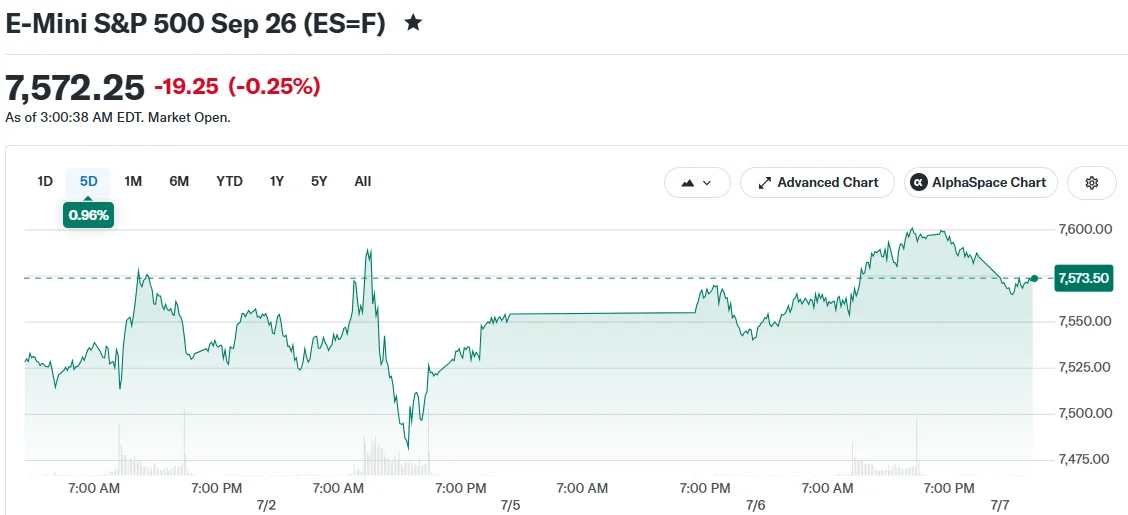
Market participants will monitor earnings releases from Samsung Electronics and Penguin Solutions on Tuesday for additional insights into semiconductor industry health.
Throughout most of the year, declines in AI and chip equities have dragged cryptocurrency prices lower in tandem. This week presents a divergence, with Bitcoin demonstrating resilience while traditional equities weakened.
Get 3 Free Stock Ebooks
Discover top-performing stocks in AI, Crypto, and Technology with expert analysis.
- Top 10 AI Stocks - Leading AI companies
- Top 10 Crypto Stocks - Blockchain leaders
- Top 10 Tech Stocks - Tech giants


