


Key Takeaways
- Low-cost drones priced between $5,000 and $10,000 are successfully challenging multi-billion-dollar military assets in modern conflicts
- Pentagon’s Defense Autonomous Warfare Group funding will surge from $225 million to $55 billion by fiscal 2027
- Six combat-proven drone manufacturers emerge as analyst favorites: AeroVironment, Aevex, Red Cat Holdings, Swarmer, Kratos Defense, and L3Harris
- Legacy defense contractors like Lockheed and Northrop experienced stock declines during recent Middle East tensions
- The annual US market for affordable drone systems could reach nearly $100 billion
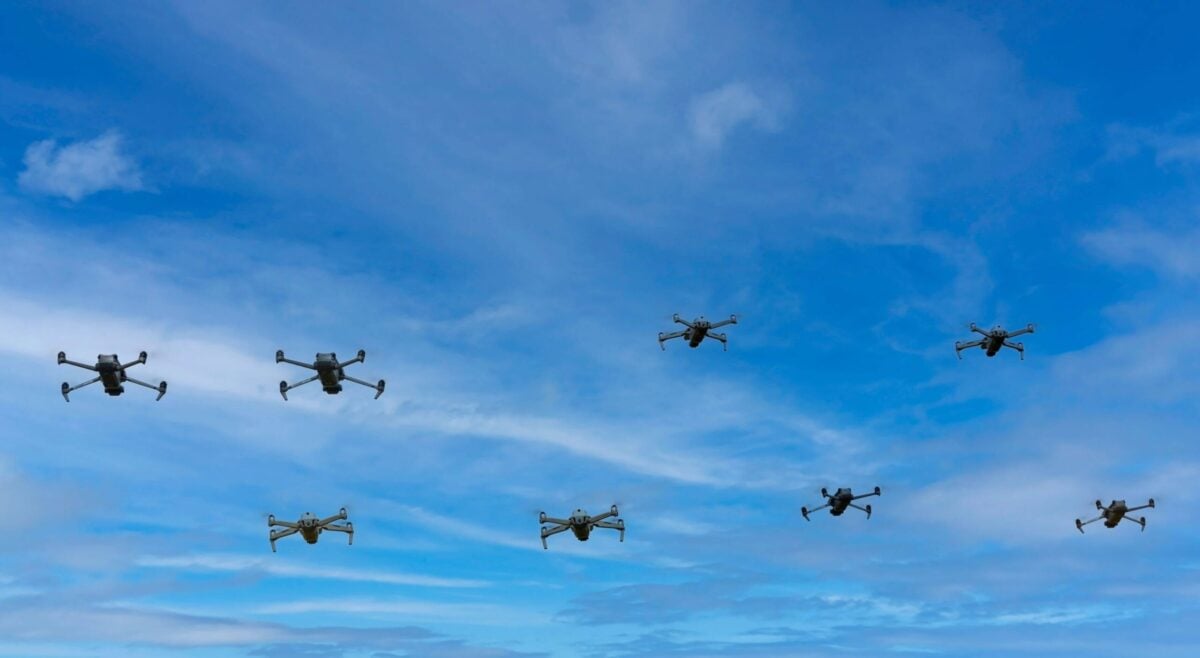
Conflicts in Ukraine and the Middle East have fundamentally transformed military strategy thinking. Unmanned aerial vehicles costing roughly $10,000 have successfully countered some of the planet’s most sophisticated and expensive defense systems. During recent tensions, Iran’s Shahed drones effectively blocked the Strait of Hormuz — a critical chokepoint for global oil shipments — rendering it unsafe for commercial tanker traffic.
Ukrainian forces deployed improvised drones to eliminate thousands of Russian armored vehicles and tanks, converting what was intended as a swift invasion into a protracted conflict lasting years. American forces responded to drone attacks in the Middle East by launching hundreds of interceptor missiles valued at millions each, sparking concerns about ammunition reserves.
These battlefield realities have prompted Pentagon officials to fundamentally reassess defense priorities. President Trump’s proposed fiscal 2027 defense budget stands at $1.5 trillion — representing approximately 50% growth compared to 2026 levels.
The Defense Autonomous Warfare Group (DAWG) faces a dramatic funding increase from $225 million to $55 billion in fiscal 2027. William Blair analyst Louie DiPalma projects the domestic market for cost-effective drone systems could approach $100 billion per year.
Analyst-Recommended Defense Stocks
Six drone manufacturers have attracted significant analyst attention due to their proven battlefield performance and operational track records.

AeroVironment has maintained continuous drone deliveries to conflict zones since its 2007 initial public offering. The company’s Switchblade loitering munitions have proven instrumental in neutralizing Russian armor. Management projects approximately $2 billion in 2026 revenue, climbing to $2.4 billion in 2027. Among 20 analysts tracking the stock, 17 assign Buy ratings.
Aevex manufactures the Phoenix Ghost kamikaze drone, capable of loitering airborne for six hours before engaging targets. Ukrainian operations account for roughly 50% of the company’s $606 million in 2026 sales. Despite anticipated slowdowns in Ukrainian procurement, revenue is forecast to expand over 10% from 2026 to 2027. All nine covering analysts rate the stock as a Buy.
Red Cat Holdings specializes in reconnaissance UAVs, attack platforms, and GPS-independent drone systems. Trading near $10.50 currently, Clear Street analyst Brian Dobson maintains a $19 price objective. The company holds active agreements with the US Army, NATO member nations, and Japanese defense forces.
Swarmer develops artificial intelligence software enabling single operators to command multiple drone units simultaneously. Ukrainian military operations have deployed the company’s technology in hundreds of thousands of missions. One analyst maintains Buy coverage with a $60 target price, representing upside from the recent $45 level.
Kratos Defense reported Q1 2026 revenue growth of 22.6%, while earnings jumped 51% year-over-year. The company’s XQ-58A Valkyrie represents a collaborative combat aircraft engineered to operate alongside piloted fighter jets. Jefferies analyst coverage includes an $80 price target for Kratos, exceeding 50% above the recent $51 trading level.
Established defense manufacturers faced headwinds during Middle East tensions. Lockheed Martin and Northrop Grumman shares declined 18% and 14% respectively from late February through mid-June, while the S&P 500 gained 8% during the same period.
Nevertheless, analysts emphasize that piloted platforms retain strategic importance. Advanced autonomous aircraft and submarine systems remain military procurement priorities, with established defense contractors positioned to secure many of these contracts.
Get 3 Free Stock Ebooks
Discover top-performing stocks in AI, Crypto, and Technology with expert analysis.
- Top 10 AI Stocks - Leading AI companies
- Top 10 Crypto Stocks - Blockchain leaders
- Top 10 Tech Stocks - Tech giants


