


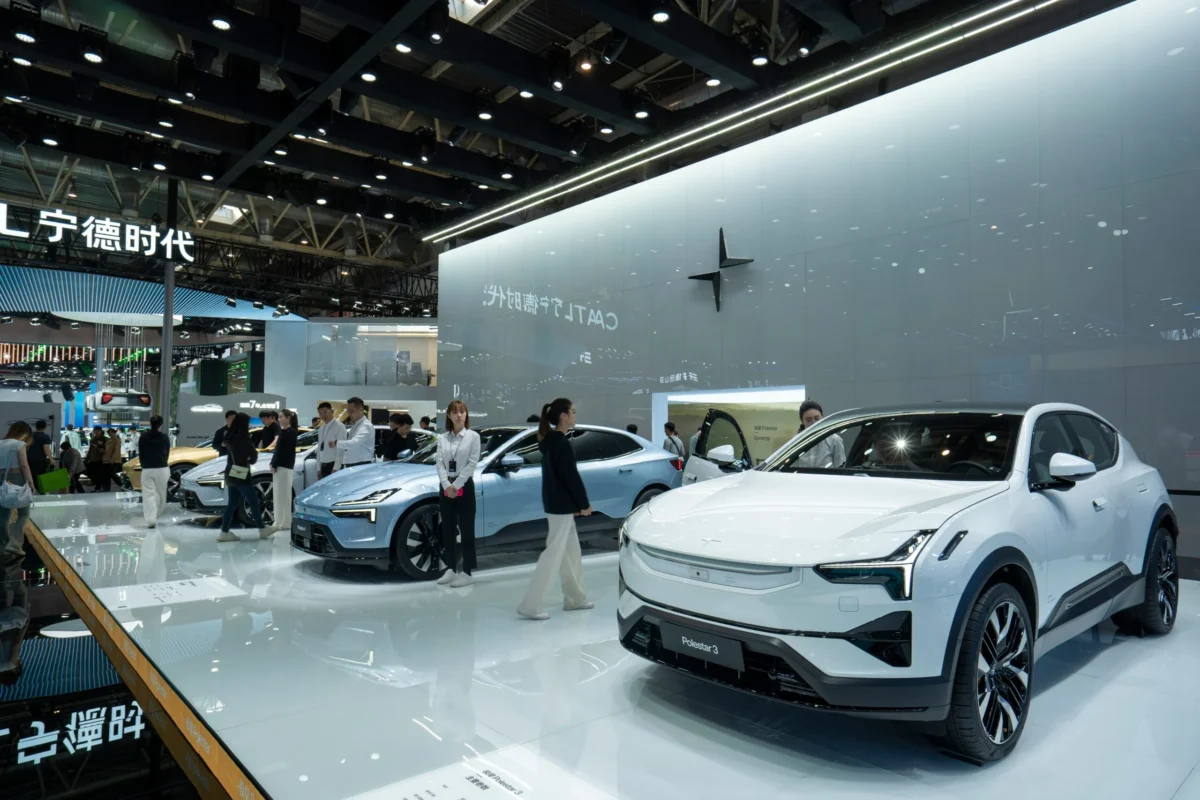
Key Highlights
- Second-quarter vehicle deliveries declined 4% year-over-year, totaling 17,296 units compared to 18,026 in the prior-year period
- Shares declined more than 3% in response to quarterly performance
- US Commerce Department rejected Polestar’s Connected Vehicles Rule authorization, effectively blocking US sales beginning with 2027 models
- European markets now represent 80% of first-half deliveries as strategic realignment accelerates
- Chief Executive Michael Lohscheller noted US operations “was not a profitable business for us” despite disappointment over market exit
Shares of Polestar declined more than 3% Thursday following the release of second-quarter delivery figures showing a year-over-year decrease, compounded by the electric vehicle manufacturer’s forced withdrawal from the American marketplace.
Polestar Automotive Holding UK PLC, PSNY
The Swedish-Chinese electric vehicle manufacturer delivered 17,296 units during the second quarter, representing a 4% decrease from the 18,026 vehicles delivered in the corresponding quarter of the previous year.
This quarterly performance follows the US Commerce Department’s recent rejection of Polestar’s application for authorization under the Connected Vehicles Rule. The regulation prohibits vehicles equipped with connected technology linked to Chinese entities, effectively ending Polestar’s ability to sell new vehicles in the United States beginning with the 2027 model year.
Polestar has officially been banned from selling new cars in the United States past the 2027 model year.
The US Department of Commerce’s Bureau of Industry and Security refused the EV maker the clearance it needs to keep doing business in the country, citing the Connected…
— Sawyer Merritt (@SawyerMerritt) June 25, 2026
Chinese automotive conglomerate Geely Holding maintains majority ownership of Polestar. Interestingly, Volvo Cars—also controlled by Geely—successfully obtained authorization approximately one month prior, creating a notable regulatory discrepancy that attracted considerable attention.

Chief Executive Michael Lohscheller expressed disappointment regarding the American market withdrawal. However, he emphasized that US operations “was not a profitable business for us,” adding that the level of investment required couldn’t be justified considering the regulatory barriers now in place.
The company plans to continue selling remaining Polestar 3 and Polestar 4 inventory currently available in America. Additionally, Polestar will preserve its service infrastructure and continue pre-owned vehicle sales. The regulatory prohibition creates uncertainty surrounding the Polestar 3, which represents the brand’s sole American-manufactured vehicle.
European Market Becomes Primary Focus
As the American chapter concludes, Polestar has intensified its concentration on European markets. The region now comprises 80% of the company’s first-half 2026 deliveries. This geographical reorientation has emerged as a fundamental component of management’s strategy for navigating challenging global EV demand conditions.
Instead of developing completely new vehicle platforms, Polestar has opted to enhance current offerings. The company unveiled refreshed iterations of its popular Polestar 2 and Polestar 4 models in February, scheduled for gradual introduction throughout the coming year.
First-quarter results released in May showed an expanded loss as competitive pricing dynamics and American tariffs compressed profit margins despite higher delivery volumes during that period.
Product Pipeline and Future Outlook
The electric vehicle maker continues advancing its product roadmap. Chief Executive Lohscheller confirmed that initial customer deliveries of the Polestar 5 remain on schedule, while Polestar 4 SUV manufacturing has commenced with first deliveries anticipated during the fourth quarter.
The broader electric vehicle sector experienced widespread challenges Thursday. Porsche, whose Macan and Taycan models compete directly with Polestar offerings, similarly reported declining first-half deliveries. The German automaker attributed softness to deteriorating Chinese market conditions and the conclusion of American EV tax credit incentives.
For Polestar, the convergence of regulatory exclusion from the US market, declining quarterly sales, and persistent financial losses maintains significant pressure on leadership to demonstrate that European market concentration can sustain the enterprise.
Lohscheller stated the company will respond to the “clear decision” from American regulators and advance its revised strategy.
Get 3 Free Stock Ebooks
Discover top-performing stocks in AI, Crypto, and Technology with expert analysis.
- Top 10 AI Stocks - Leading AI companies
- Top 10 Crypto Stocks - Blockchain leaders
- Top 10 Tech Stocks - Tech giants


