


TLDR
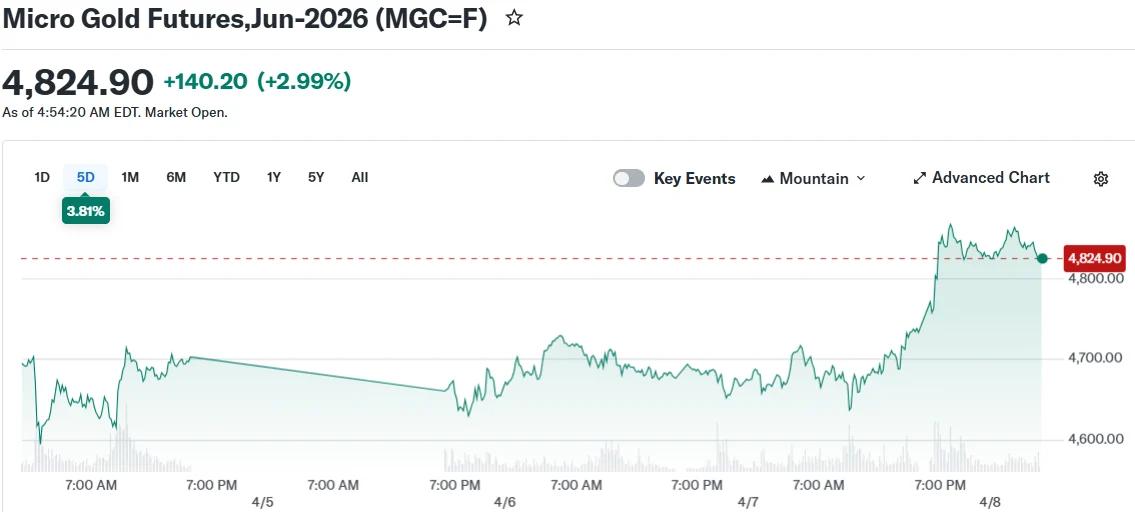
- Continuous gold futures climbed 3.8% to reach $4,864.40 per ounce following ceasefire declaration
- Silver futures jumped 7.9%, while spot prices advanced 6% to $77.38 per ounce
- President Trump declared a two-week halt to military operations against Iran through social media
- Crude oil plummeted over 15% while the dollar index declined sharply on the news
- Precious metals had faced downward pressure during the conflict amid inflation worries and rate expectations
Precious metals experienced a powerful rally on Wednesday following President Donald Trump’s surprise announcement of a two-week military ceasefire with Iran, preventing imminent U.S. strikes.
Continuous gold futures advanced 3.8% to settle at $4,864.40 per ounce. Spot gold surged 2.7% to $4,832.51 per ounce, marking the strongest level recorded since March 19.
Silver demonstrated even more impressive gains during the session. Silver futures soared 7.9%, while spot silver rallied 6% to reach $77.38 per ounce. Platinum followed suit, advancing 4.2% to $2,044.60 per ounce.
Through a social media post, Trump revealed that the United States would pause military operations for a two-week period. The president indicated that American forces had already achieved their primary military goals.
The surprise declaration arrived with less than two hours remaining before an 8:00 p.m. ET deadline that financial markets had been closely monitoring. During earlier hours, Trump had delivered severe warnings regarding potential consequences of non-cooperation.

Pakistan successfully facilitated the ceasefire agreement through eleventh-hour diplomatic efforts. The agreement requires Iran to maintain open passage through the Strait of Hormuz for commercial shipping.
The Strait of Hormuz represents a critical chokepoint, facilitating approximately 20% of worldwide oil transportation. Iranian officials indicated conditional acceptance to guarantee safe passage throughout the ceasefire window.
Trump additionally stated that American forces would assist in clearing vessel congestion within the Strait.
How Markets Reacted
Oil prices tumbled more than 15% immediately following the ceasefire announcement. Risk-sensitive assets experienced broad gains while the U.S. Dollar Index declined nearly 1% during Asian trading hours on Wednesday.
A declining dollar enhances gold’s affordability for international buyers holding alternative currencies, generally providing price support.
Interestingly, both gold and silver had experienced declines throughout the Iran military confrontation. Elevated energy costs had intensified inflation fears, diminishing market expectations that the Federal Reserve would implement interest rate reductions in the near term.
Since precious metals like gold and silver generate no yield, they typically underperform when interest rates are anticipated to remain elevated.
What Comes Next
Market participants are now focused on Friday’s release of the U.S. Consumer Price Index report for March. Economists anticipate the headline inflation metric will show monthly increases, primarily attributed to elevated fuel expenses.
This economic data could significantly influence Federal Reserve monetary policy expectations for upcoming months.
Within industrial metals markets, copper futures traded on the London Metal Exchange gained 2.8% to $12,691.33 per ton. U.S. copper futures increased 2.7% to settle at $5.74 per pound.
Friday’s CPI release will serve as the initial major economic indicator revealing how the recent energy price spike has impacted overall inflation pressures.
Get 3 Free Stock Ebooks
Discover top-performing stocks in AI, Crypto, and Technology with expert analysis.
- Top 10 AI Stocks - Leading AI companies
- Top 10 Crypto Stocks - Blockchain leaders
- Top 10 Tech Stocks - Tech giants


