


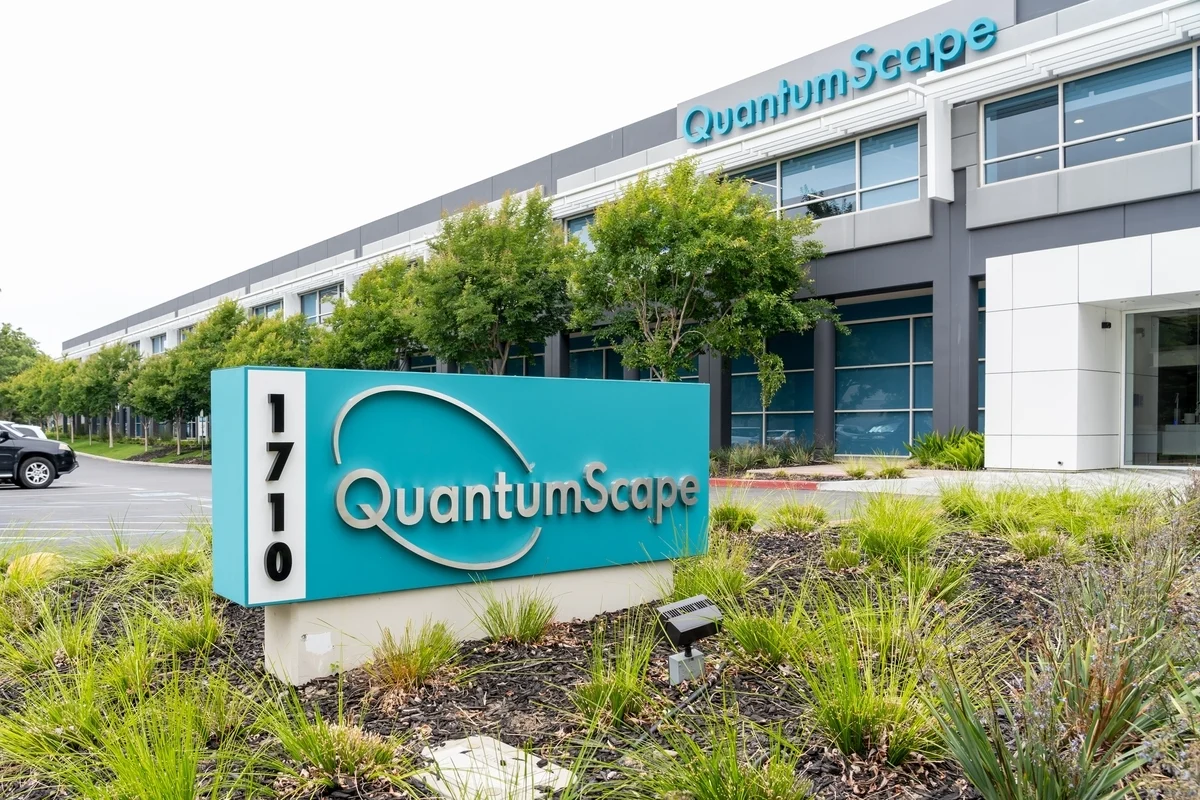
TLDR
- QuantumScape (QS) shares declined 7% Monday, finishing at $4.56 following a new 52-week low touch of $4.54.
- Year-to-date losses have reached approximately 56%, with Monday’s selloff occurring without specific corporate news.
- TD Cowen lowered its price objective to $6 while maintaining a Hold stance; consensus recommendation remains Hold across Wall Street.
- Company insiders offloaded more than 321,000 shares totaling roughly $2 million over three months, though certain institutional players increased exposure.
- QuantumScape maintains its 2029 commercial manufacturing timeline with Volkswagen’s PowerCo, while Honda executed a fresh research partnership in June.
QuantumScape (QS) stock tumbled 7% during Monday’s trading session, settling at $4.56. The shares touched a new 52-week low of $4.54 intraday.
QuantumScape Corporation, QS
Since January, the equity has declined roughly 56%. Monday’s downturn wasn’t linked to any fresh corporate disclosure.
Market participants seem increasingly concerned about the extended timeline before QuantumScape achieves commercial-scale manufacturing. The solid-state battery developer has operated as a publicly-traded entity for several years without generating profits.
Volume metrics also painted a revealing picture. Approximately 7 million shares traded hands, significantly under the typical daily average of nearly 19 million.
TD Cowen reduced its price objective on the shares from $8 down to $6 in July. The brokerage maintained its Hold recommendation.

Analyst sentiment across Wall Street remains lukewarm. Five analysts assign Hold ratings while one recommends Sell, producing a consensus Reduce recommendation with an average price target around $9.47.
QS Stock Struggles Under Weight of Continued Cash Burn
QuantumScape continues investing substantial capital into battery technology development. The firm recorded a net loss of $98.2 million during Q2.
Looking ahead to full-year 2026, management anticipates an adjusted EBITDA loss ranging from $250 million to $275 million. This represents a significant deficit the organization must eventually bridge.
More encouragingly, QuantumScape finished the quarter maintaining $859 million in liquidity. Management also reduced its 2026 capital expenditure projection to between $27 million and $37 million.
The partnership with Volkswagen’s PowerCo underwent restructuring in July. Milestone payments decreased from approximately $131 million to $75 million, though QuantumScape maintains that reduced project expenses should compensate for the reduction.
Revenue generation has shown improvement. Q2 billings totaled $10.8 million, bringing first-half billings to $21.8 million—already surpassing the $19.5 million recorded throughout all of 2025.
QuantumScape Expands Its Partnership Network
The organization plans to double cell manufacturing capacity from its Eagle Line during 2026’s second half. Increased production enables more extensive testing by both QuantumScape and its collaborative partners.
Honda formalized a multi-year research collaboration with QuantumScape in June following technology evaluation. This supplements the existing partnership with Volkswagen’s PowerCo.
QuantumScape maintains relationships with two additional major automotive manufacturers. Cell shipments to one extra carmaker for evaluation have already occurred.
CEO Siva Sivaram has affirmed the company’s expectation for commercial manufacturing with PowerCo by 2029. This timeline represents the critical benchmark for the enterprise.
Company insiders haven’t purchased shares amid the recent decline. CTO Timothy Holme liquidated 45,000 units mid-September at an average of $5.09.
CFO Kevin Hettrich disposed of 9,800 units in July at an average of $7.28. Collectively, insiders sold 321,644 units valued at approximately $2 million during the past 90 days.
Institutional investors have moved in the opposite direction. Dimensional Fund Advisors expanded its holdings by over 134% during Q1, while Geode Capital Management similarly increased its position.
Company insiders presently control roughly 3.93% of the enterprise. Hedge funds and institutional investors collectively own approximately 29.87% of outstanding shares.
Get 3 Free Stock Ebooks
Discover top-performing stocks in AI, Crypto, and Technology with expert analysis.
- Top 10 AI Stocks - Leading AI companies
- Top 10 Crypto Stocks - Blockchain leaders
- Top 10 Tech Stocks - Tech giants


