



Key Takeaways
- According to Goldman Sachs, hedge funds have offloaded information technology and semiconductor equities for four weeks in a row
- The SOX chip benchmark declined 4.2% during the trading week that concluded on July 3
- Foxconn’s quarterly revenue beat expectations, reinforcing optimism around artificial intelligence hardware demand
- Samsung Electronics is projected to reveal an 18-times increase in annual profit when results are released Tuesday
- Tech-heavy Nasdaq 100 futures surged 1% on Monday as the sector showed signs of stabilization
Institutional investors in the United States have been systematically divesting from technology hardware and semiconductor equities for four straight weeks, based on a Friday client briefing from Goldman Sachs. This sustained selloff arrives just as numerous companies in these sectors prepare to announce quarterly results.
The semiconductor benchmark SOX index experienced a 4.2% decline during the week that closed on July 3. This downturn highlights mounting investor concerns regarding the velocity of artificial intelligence capital expenditure and the timeline for generating returns on these massive investments.
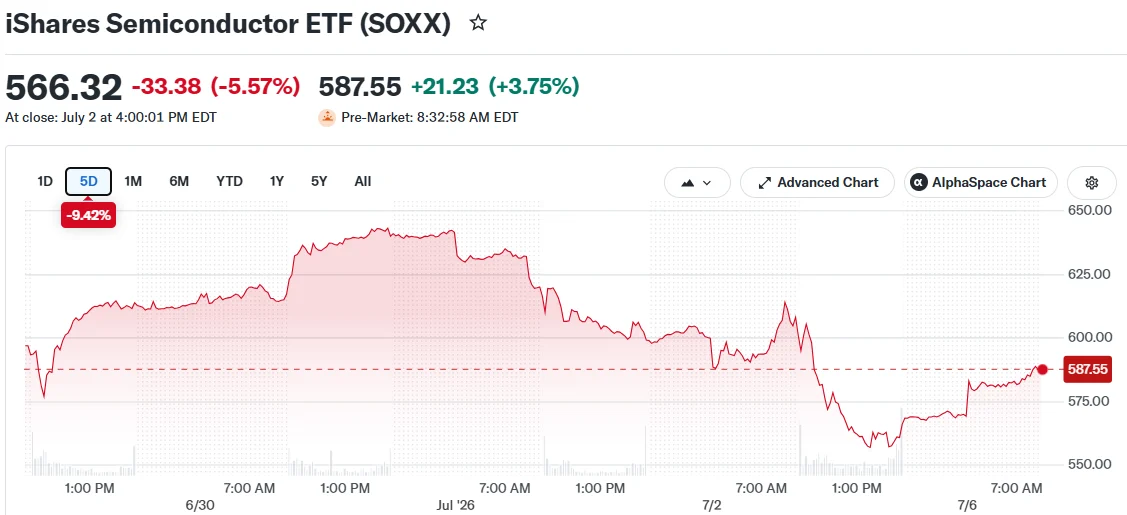
Goldman Sachs identified information technology—encompassing both semiconductors and hardware—as the U.S. equity sector experiencing the largest net outflows for four consecutive weeks. During this timeframe, institutional investors also liquidated positions in industrial and consumer discretionary sectors.
For three straight weeks, hedge funds have recorded more selling activity than buying. The previous week’s divestment was concentrated primarily in individual U.S. equities rather than broad-based index instruments.
While reducing technology exposure, these institutional players reallocated capital elsewhere. They accumulated positions in commercial services, consumer staples, real estate, and energy sectors. Additionally, they increased holdings in index funds and exchange-traded products, which typically track general market performance.

Technology Futures Stage Monday Recovery
Notwithstanding the recent institutional selling, U.S. equity futures advanced on Monday. Nasdaq 100 futures gained 1%, while S&P 500 futures increased 0.4%. Dow Jones futures remained relatively flat following the blue-chip benchmark’s record-breaking performance during the abbreviated Independence Day trading week.
The upward momentum followed Foxconn’s Sunday announcement of quarterly sales figures that exceeded analyst projections. As a critical supplier to Nvidia, Foxconn’s results indicated sustained appetite for AI infrastructure, providing some relief to beleaguered chip stocks.
Samsung Results Draw Market Attention
Market participants are now focused on Samsung Electronics, scheduled to release quarterly earnings on Tuesday. The global leader in memory chip manufacturing is anticipated to report profits eighteen times higher than the comparable year-ago period, significantly exceeding its entire 2025 fiscal year performance.
JPMorgan strategists upgraded their S&P 500 price target, citing the AI supercycle as a catalyst for continued index appreciation. However, they cautioned that volatility should be expected along the way.
On the macroeconomic front, traders are monitoring U.S. services sector data published Monday. A disappointing June employment report has already influenced market expectations surrounding monetary policy adjustments. Minutes from the Federal Reserve meeting, the inaugural session under new chair Kevin Warsh, are scheduled for release Wednesday.
Ross Mayfield, investment strategist at Baird, told Yahoo Finance that market conditions remain firmly bullish. “It’s a bull market driven by earnings and liquidity,” he noted, projecting continued appreciation through 2027.
While hedge funds appear to be either securing gains or hedging against potential semiconductor weakness, Monday’s futures activity suggests certain market participants view the recent pullback as an attractive entry point.
Get 3 Free Stock Ebooks
Discover top-performing stocks in AI, Crypto, and Technology with expert analysis.
- Top 10 AI Stocks - Leading AI companies
- Top 10 Crypto Stocks - Blockchain leaders
- Top 10 Tech Stocks - Tech giants


