



TLDR
- Samsung delivered a 19-fold surge in Q2 operating profit powered by artificial intelligence demand, yet investor anxiety over capital expenditure strategy sparked a semiconductor sector retreat
- Major indices declined Tuesday with the Nasdaq losing 1.4%, S&P 500 falling 0.6%, and Dow Jones dipping 0.1%
- The downturn followed Monday’s milestone as the Dow reached an all-time closing peak above 53,000
- Crude oil climbed after Iranian forces targeted merchant vessels in the Strait of Hormuz, lifting Brent above $73 per barrel
- Wolfe Research upgraded S&P 500 profit projections and established an 8,000 fair value target for year-end
A blockbuster earnings report from Samsung triggered an unexpected wave of selling across the chip industry on Tuesday, demonstrating how market sentiment can override positive fundamentals.
The South Korean technology giant disclosed second-quarter operating profits that multiplied nineteen-fold year-over-year. Artificial intelligence infrastructure demand fueled the extraordinary performance.
Yet rather than celebrating, market participants reacted with caution. Investor apprehension centered on Samsung’s projected AI-related capital investments and uncertainty surrounding sustained demand trajectories, pushing shares downward. The bearish sentiment quickly contaminated the broader semiconductor landscape.
Technology-Heavy Index Bears Brunt of Decline
The Nasdaq Composite absorbed the heaviest losses on Tuesday, retreating 1.4% to claim the dubious distinction of worst performer among primary benchmarks. The S&P 500 surrendered 0.6% while the Dow Jones Industrial Average shed approximately 0.1%.
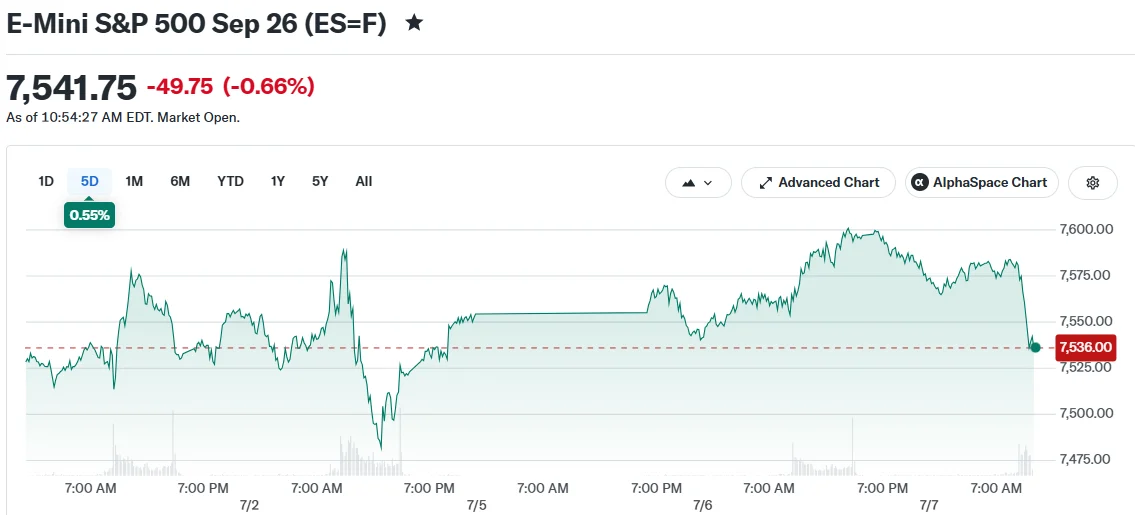
The weakness arrived immediately after Monday’s celebration, when the Dow established a fresh record by settling above 53,000 for the inaugural time.

Semiconductor equities had constructed positive momentum through preceding sessions. Tuesday’s action effectively erased substantial portions of those gains within hours.
Technology names dominated the decliner list. The reversal proved both swift and widespread, impacting numerous companies connected to AI development and chip manufacturing.
Energy Markets React to Geopolitical Flare-Up
While equities retreated, oil prices advanced. Iranian military forces engaged commercial shipping vessels navigating the Strait of Hormuz, a critical chokepoint for global energy transport.
Brent crude futures pushed beyond $73 per barrel. West Texas Intermediate crude advanced to $70 per barrel.
Shipping activity through the strategic waterway had been normalizing in recent weeks. Tuesday’s military action reignited concerns regarding the durability of the US-Iran diplomatic framework.
Investors have maintained vigilant surveillance of that arrangement. Any indication of deterioration could interrupt petroleum supply chains and accelerate price appreciation.
Treasury yields expanded as geopolitical risk elevated. The US dollar gained strength in tandem with rising yields.
Corporate Reporting Period Approaches
Notwithstanding Tuesday’s pullback, certain market strategists maintain constructive perspectives on equities.
Wolfe Research analyst Chris Senyek increased his S&P 500 operating profit forecasts for both 2026 and 2027. He established a year-end fair valuation benchmark of 8,000 for the benchmark index.
Senyek highlighted robust corporate performance through 2026’s initial months. He expressed confidence that businesses should successfully satisfy elevated expectations as second-quarter disclosures commence.
The S&P 500 has oscillated within a narrow band since mid-May. Senyek anticipates the approaching earnings cycle could provide the impetus required to propel the index through resistance.
Caterpillar equity also declined Tuesday after announcing a significant mining sector transaction. The industrial bellwether contributed to the session’s downward pressure.
As of midday trading Tuesday, the Dow registered 52,866. The S&P 500 stood at 7,489 while the Nasdaq had retreated to 25,745.
Get 3 Free Stock Ebooks
Discover top-performing stocks in AI, Crypto, and Technology with expert analysis.
- Top 10 AI Stocks - Leading AI companies
- Top 10 Crypto Stocks - Blockchain leaders
- Top 10 Tech Stocks - Tech giants


