


Quick Overview
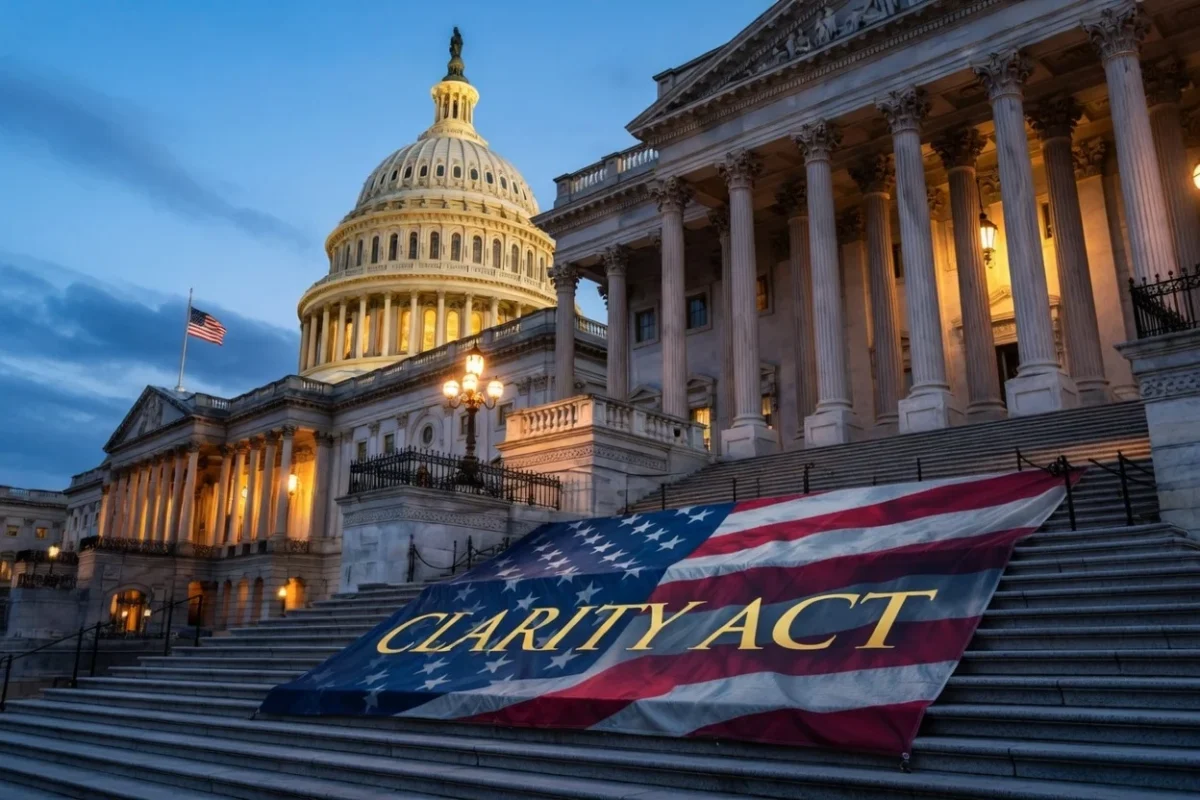
- Senator Cynthia Lummis is advocating for swift passage of the CLARITY Act, describing it as fundamental infrastructure for modern finance
- While the legislation cleared the House and Senate Banking Committee, it awaits a complete Senate floor vote
- The crucial date is August 7 — failure to vote before the recess could postpone action until 2027
- Democratic lawmakers are insisting on ethics provisions preventing the president and government officials from earning crypto profits
- President Trump’s 2025 financial filing revealed approximately $1.4 billion in crypto-related income, intensifying ethics concerns
Senator Cynthia Lummis continues pressing the Senate for rapid action on the CLARITY Act, legislation designed to establish comprehensive regulatory guidelines for digital assets across the United States. She characterized it as a defining legislative achievement for this generation and emphasized the urgency of completing the process.
The legislation successfully navigated through the House and received approval from the Senate Banking Committee. However, it remains pending for a comprehensive Senate floor vote, which has yet to be placed on the calendar.
Time is running short. The Senate’s final session before summer recess concludes on August 7. Without a vote before this deadline, the legislation’s trajectory extends potentially into 2027.
Key Provisions Within the Legislation
The CLARITY Act establishes a dual regulatory framework dividing crypto supervision between two federal agencies. The Securities and Exchange Commission would maintain authority over investment contract assets, while the Commodity Futures Trading Commission would expand its jurisdiction over digital commodity spot markets.
The legislation mandates that crypto exchanges and brokerage firms maintain segregated accounts for customer assets, preventing commingling with corporate funds. This requirement directly addresses failures witnessed in previous exchange bankruptcies.
Additionally, the bill allocates $150 million specifically for investigating crypto fraud and extends Bank Secrecy Act compliance obligations to certain digital asset companies. Proponents argue this approach replaces regulatory ambiguity with explicit legal frameworks. Opponents counter that the current language provides insufficient safeguards for consumers and decentralized finance protocols.

Ethics Provisions Emerge as Primary Obstacle
The central impediment currently facing the legislation is not procedural but rather political. Democratic senators are demanding incorporated ethics standards that would prohibit the president, vice president, cabinet members, and Congressional representatives from receiving financial benefits from cryptocurrency ventures.
This demand intensified following President Trump’s 2025 financial disclosure filing, which documented approximately $1.4 billion in crypto-generated income during the past year. This figure encompasses royalty streams from his memecoin venture, token transactions through World Liberty Financial, and asset sales to entities in Abu Dhabi.
Senator Elizabeth Warren advocated forcefully for robust ethics language, asserting the legislation “must prevent the president” and other officials from profiting through cryptocurrency. Senator Ruben Gallego, despite supporting the bill in committee, stated his commitment to “crack down on corrupt crypto dealings” while withholding confirmation of his floor vote support.
Negotiators must reach consensus on ethics language, and any agreement requires presidential approval.
The Path Forward
Currently, Senate staff members from the Agriculture and Banking committees continue reconciliation meetings to merge two distinct versions of the legislation. Individuals familiar with these discussions report cautious optimism while acknowledging the compressed timeline.
Following text finalization, a Senate floor vote could proceed rapidly — potentially requiring only several days to secure the 60-vote supermajority necessary for passage.
The bill’s ultimate success may also hinge on House dynamics. Recent reporting from Politico and Punchbowl News characterized the House as experiencing operational challenges, which could complicate final approval even with Senate passage.
August 7 stands as the pivotal deadline.
Get 3 Free Stock Ebooks
Discover top-performing stocks in AI, Crypto, and Technology with expert analysis.
- Top 10 AI Stocks - Leading AI companies
- Top 10 Crypto Stocks - Blockchain leaders
- Top 10 Tech Stocks - Tech giants


