


Key Highlights
- Solana ranks among leading blockchains for daily active users and transaction volume
- Strong stablecoin infrastructure powers DeFi, payments, and trading across the ecosystem
- Ecosystem applications generate substantial revenue, demonstrating utility beyond core protocol
- Technical analysis shows SuperTrend indicator turning bullish on 3-day timeframe—first occurrence since mid-October
- Token inflation through staking rewards means network expansion must exceed dilution rates
Solana has evolved beyond its initial reputation as merely a high-speed, low-cost blockchain. Today, it represents one of the most vibrant and actively used cryptocurrency ecosystems, characterized by genuine user engagement, substantial trading activity, and significant capital flows.
When measuring blockchain performance by daily active wallet addresses and on-chain transaction volumes, Solana consistently appears in the top tier. This level of authentic engagement is difficult to artificially inflate and distinguishes Solana from numerous alternative cryptocurrencies that remain primarily speculative.
The stablecoin infrastructure represents one of Solana’s most compelling advantages. Solana has cultivated substantial and expanding stablecoin reserves, which serve as essential liquidity for payment systems, exchange platforms, and decentralized financial services. This deep liquidity provides compelling incentives for developers and users to commit to the platform long-term.
The protocol layer has demonstrated significant maturation. Decentralized exchanges, digital wallets, and financial protocols operating on Solana are producing considerable fee income and revenue streams. This evolution demonstrates that the network transcends its role as mere infrastructure—it’s developing into a comprehensive economic framework.
Additionally, Solana has established connections with institutional financial services and payment processing systems. These partnerships create expansion opportunities beyond cryptocurrency-native speculation, encompassing tokenized traditional assets and enterprise-grade financial platforms.

Economic Model and Valuation Considerations
The counterpoint involves current valuation metrics. Solana already commands one of the largest market capitalizations in cryptocurrency. Substantial anticipated growth may already be reflected in current prices, potentially limiting the magnitude of percentage gains compared to smaller-cap blockchain networks.
Tokenomics warrant careful examination. SOL serves practical functions through transaction fees and staking mechanisms, with portions of network fees permanently removed from circulation. However, Solana maintains an inflationary model, as staking compensation derives partially from newly minted tokens. While the inflation percentage decreases progressively, it hasn’t reached zero.
This dynamic requires continuous network expansion to offset dilution effects for SOL token holders.
It’s important to recognize that ecosystem value doesn’t entirely accrue to SOL directly. Significant fee generation occurs at the application level rather than the base protocol layer. While this doesn’t undermine the investment thesis for SOL, it represents a subtlety that investors should monitor.
Technical Outlook: SuperTrend Indicator Shifts Positive
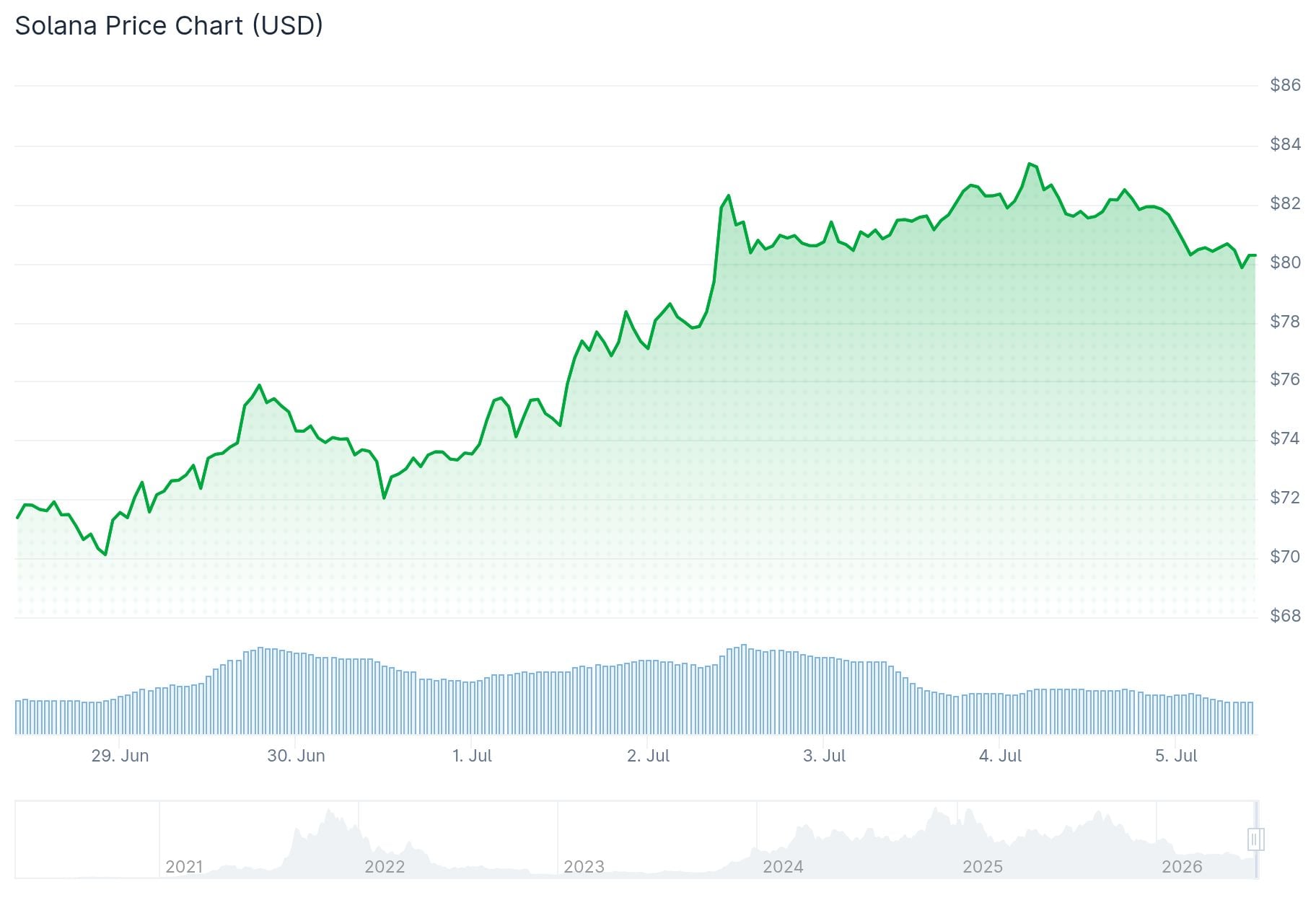
From a technical analysis perspective, market data indicates the SuperTrend indicator has generated a fresh buy signal on Solana’s 3-day chart. According to technical analysts, this marks the first bullish signal since October 10. The preceding sell signal occurred before a substantial 74% price decline.
The Average True Range (ATR) trailing stop has now positioned itself below current price levels, confirming a momentum shift from bearish to bullish territory. Technical analysts identify $100 as a reasonable price objective following this indicator change.
SOL currently trades with this technical configuration intact as market participants evaluate whether the positive trend can maintain momentum.
Get 3 Free Stock Ebooks
Discover top-performing stocks in AI, Crypto, and Technology with expert analysis.
- Top 10 AI Stocks - Leading AI companies
- Top 10 Crypto Stocks - Blockchain leaders
- Top 10 Tech Stocks - Tech giants


