


Key Highlights
- SOL experienced an 8.31% decline from $110.50 to approximately $100.40 starting August 26
- Whale wallet count increased by 52 over the last seven days, each holding a minimum of 10,000 SOL
- Spot Solana ETFs in the United States recorded consecutive inflows for seven weeks, with 1.2 million SOL (~$120M) added in the latest week
- SOL holdings on centralized exchanges decreased by 4.91%, indicating a shift toward long-term storage
- SGP-0002 Double Disinflation proposal was approved, increasing the yearly disinflation rate from 15% to 30%
While Solana has experienced a notable price correction in recent sessions, underlying blockchain metrics reveal a contrasting narrative of strength. The data indicates increasing network engagement, institutional capital deployment, and unprecedented operational performance.
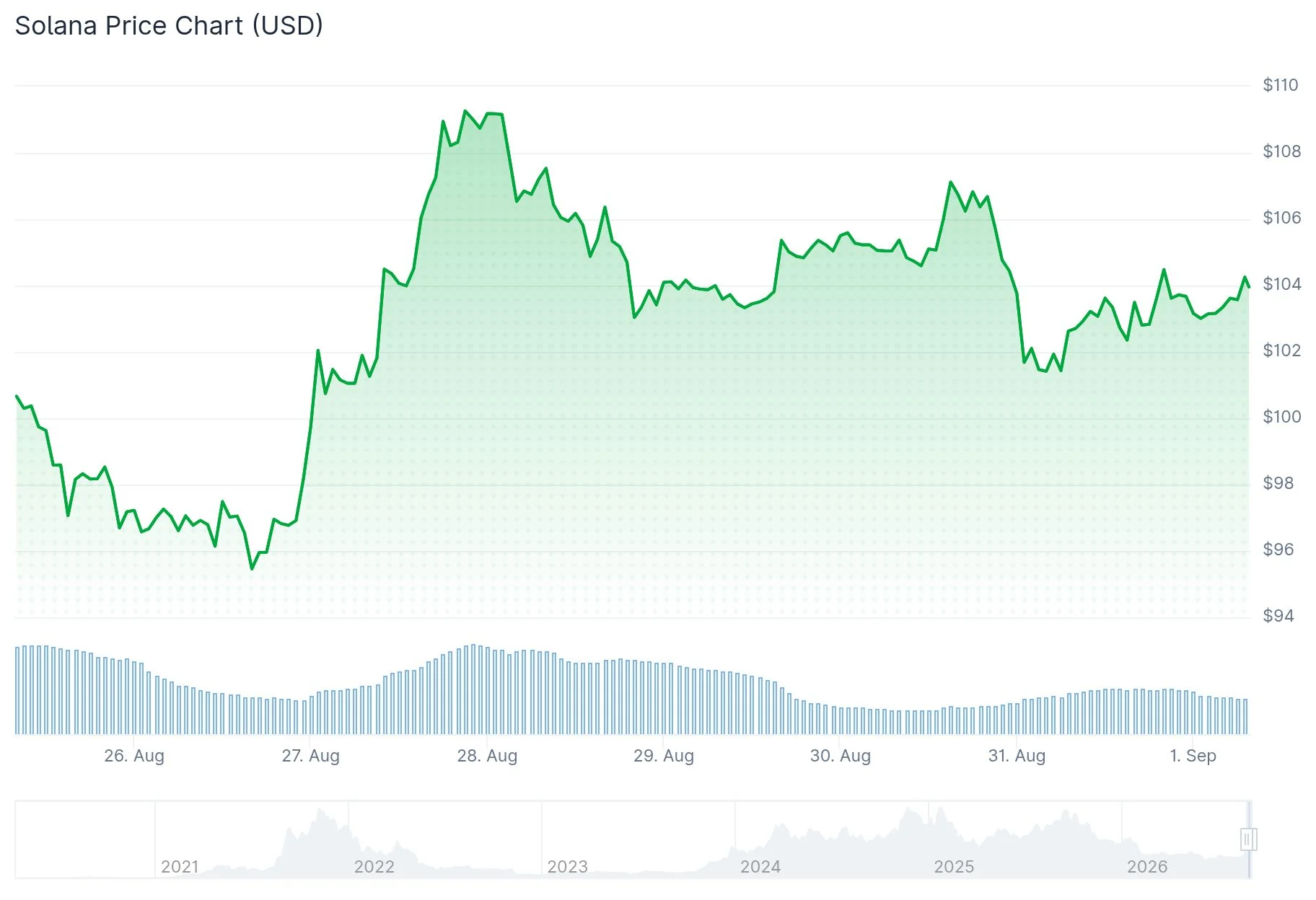
Starting August 26, SOL experienced an 8.31% decrease, moving from $110.50 down to approximately $100.40, as reported by cryptocurrency analyst Ali Charts.
The price decline hasn’t deterred network expansion. Solana has maintained an average of approximately 9.5 million newly created wallet addresses daily throughout the previous week. This expansion rate indicates continued ecosystem participation rather than user exodus.
Large holder behavior has intensified recently. Wallets containing 10,000 SOL or more increased by 1.58%, representing 52 additional whale-tier addresses in the last week. When major stakeholders accumulate assets, it typically reduces circulating supply available for market transactions.
Institutional Capital Continues Flowing Into SOL ETFs
Investment product demand has maintained momentum. United States-based spot Solana ETFs have registered positive net inflows for seven straight weeks. During the most recent seven-day period, these investment vehicles absorbed more than 1.2 million SOL, representing approximately $120 million in value.

Simultaneously, exchange-held SOL inventory contracted by 4.91%. Approximately 2.6 million SOL exited centralized trading platforms during the past week, suggesting investors are transferring assets to self-custody solutions or extended-hold wallets.
Market analyst CryptosBatman shared on X that SOL has emerged from a significant accumulation pattern, identifying the $83–$85 range as a critical retest zone. According to his analysis, maintaining support at that level could propel SOL toward $150 and potentially higher.
From a technical perspective, $103 represents the critical support threshold. Approximately 39 million SOL changed hands near this price point, establishing it as a substantial demand zone where buyers are expected to defend the level.
Should SOL maintain the $103 floor and build upward momentum, overhead resistance exists around $123 and $132, where roughly 20 million SOL was accumulated previously. Breaching both levels decisively could clear the runway toward $150.
Network Fee Revenue Reaches New Peak
From an infrastructure standpoint, Solana’s fee production achieved a seven-day rolling average of nearly 9,200 SOL on August 27, representing an increase exceeding 80% compared to three months prior.
Non-voting transactions reached an unprecedented 191 million on a seven-day measurement basis, up from just 88 million during the same period last year. Jito validator tip revenue averaged 2,073 SOL daily last week, reflecting a 26% week-over-week gain.
A community governance decision was finalized on Friday. The Double Disinflation initiative, designated SGP-0002, achieved passage with 67.001% approval. This measure doubles the yearly disinflation rate from 15% to 30%, removing approximately 18.9 million SOL from projected supply calculations over a six-year timeline.
Staking yield projections indicate a decline from roughly 5.25% to 2.25% by the third year. Smaller validation operations dependent on inflation-based revenue may face profitability challenges, though typical users should experience no perceptible changes in transaction speed or cost structure.
Non-voting transaction volume on Solana currently stands at a historical peak of 191 million based on seven-day rolling averages.
Get 3 Free Stock Ebooks
Discover top-performing stocks in AI, Crypto, and Technology with expert analysis.
- Top 10 AI Stocks - Leading AI companies
- Top 10 Crypto Stocks - Blockchain leaders
- Top 10 Tech Stocks - Tech giants


