


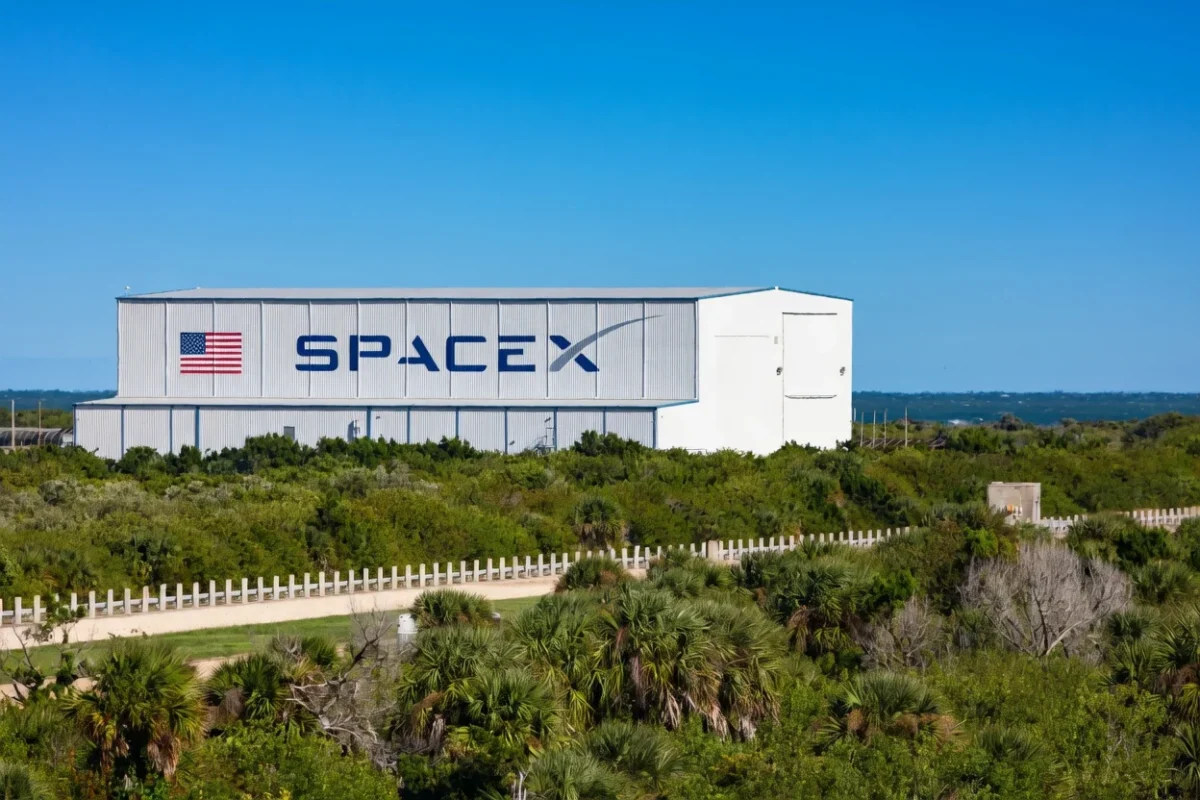
Key Highlights
- SpaceX’s Nasdaq debut scheduled for June 12 with ambitious $2 trillion target valuation and $86.5 billion capital raise
- This offering would shatter records as the biggest U.S. IPO ever, far exceeding Alibaba’s $21.8 billion 2014 listing
- Index funds could automatically purchase approximately 48% of available shares upon listing
- The prospectus references Tesla 87 times, highlighting interconnected operations spanning chips, infrastructure, and artificial intelligence
- Starlink contributed $11.4 billion of SpaceX’s $15.5 billion space and connectivity income during 2025
The aerospace manufacturer SpaceX has announced plans for a public market debut on June 12 via Nasdaq listing, pursuing a valuation that could reach $2 trillion. The offering aims to generate approximately $86.5 billion in proceeds, positioning it to become America’s most significant initial public offering ever recorded. To put this in perspective, when Alibaba went public in 2014, it raised $21.8 billion, while Facebook’s 2012 debut generated roughly $16 billion.
Should SpaceX achieve this valuation target, it would instantly enter the ranks of the planet’s highest-valued corporations, positioned directly behind Amazon in market capitalization.
This public offering comes during a period of sustained strength across American equity markets. The S&P 500 index is nearing the 8,000 threshold, while the Nasdaq approaches 30,000. Second quarter performance has been particularly robust, with the S&P 500 climbing over 16% during this three-month period.
Market Absorption Concerns Emerge
Market observers aren’t uniformly optimistic about smooth absorption of such a massive capital raise.
Rupert Mitchell, formerly with Goldman and Salomon and currently at Blind Squirrel Macro, has expressed concerns about the unprecedented scale of this transaction. His analysis suggests successful completion requires investor deployment of approximately half a trillion dollars.
Mitchell’s calculations indicate passive investment vehicles will automatically purchase roughly $44 billion of the total raise. Major index trackers including those following the S&P 500, Nasdaq, and Russell 1000 are projected to collectively acquire about 48% of available SpaceX shares, based on Bloomberg Intelligence assessments.

This capital must originate from existing positions. Market analysts anticipate funds directed toward SpaceX will necessitate liquidation of other holdings already present in these benchmark indexes.
Freedom Capital Markets’ Jay Woods highlighted that ordinary investors with S&P 500 index exposure through retirement accounts would automatically gain SpaceX ownership. The company currently operates at a loss, features concentrated voting control at 79% under one individual, and offers merely 5% public float.
Woods characterized this as incompatible with the index’s original design, noting it was constructed to recognize companies with demonstrated profitability records.
Prospectus Deep Dive
The SpaceX offering document spans 380 pages, disclosing numerous previously undisclosed operational details.
While Tesla isn’t part of the public offering itself, the automaker receives 87 mentions across the filing. Documentation describes shared semiconductor resources, collaborative artificial intelligence initiatives, and a chip production venture dubbed Terafab involving Tesla and Intel. The prospectus explicitly states intentions to “deepen our strategic collaboration with Tesla.”
SpaceX operates using an internal methodology called “the Algorithm,” comprising five sequential steps prioritizing elimination of superfluous components, optimization of remaining elements, and reserving automation only after completing initial four phases. A competing chief executive publicly commended the resulting Raptor engine architecture in 2024.
Starlink Powers Financial Performance
Revenue analysis reveals Starlink as the company’s primary growth driver. The satellite connectivity business produced $11.4 billion of total $15.5 billion space and connectivity revenues during 2025, representing substantial growth from $7.6 billion in 2024.
The company’s artificial intelligence operations, encompassing X and Grok platforms, contributed $3.2 billion but recorded $6.4 billion in operating losses throughout 2025. Consolidated results showed SpaceX posted $4.9 billion in net losses for the year.
Future roadmap includes deployment of next-generation V3 Starlink satellites engineered for one terabit-per-second download capabilities beginning late 2026. The following year, V2 Mobile satellites will expand direct-to-cell coverage, currently serving 7.4 million monthly devices spanning 30 nations.
Capital Economics chief market adviser John Higgins observed that major IPOs haven’t consistently triggered market corrections. However, he characterized this year’s artificial intelligence-focused public offerings, including SpaceX alongside Anthropic and OpenAI, as a legitimate examination of market resilience.
Get 3 Free Stock Ebooks
Discover top-performing stocks in AI, Crypto, and Technology with expert analysis.
- Top 10 AI Stocks - Leading AI companies
- Top 10 Crypto Stocks - Blockchain leaders
- Top 10 Tech Stocks - Tech giants


