


Key Takeaways
- President Trump announced the termination of the US-Iran ceasefire during NATO talks in Ankara, triggering widespread market losses
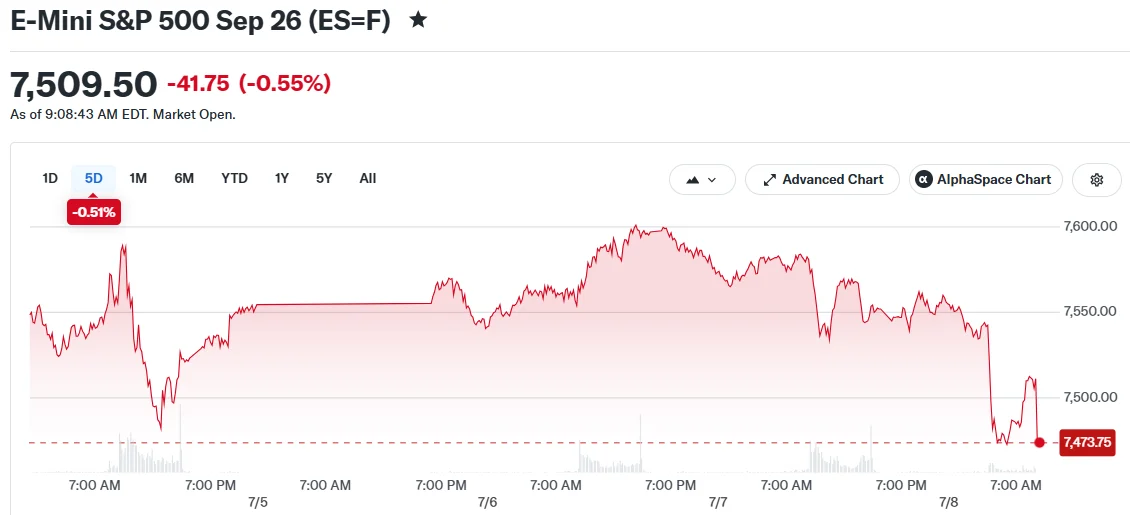
- Futures contracts showed Dow down over 500 points with S&P 500 and Nasdaq 100 posting significant declines
- Crude oil jumped more than 5% following Washington’s decision to cancel Iran’s crude export authorization
- South Korea’s KOSPI index plummeted 5.4% amid broader Asian market weakness
- Market participants await Federal Reserve June meeting minutes for policy direction signals from Chair Kevin Warsh
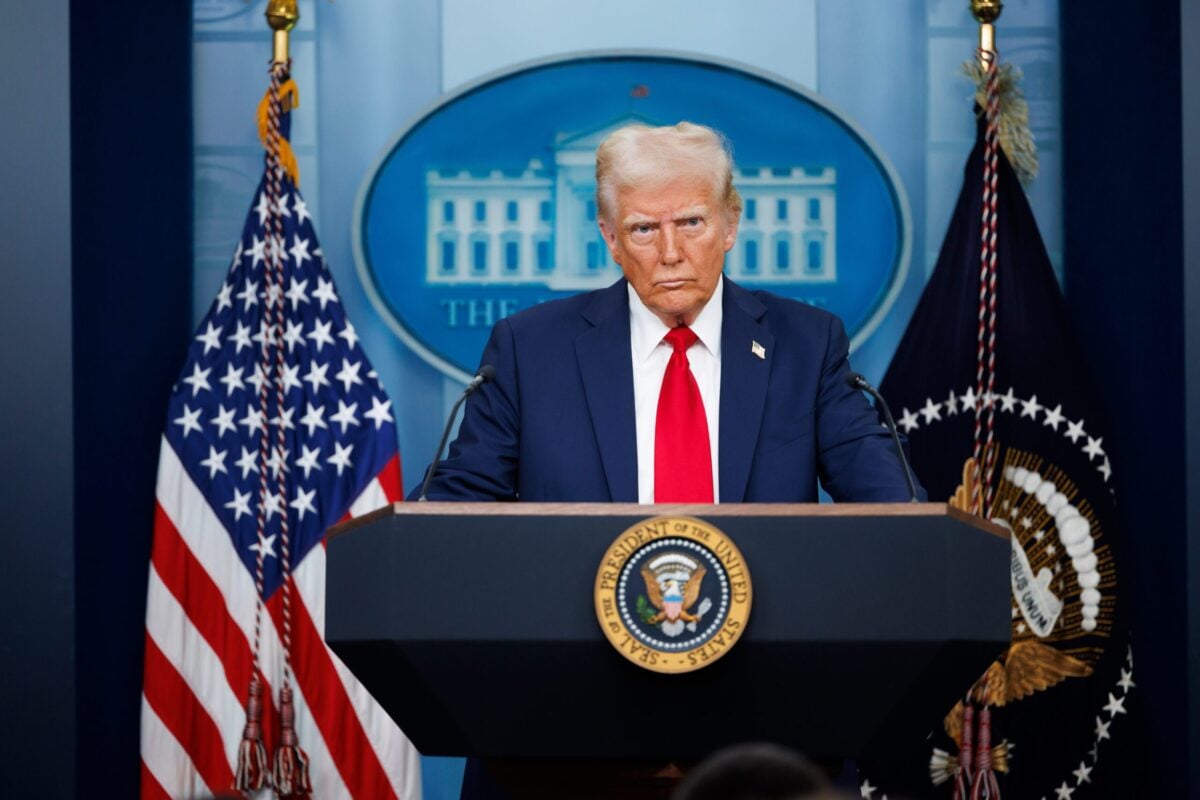
Equity futures in the United States experienced substantial declines Wednesday following President Donald Trump’s announcement that the ceasefire agreement with Iran had concluded.
Futures tied to the Dow Jones Industrial Average plummeted more than 500 points, representing approximately a 1% decline. The S&P 500 futures contract retreated 0.7%, while Nasdaq 100 futures decreased 1.1%.
The President delivered his statement during a NATO gathering in Ankara, Turkey. When questioned about the ceasefire’s current standing, he responded, “To me, I think it’s over. I don’t want to deal with them anymore.”
His declaration followed American military operations targeting locations along Iran’s coastline. These strikes came as retaliation for Iranian attacks on three merchant vessels operating near the Strait of Hormuz.
Prior to this development, the Treasury Department withdrew licensing that had permitted Iranian crude oil sales in international markets. This action had already initiated upward pressure on petroleum prices Tuesday.

By Wednesday’s opening hours, West Texas Intermediate crude had climbed above $74 per barrel, marking a gain exceeding 5%. Brent crude advanced to approximately $78 per barrel.
Energy sector equities benefited from higher oil prices, though the wider market experienced downward momentum.
All three primary American indices had already registered losses during Tuesday’s session. Semiconductor manufacturers and other artificial intelligence-focused companies drove the declines.
Pacific Rim Markets Experience Sharp Losses
Markets across Asia responded swiftly to the geopolitical developments. The KOSPI index in South Korea dropped 5.4%, with memory chip producers SK Hynix and Samsung experiencing particularly steep selloffs.
Asian economies depend heavily on energy imports, creating heightened vulnerability to petroleum price increases compared with other global regions.
Deutsche Bank’s Jim Reid noted the developments had “reignited concerns about energy supplies and geopolitical risk.”
The analyst characterized the recent escalation as “the most serious test yet for the ceasefire,” while observing that risk sentiment remained “weak but not as much as you may have imagined.”
Bitcoin declined following the President’s remarks, extending losses from earlier trading.
Federal Reserve Minutes Draw Attention
Investors are anticipating the publication of Federal Reserve meeting minutes from June, scheduled for release Wednesday afternoon.
The central bank maintained its current interest rate policy at that gathering. It represented Chair Kevin Warsh’s inaugural policy meeting in his new role.
Traders will scrutinize the document for indications regarding future monetary policy adjustments.
Currently, Middle Eastern developments are exerting greater influence on trading activity than domestic economic indicators.
The geopolitical landscape remains volatile, with no immediate prospects for renewed diplomatic engagement between Washington and Tehran.
Get 3 Free Stock Ebooks
Discover top-performing stocks in AI, Crypto, and Technology with expert analysis.
- Top 10 AI Stocks - Leading AI companies
- Top 10 Crypto Stocks - Blockchain leaders
- Top 10 Tech Stocks - Tech giants


