


Key Highlights
- Synopsys delivered Q2 adjusted earnings per share of $3.35, surpassing the Street’s $3.15 estimate, while revenue reached $2.28B versus the expected $2.25B
- Shares declined approximately 2.6% during premarket hours to $512.22 despite exceeding expectations
- The company elevated its full-year revenue forecast to a midpoint of $9.67B from the prior $9.6B target
- A cooperation deal was finalized with Elliott Investment Management, bringing Jesse Cohn onto the board of directors
- Workforce reductions of approximately 10% accompanied the Ansys merger, generating $325M in restructuring expenses
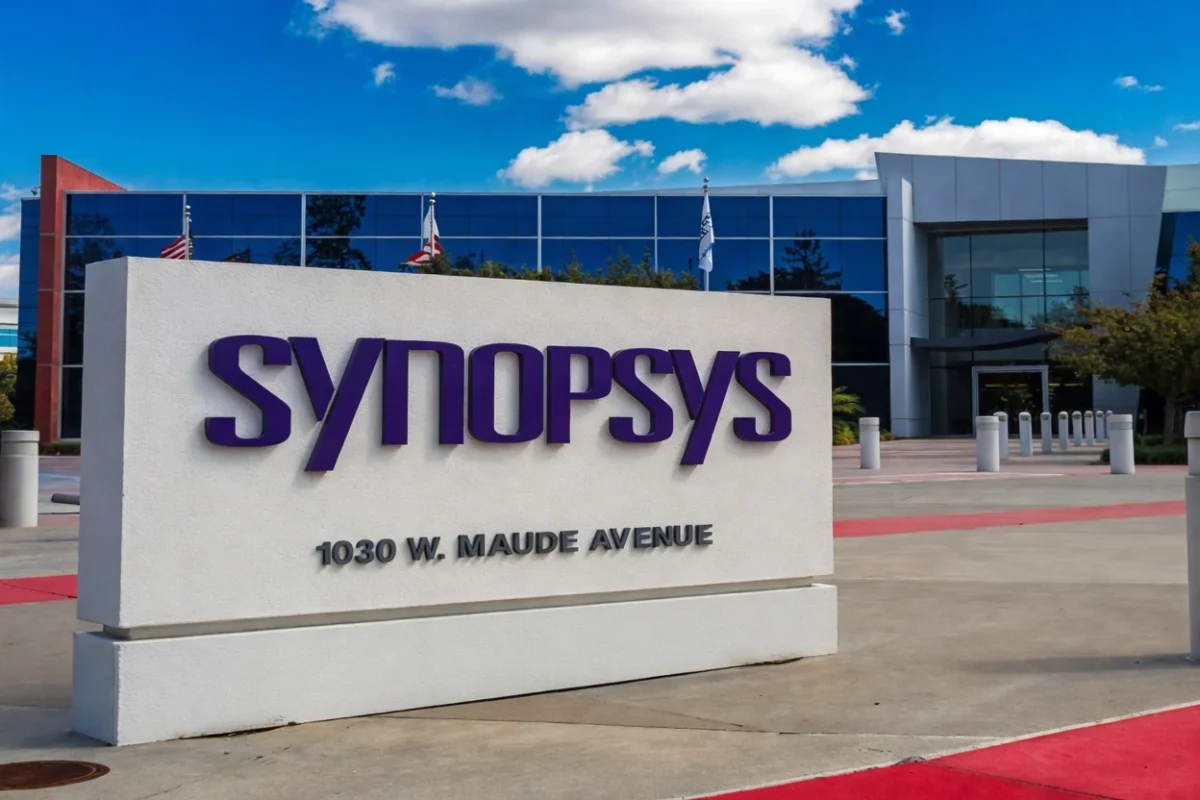
Synopsys (SNPS) delivered robust fiscal second-quarter results on Tuesday that exceeded Wall Street’s projections on both the top and bottom lines — yet investors weren’t impressed.
The electronic design automation leader reported adjusted earnings of $3.35 per share, eclipsing analyst projections of $3.15 by a notable $0.20 margin. Total revenue climbed to $2.28 billion, surpassing the Street’s $2.25 billion forecast.
Shares closed at $524.15 before sliding 2.6% to $512.22 in Thursday’s premarket session. Despite the recent pullback, the stock maintains gains of approximately 13% year-over-year and has surged roughly 26.6% over the trailing three-month period.
Synopsys elevated its annual revenue projection to a range spanning $9.63B to $9.71B, establishing a midpoint of $9.67B. The company’s full-year earnings guidance landed between $14.72 and $14.80 per share, comfortably exceeding the analyst consensus target of $14.45.

Simultaneously, the firm announced a cooperation arrangement with activist shareholder Elliott Investment Management. Under the terms, Elliott’s Jesse Cohn will assume a board seat at Synopsys. Elliott has maintained an aggressive stance across multiple technology investments in recent quarters.
Ansys Merger Drives Major Restructuring
The more significant narrative extends beyond the quarterly performance — it centers on the complex integration of Ansys, the physics-simulation software provider Synopsys acquired in a $35 billion transaction last year.
Given that Ansys was producing approximately half a billion dollars in quarterly sales as a standalone entity, year-over-year performance metrics for Synopsys have become challenging to interpret without accounting for this transformative acquisition.
The consolidation process triggered significant workforce reductions, eliminating roughly 10% of the merged organization’s employees. These cuts resulted in approximately $325 million in aggregate restructuring costs. Following the merger, the combined entity employed around 28,000 people, based on FactSet data.
This past March, Synopsys introduced its inaugural integrated product stemming from the acquisition: Multiphysics Fusion. The platform incorporates electrical, thermal, electromagnetic, and mechanical simulation capabilities directly within chip design processes — a valuable advancement for semiconductor manufacturers grappling with increasingly sophisticated AI architectures.
Artificial Intelligence Exposure Exists, Though Growth Remains Gradual
Synopsys has articulated its artificial intelligence value proposition with clarity: its software and hardware platforms form the foundation of chip design processes, making advanced AI processor development significantly more challenging without these tools.
Nvidia maintains a 2.5% ownership position in Synopsys and counts among its customer base. Rival Cadence Design Systems (CDNS) competes in this identical market segment.
However, organic revenue expansion hasn’t replicated the momentum witnessed during Synopsys’ 2022 surge. While the AI-driven catalyst remains evident, it hasn’t yet reached maximum velocity.
Analyst sentiment appears constructive, with the company receiving 14 upward EPS estimate revisions over the past 90 days compared to merely 3 downward adjustments, signaling widespread confidence preceding the quarterly release.
Synopsys’ future trajectory will predominantly depend on the seamless execution of the Ansys integration and whether Multiphysics Fusion achieves meaningful adoption among AI chip developers.
Get 3 Free Stock Ebooks
Discover top-performing stocks in AI, Crypto, and Technology with expert analysis.
- Top 10 AI Stocks - Leading AI companies
- Top 10 Crypto Stocks - Blockchain leaders
- Top 10 Tech Stocks - Tech giants


