


Key Highlights
- Nasdaq 100 futures declined 0.5% while Dow futures showed modest gains before the release of June employment data
- Semiconductor stocks experienced sharp declines, with South Korean chipmakers SK Hynix and Samsung triggering a 7.9% drop in the Kospi index
- Economists anticipate 115,000 new jobs for June, with the unemployment rate projected to remain at 4.3%
- Federal Reserve Chair Kevin Warsh refrained from indicating potential rate changes, directing attention toward economic indicators
- Reports of Meta’s potential cloud computing resale venture sparked doubts about technology sector AI infrastructure investments
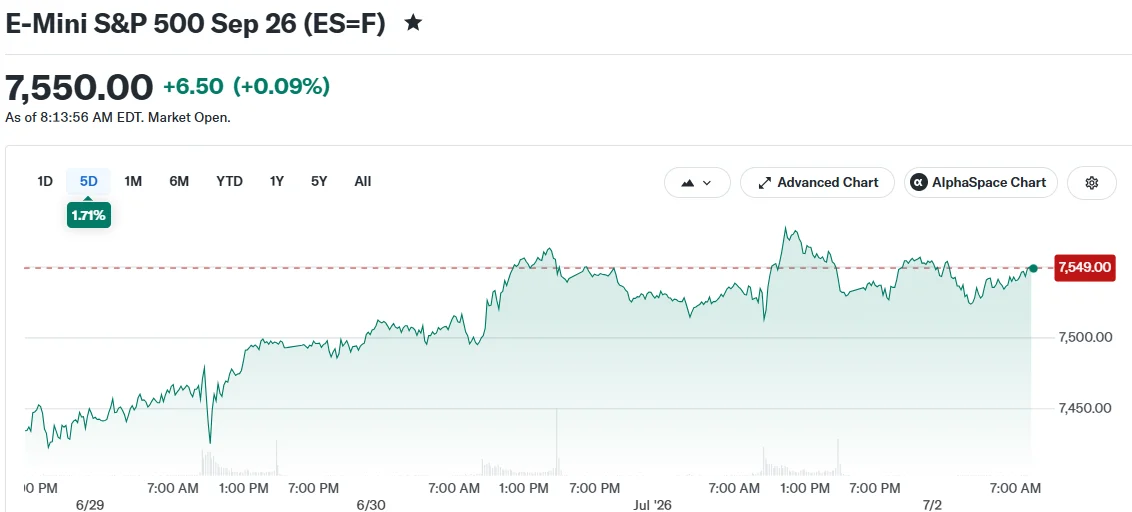
American equity futures displayed divergent movements during Thursday’s pre-market session as market participants anticipated the June employment report scheduled for release at 8:30 a.m. Eastern Time.
Futures tied to the Nasdaq 100 retreated 0.5%. Contracts linked to the S&P 500 slipped 0.1%. Dow Jones Industrial Average futures climbed marginally, gaining less than 0.1%.
Semiconductor Sector Faces Intense Selling Pressure
Technology stocks continued to face headwinds after the PHLX Semiconductor Index posted a significant 6.3% decline during Wednesday’s trading session.
The downturn extended to international markets. The Kospi index in South Korea plummeted 7.9% on Thursday. Memory chip manufacturers SK Hynix and Samsung Electronics experienced dramatic selloffs, tumbling more than 14% and 9% respectively.
Both semiconductor giants had recently unveiled substantial investment commitments focused on artificial intelligence initiatives.

Speculation surrounding Meta Platforms’ reported plans to commercialize surplus computing capacity through a new cloud services division intensified investor apprehension. Market observers began questioning whether major technology corporations have engaged in excessive capital deployment for AI-related infrastructure.
Despite the technology sector’s struggles, the equal-weighted S&P 500 achieved a fresh all-time high on Wednesday. Deutsche Bank’s Henry Allen observed that market performance “hasn’t been so bad if you look beyond the tech slump.”
The benchmark 10-year Treasury yield registered 4.495% during early Thursday trading, showing a modest uptick from the previous session.
Employment Data Takes Center Stage
Federal Reserve Chairman Kevin Warsh delivered remarks Wednesday during a central banking conference in Portugal. He avoided providing guidance on whether the Federal Reserve might pursue an interest rate increase later this month.
Warsh emphasized that markets should examine economic data directly rather than relying on Fed communications for interest rate signals.
Economic forecasters surveyed by the Wall Street Journal project that 115,000 positions were created in June. The jobless rate is anticipated to remain unchanged at 4.3%.
Market analysts cautioned that the employment figures might be affected by temporary hiring associated with the soccer World Cup.
Any indication of robust labor market conditions could elevate expectations for a rate increase during the current year.
Oil prices edged lower following Qatar’s announcement, in its role as intermediary, that recent US-Iran negotiations were characterized by positive momentum. While no agreement was finalized, discussions were portrayed as constructive.
Gold prices advanced in response to Warsh’s statements. Bitcoin rebounded after experiencing earlier weakness connected to Federal Reserve commentary.
Investors now await the employment data to determine whether it will alter expectations regarding the Fed’s upcoming policy decisions on interest rates.
Get 3 Free Stock Ebooks
Discover top-performing stocks in AI, Crypto, and Technology with expert analysis.
- Top 10 AI Stocks - Leading AI companies
- Top 10 Crypto Stocks - Blockchain leaders
- Top 10 Tech Stocks - Tech giants


