



Key Highlights
- Technology-heavy Nasdaq tumbled 1.5% Thursday, with semiconductor stocks leading the decline
- Dow Jones shed 105 points (0.2%) while S&P 500 retreated 0.5%
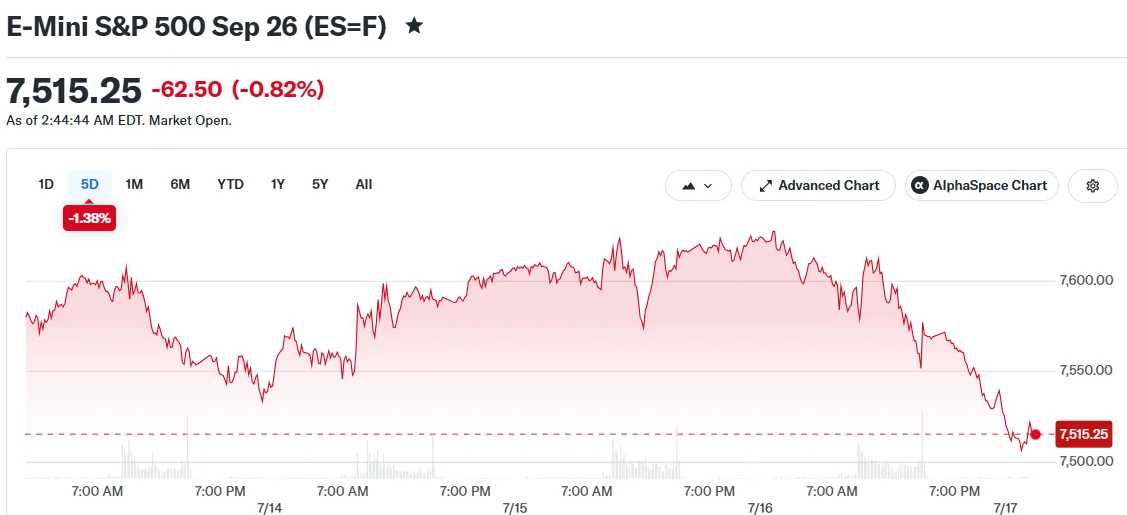
- Bitcoin declined beneath the $63,000 threshold after U.S. military action against Iran
- New allegations from Trump regarding Chinese election meddling heightened pressure on risk-sensitive investments
- Friday trading in Asia saw sharp losses, with Japan’s Nikkei plummeting close to 3%
Thursday’s trading session on July 16 saw the Nasdaq composite register a 1.5% decline as semiconductor stocks experienced widespread selling pressure. The S&P 500 retreated 0.5% while the Dow Jones Industrial Average shed 0.2%, equivalent to a 105-point drop.
The technology sector bore the brunt of selling activity, with Nvidia and Broadcom standing out as significant detractors from index performance. Additional pressure on the Dow came from Goldman Sachs and Caterpillar.
Amazon and Alphabet contributed to the S&P 500’s downward movement. Interestingly, despite headline index declines, advancing issues outnumbered declining ones within both the Dow and S&P 500.
The equal-weighted version of the S&P 500 managed to finish in positive territory, while the S&P 500 ex-technology index remained essentially unchanged. This divergence clearly identifies the technology sector as Thursday’s primary source of weakness.
Recent market advances have been heavily dependent on a narrow group of technology leaders. With this leadership now showing signs of fatigue, the concentration risk is manifesting in broader index underperformance.

Cryptocurrency Retreats Amid Middle East Military Action and Sino-American Friction
Bitcoin’s price fell below the $63,000 level on Friday following renewed U.S. military strikes against Iranian targets. The digital asset had already declined approximately 1.4% during Thursday’s session from levels near $65,000.
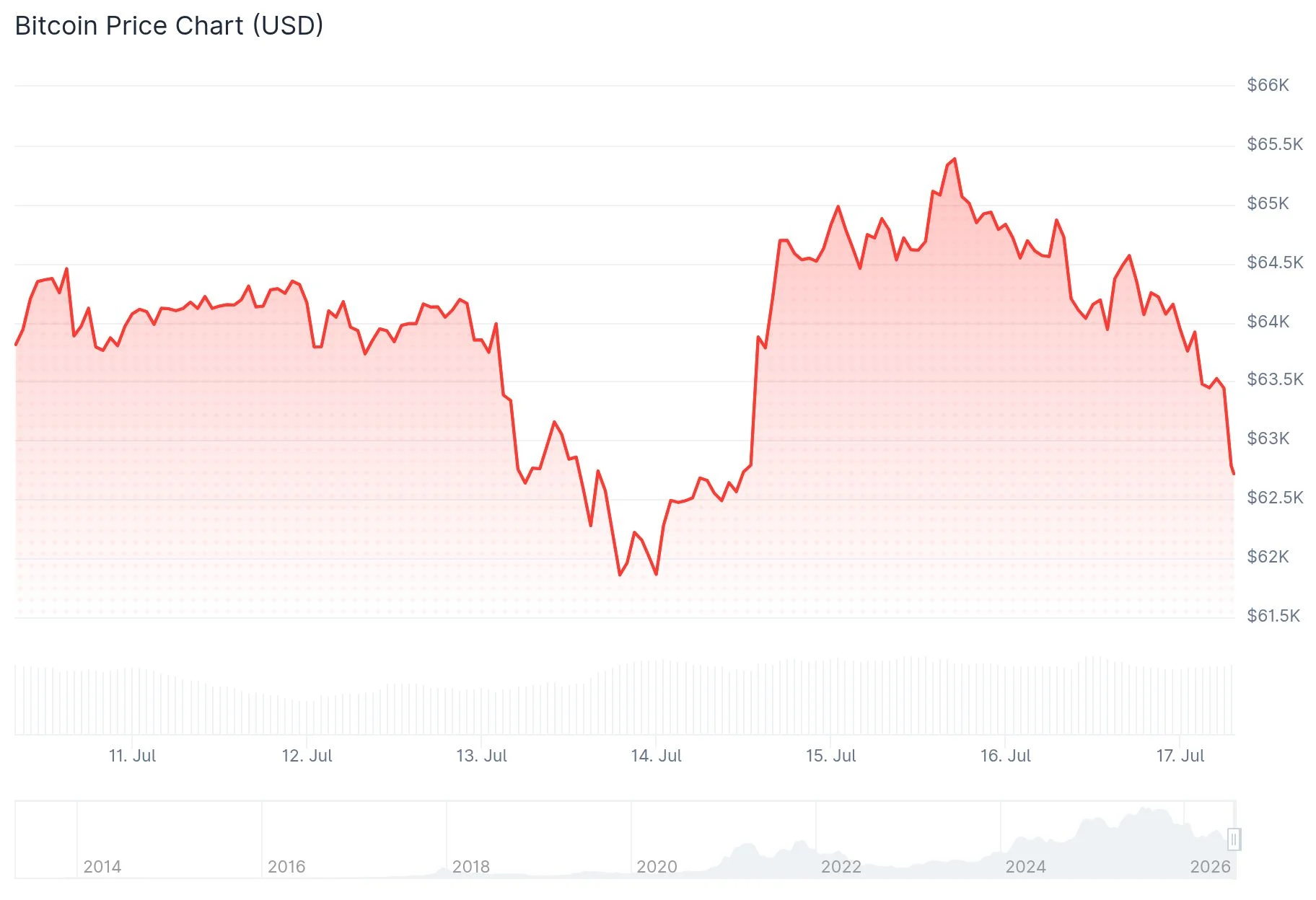
As of this writing, Bitcoin was changing hands just beneath its 50-day simple moving average, a technical threshold closely monitored by traders as a gauge of near-term directional momentum.
According to reports from Iran’s Fars news agency, which has semi-official status, American strikes targeted five bridge structures in Hormozgan province’s southern region. Additionally, a missile reportedly impacted the Chabahar maritime control facility.
Crude oil markets displayed relative resilience to the escalation. West Texas Intermediate crude maintained stability around the $79 per barrel mark despite heightened Middle Eastern tensions.
Friday’s Asian trading sessions witnessed pronounced weakness. Japan’s Nikkei 225 index plunged nearly 3%, reaching its weakest level in more than a month. Australia’s ASX 200 declined 0.5%, while Nasdaq futures contracts dropped 0.8%.
Late Thursday brought President Trump’s announcement regarding the declassification of intelligence materials alleging Chinese involvement in the 2020 U.S. electoral process. The claims suggested Beijing acquired 220 million American voter records. Chinese embassy officials rejected these assertions.
These allegations introduced fresh uncertainty regarding the state of U.S.-China diplomatic relations, particularly with a scheduled Trump-Xi Jinping summit approaching in September.
The Australian dollar, frequently utilized as a barometer for China-related risk sentiment, weakened versus the U.S. dollar following the news. Market observers suggest the timing of these accusations could complicate bilateral engagement ahead of autumn discussions.
“Trump’s decision to level fresh, sweeping accusations against Beijing weeks ahead of that meeting introduces a new source of friction risk,” said Eamonn Sheridan, Chief Asia-Pacific Currency Analyst at InvestingLive.
Should U.S.-China relations experience further deterioration, additional downward pressure on risk-oriented assets including Bitcoin may emerge in upcoming trading sessions.
Get 3 Free Stock Ebooks
Discover top-performing stocks in AI, Crypto, and Technology with expert analysis.
- Top 10 AI Stocks - Leading AI companies
- Top 10 Crypto Stocks - Blockchain leaders
- Top 10 Tech Stocks - Tech giants


