


Key Takeaways
- Shares of TSLA declined 1.5% to $350.80 during early Wednesday trading before Thursday’s Cybercab unveiling in Austin, Texas
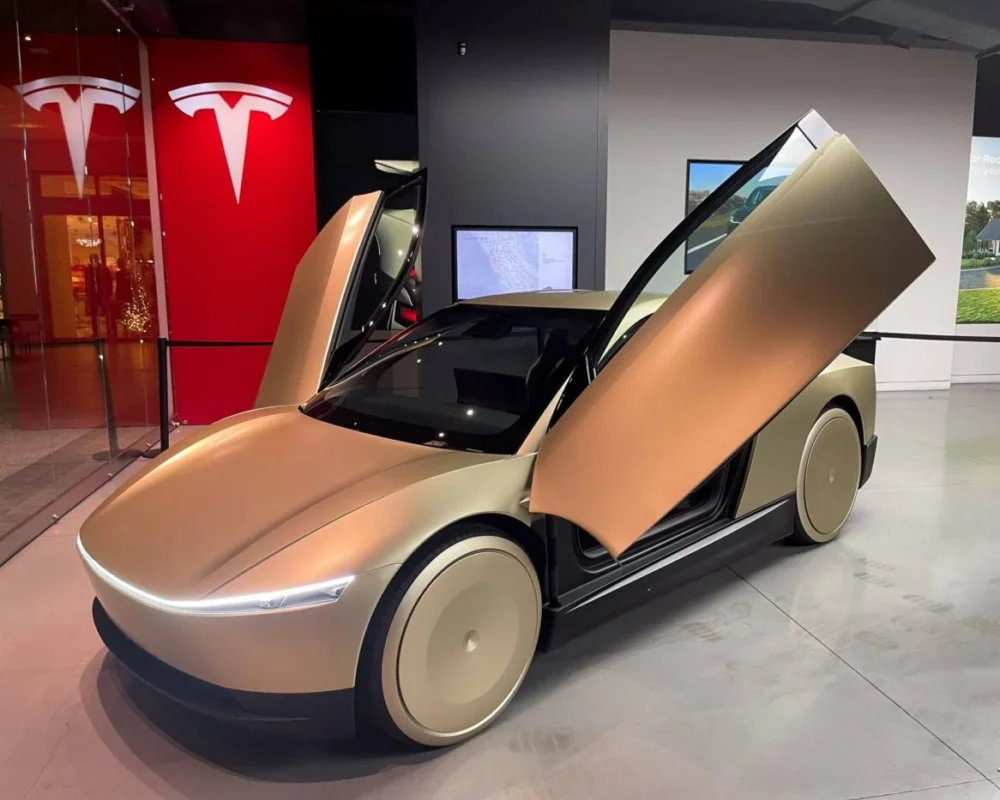
- Thursday’s event will showcase Tesla’s steering-wheel-free Cybercab, purpose-designed for autonomous taxi operations
- The company’s robo-taxi service debuted in Austin during June 2025 with Model Y vehicles, though expansion has remained gradual
- Morgan Stanley’s Equal Weight rating and $400 price target remain unchanged, with analysts cautioning that a basic product reveal may not drive significant stock movement
- Year-to-date, TSLA has dropped nearly 20% and remains approximately 30% off its late-2025 peak values
Shares of Tesla (TSLA) retreated 1.5% during Wednesday’s early session to $350.80 as market participants anticipated Thursday’s Cybercab event taking place in Austin, Texas.
While the S&P 500 and Dow Jones posted gains of 0.2% and 0.4% respectively during the identical timeframe, Tesla’s pullback was particularly noticeable.
Recent trading sessions have shown considerable volatility. The stock surged 5.5% Monday before declining 3.2% Tuesday. These price fluctuations seem closely connected to autonomous vehicle developments and Thursday’s upcoming presentation.
The Cybercab represents Tesla’s dedicated autonomous taxi vehicle. Without a traditional steering wheel and relying solely on camera-based sensors, production commenced earlier this year.

The Thursday presentation is anticipated to officially integrate the Cybercab into Tesla’s operational robo-taxi network, which presently deploys Model Y vehicles throughout Austin, Miami, Dallas, and other markets.
The company’s autonomous taxi service made its Austin debut in June 2025. TSLA closed near $349 following that initial launch. Subsequent expansion has proceeded cautiously, with fleet size estimated at several hundred vehicles spread across multiple metropolitan areas.
Comparing Tesla’s Approach to Waymo’s Strategy
Meanwhile, Alphabet’s Waymo has deployed thousands of autonomous taxis throughout more than twelve American cities, utilizing comprehensive sensor arrays that incorporate lidar systems.
Tesla’s camera-exclusive strategy aims to reduce expenses. The underlying thesis suggests lower vehicle costs will provide competitive advantages once autonomous taxis primarily compete on pricing against one another instead of traditional ride-hailing services like Uber.
Annual American driving totals exceed three trillion miles. Should robo-taxi pricing reach as low as 50 cents per mile, industry observers believe a trillion-dollar addressable market could emerge.
Tesla’s present market capitalization incorporates investor assumptions that the company will secure substantial portions of this potential opportunity.
Analyst Sentiment Remains Measured
Morgan Stanley’s Andrew Percoco observed before the event that Tesla’s previous product demonstrations have generated varying market responses. He indicated that a standard Cybercab presentation alone probably won’t catalyze substantial share price appreciation.
Percoco sustained his Equal Weight rating on TSLA while preserving his $400 twelve-month price objective.
Tesla’s promotional efforts surrounding Thursday’s event have intensified since late August, emphasizing safety features and autonomous driving capabilities. However, concrete information regarding the event’s specific agenda has stayed scarce.
TSLA has retreated approximately 20% during 2026 and currently trades roughly 30% beneath its late-2025 highs. The stock advanced about 9% throughout August, although market observers linked that movement primarily to post-earnings momentum rather than Cybercab enthusiasm.
By Wednesday morning, TSLA was changing hands at $350.80.
Get 3 Free Stock Ebooks
Discover top-performing stocks in AI, Crypto, and Technology with expert analysis.
- Top 10 AI Stocks - Leading AI companies
- Top 10 Crypto Stocks - Blockchain leaders
- Top 10 Tech Stocks - Tech giants


