


Quick Overview
- Solana stands as a leading Ethereum alternative with partnerships including Visa, PayPal, and Worldpay
- Chainlink delivers critical oracle services that bridge blockchains with real-world financial information
- Ondo Finance’s tokenized asset platform exceeded $500 million in value covering 200+ securities
- Each token offers legitimate use cases alongside significant volatility exposure
- Portfolio strategy suggests weighting Solana heaviest, with Chainlink and Ondo as supplementary holdings
As cryptocurrency enthusiasts prepare for the next market upswing, attention increasingly turns toward projects demonstrating tangible utility and real-world traction. Three altcoins consistently mentioned by market analysts as meeting these standards are Solana, Chainlink, and Ondo Finance.
Solana: Performance, Scalability, and Corporate Support
Solana has established itself as a formidable challenger to Ethereum’s dominance. The platform was engineered to process substantial transaction volumes at high speeds with minimal costs, making it particularly attractive for decentralized exchanges, payment systems, stablecoin operations, and blockchain gaming.
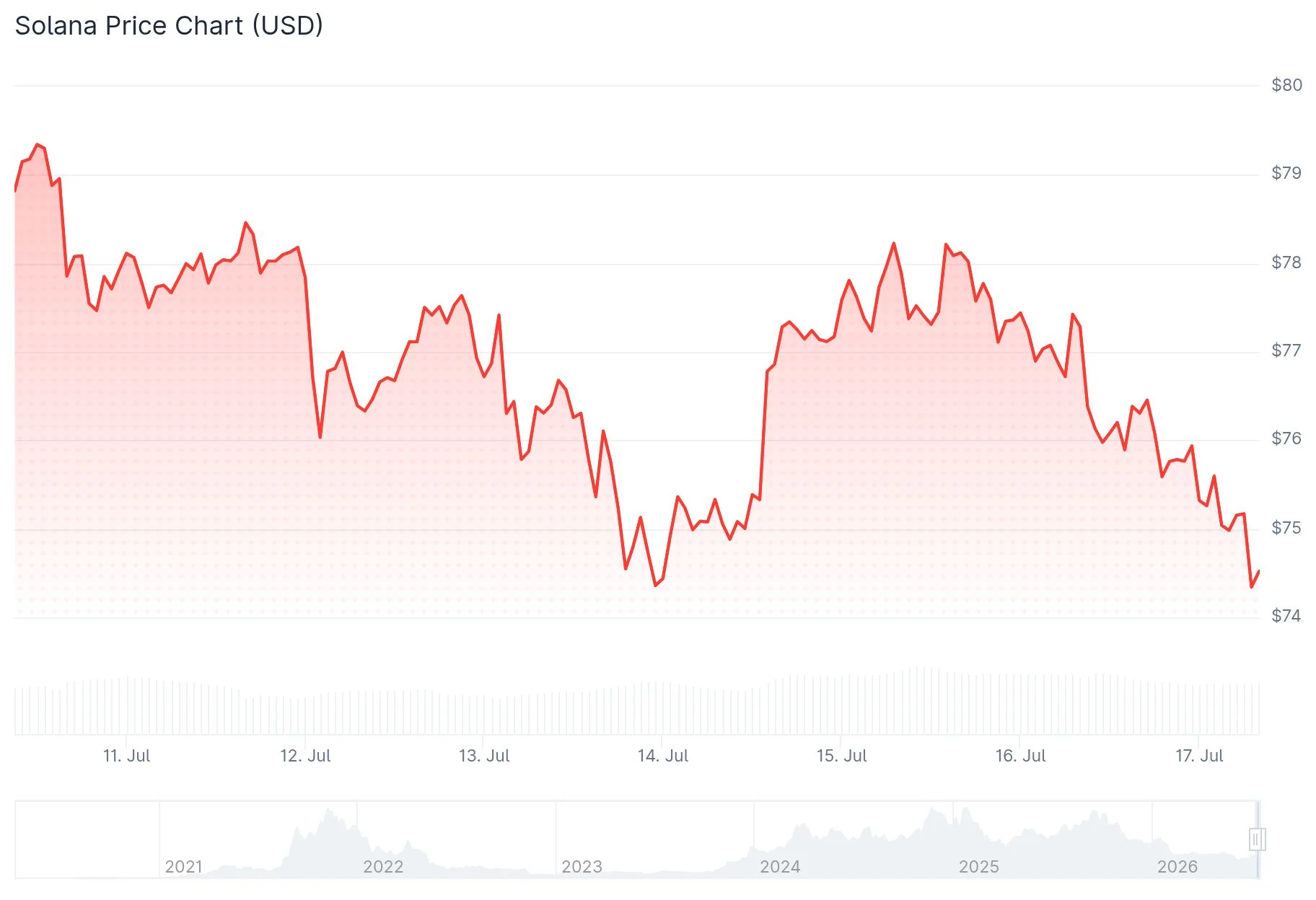
Solana’s architectural strength lies in its streamlined approach. The majority of decentralized applications operate within a unified ecosystem, contrasting sharply with Ethereum’s fragmented landscape where users frequently bridge assets between the mainnet and various layer-2 scaling solutions.
This user-friendly infrastructure has drawn significant interest from traditional finance giants. Notable partnerships listed on Solana’s official website include Visa, PayPal, Circle, Western Union, and Worldpay.
The native SOL token serves multiple functions: covering network fees, enabling staking participation, and maintaining network security. Increased blockchain activity could naturally elevate SOL demand.

However, substantial risks exist. Much of Solana’s historical transaction volume originated from memecoin speculation and high-frequency trading—activities that typically evaporate during bearish market conditions. The network also experienced multiple outages previously, although stability has notably improved recently.
Chainlink: Essential Blockchain Infrastructure
Chainlink functions as critical backend infrastructure for decentralized finance ecosystems. Smart contracts require external information—asset prices, benchmark rates, proof-of-reserves verification—which Chainlink’s decentralized oracle network delivers reliably.
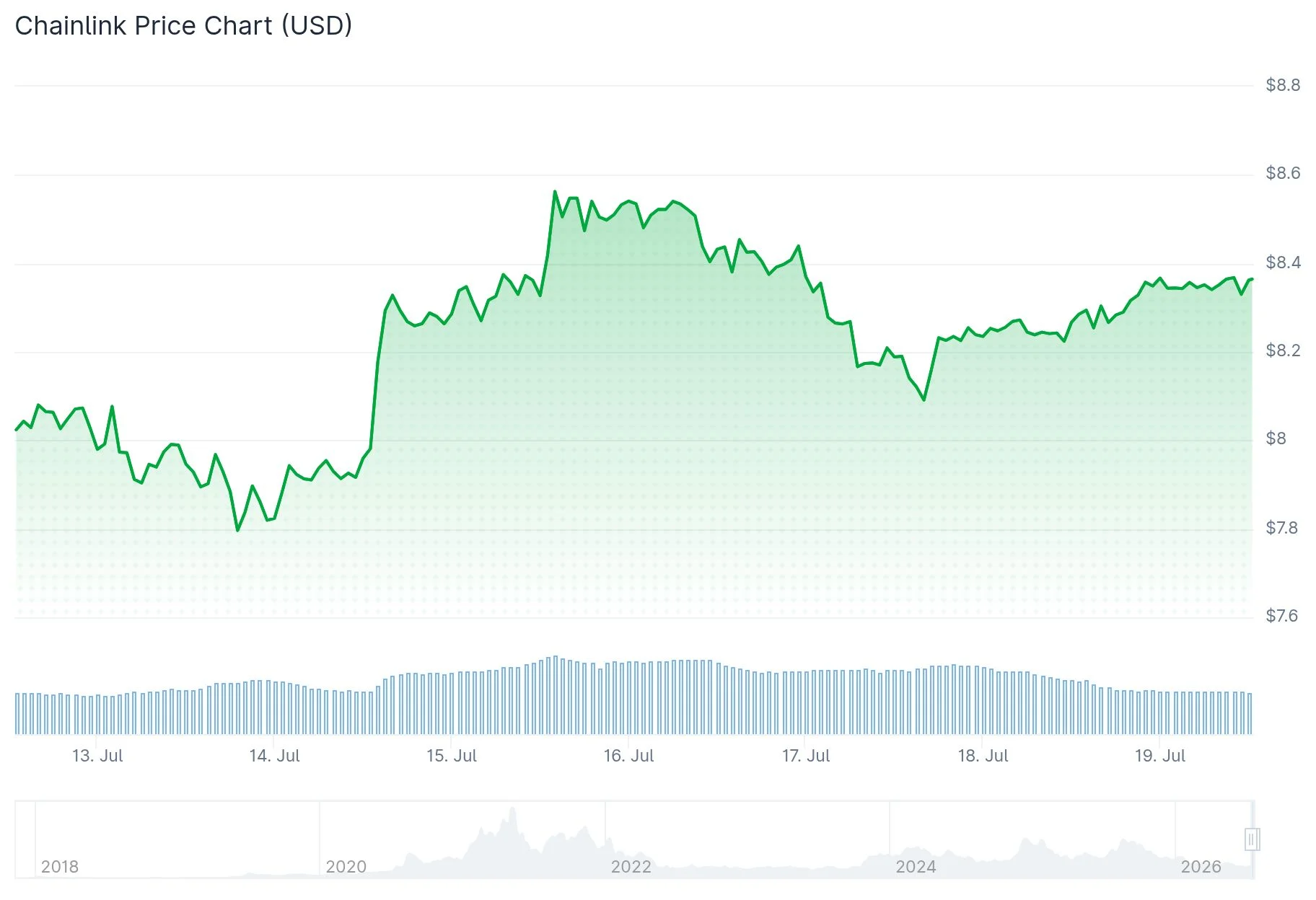
The project is aggressively expanding into traditional finance sectors. Its Cross-Chain Interoperability Protocol (CCIP) aims to facilitate seamless data and asset transfers between disparate blockchain networks for institutional clients.
This strategic positioning places Chainlink at the center of the broader asset tokenization movement, extending well beyond decentralized finance applications. As financial instruments become distributed across various blockchains and permissioned ledgers, reliable interoperability solutions may prove indispensable.
The critical uncertainty centers on whether expanding network usage translates directly into LINK token demand. This economic relationship isn’t necessarily guaranteed.
Major financial institutions might alternatively develop proprietary solutions, while competing oracle providers continue vying for market share.
Ondo Finance: Bridging Traditional Assets to Blockchain
Ondo Finance specializes in migrating conventional financial assets—including US Treasury securities, equities, and exchange-traded funds—onto blockchain infrastructure.
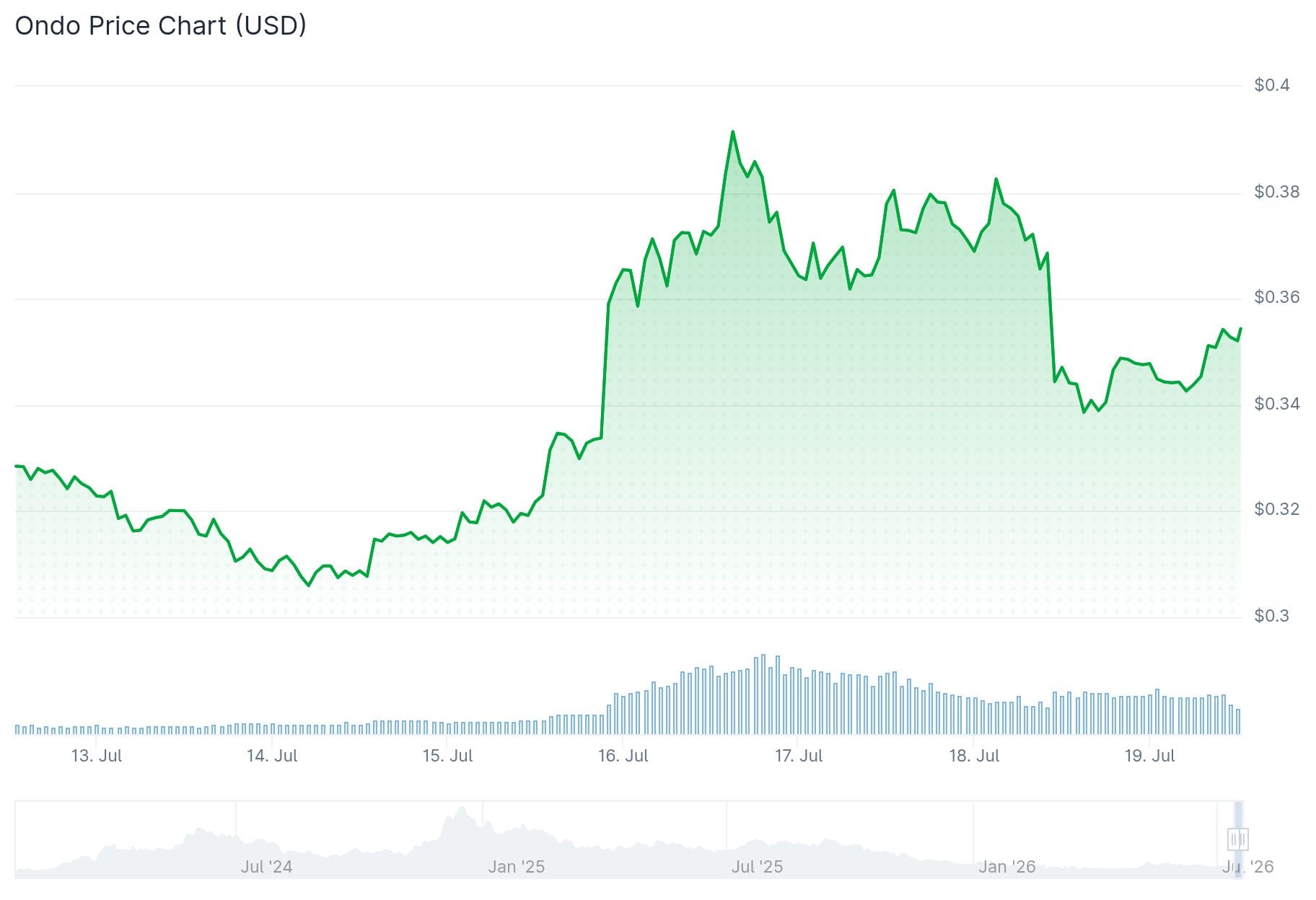
In January 2026, Ondo announced its tokenized securities platform had surpassed $500 million in aggregate value spanning over 200 distinct assets, generating more than $7 billion in cumulative transaction volume since launching in September 2025.
Ondo recently collaborated with Broadridge to establish a US-based framework for tokenizing third-party securities. Qualified token holders now gain access to shareholder voting privileges, effectively merging blockchain technology with established regulatory frameworks.
Should asset tokenization achieve widespread adoption in traditional finance, Ondo appears strategically positioned. However, the ONDO token doesn’t represent company equity. Token holders don’t directly benefit from the platform’s revenue growth.
Scheduled token unlocks, evolving regulatory landscapes, and potential competition from established banks or asset management firms represent considerable headwinds. Market experts recommend treating ONDO as a speculative allocation rather than a foundational portfolio component.
Comparing the Three Altcoins
Solana presents the most comprehensive blend of transaction capacity and mainstream acceptance. Chainlink delivers exposure to cross-chain infrastructure spanning numerous blockchain ecosystems. Ondo carries elevated risk but potentially substantial rewards if tokenization gains momentum.
All three assets exhibit pronounced price volatility. Strong fundamental characteristics provide no immunity during broader cryptocurrency market corrections.
Get 3 Free Stock Ebooks
Discover top-performing stocks in AI, Crypto, and Technology with expert analysis.
- Top 10 AI Stocks - Leading AI companies
- Top 10 Crypto Stocks - Blockchain leaders
- Top 10 Tech Stocks - Tech giants


