


Key Takeaways
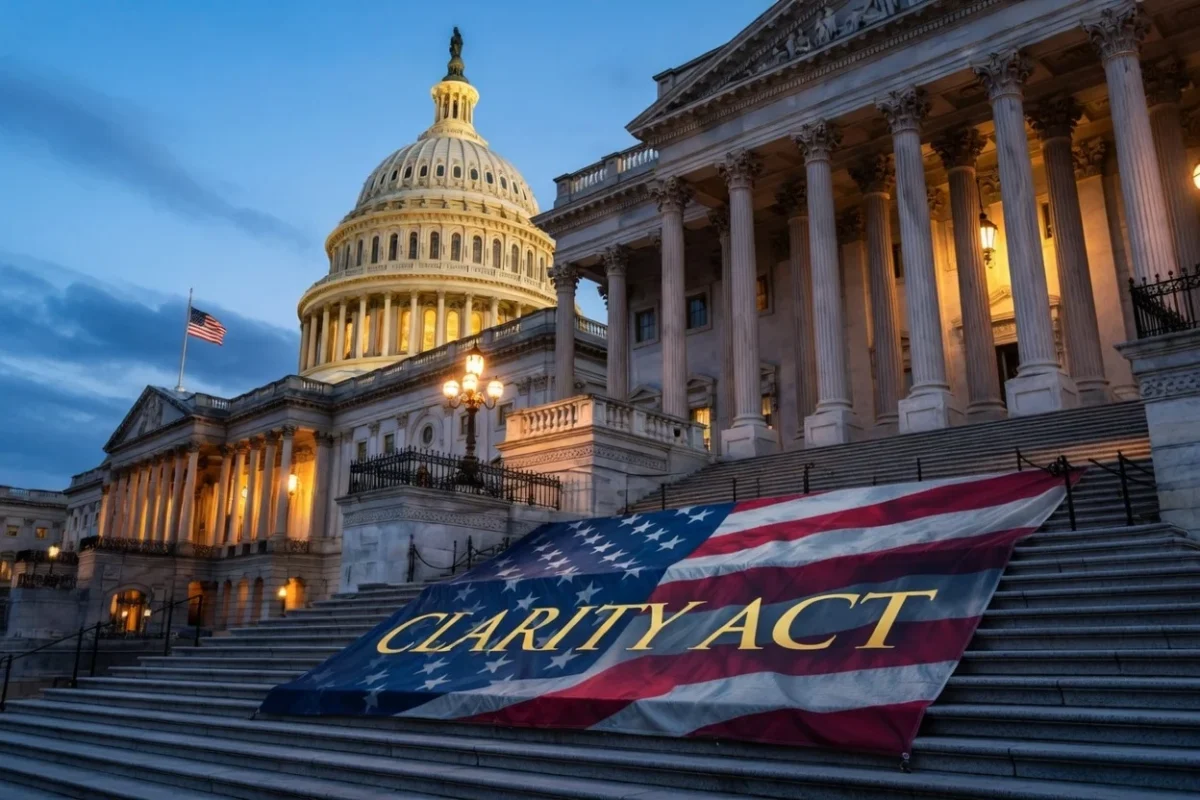
- President Trump declared on Truth Social that the CLARITY Act will cement digital asset regulations and prevent future governments from dismantling them.
- Treasury Secretary Scott Bessent is pressuring lawmakers in both chambers to expedite the legislation, emphasizing the need to regulate crypto domestically.
- Senator Cynthia Lummis highlighted that without this legislation, cryptocurrency holders lack protected rights when exchanges face insolvency.
- Polymarket traders currently assess a 57% probability of the CLARITY Act becoming law in 2026, rebounding from 49% but below the 75% peak.
- The legislation confronts a critical June 2026 Senate voting deadline and requires bipartisan backing to succeed.
The Trump administration and senior officials are escalating efforts to convince Congress to approve the Digital Asset Market Clarity Act. Here’s a breakdown of the current situation and its implications.
Administration Mounts Aggressive Campaign for Legislation
President Donald Trump took to Truth Social this week, declaring his intention to establish permanent digital asset regulations via the CLARITY Act. According to Trump, the legislation would shield crypto frameworks from being dismantled by “crypto haters” who might occupy the White House in coming years.
Treasury Secretary Scott Bessent echoed this position during discussions with legislators. He emphasized the critical need for comprehensive definitions of digital assets and domestic oversight of cryptocurrency operations.
“When you look at digital assets, all the nonsense that happens, that’s because it’s the wild, wild west offshore,” Bessent stated. He stressed the importance of bringing these activities under U.S. jurisdiction.
Bessent also made clear that a central bank digital currency remains off the table during Trump’s tenure. He characterized a government-backed digital dollar as “the first step toward tracking.”
The Treasury Secretary noted growing bipartisan momentum for the CLARITY Act and called on both the Senate and House to accelerate its passage.
Current Legislative Status
The CLARITY Act secured House approval in July 2025. Since then, its Senate progress has stalled due to federal budget impasses, opposition from certain industry stakeholders, and scrutiny surrounding potential Trump family conflicts of interest.

The Trump family maintains ties to various cryptocurrency ventures, including memecoin initiatives, the World Liberty Financial platform with its USD1 stablecoin, and Bitcoin mining operations.
Both the Senate Agriculture Committee and Senate Banking Committee have approved the bill following separate markup sessions in January and May. However, a full Senate floor vote remains pending, and Republicans’ narrow majority necessitates Democratic cooperation for passage.
Several Democratic senators have indicated they will oppose the measure unless it incorporates more robust ethical safeguards.
Senator Cynthia Lummis from Wyoming emerged as another vocal advocate this week, positioning the legislation as essential consumer protection.
“Without the Clarity Act, if a digital asset exchange goes bankrupt, customers have no guaranteed right to their own assets,” Lummis explained. She further cautioned that software developers could again face criminal charges merely for releasing code if the bill doesn’t pass.
The legislation must secure a Senate floor vote by June 2026.
Market Response
Bitcoin declined from above $74,000 to under $73,000 following Trump’s social media announcement. As of this writing, it was changing hands at $73,467.
Polymarket bettors currently place the likelihood of the CLARITY Act becoming law in 2026 at 57%. This represents an increase from the 49% low recorded after Senate proceedings were postponed, though it remains below the 75% high water mark.
In another development, Trump commented on ongoing litigation concerning prediction markets including Kalshi and Polymarket, supporting the Commodity Futures Trading Commission’s assertion of sole regulatory authority over these platforms. Notably, Donald Trump Jr. serves as an adviser to both companies.
Get 3 Free Stock Ebooks
Discover top-performing stocks in AI, Crypto, and Technology with expert analysis.
- Top 10 AI Stocks - Leading AI companies
- Top 10 Crypto Stocks - Blockchain leaders
- Top 10 Tech Stocks - Tech giants


