


TLDRs
- Verizon fell as Supreme Court ruling increased telecom regulatory uncertainty.
- Strong dividend yield continues attracting income-focused investors despite risks.
- Broader telecom sector weakness followed legal setback and market pressure.
- Debt strategy and guidance updates offer partial support to outlook.
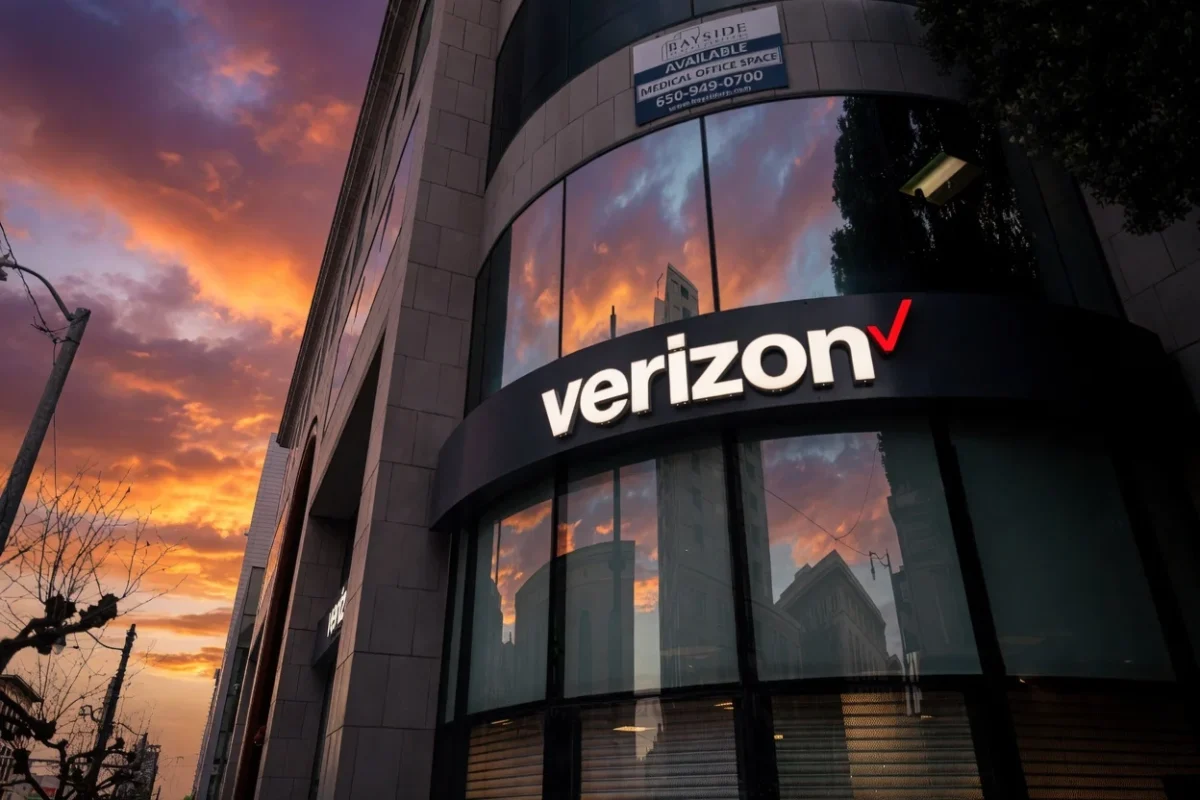
Verizon Communications Inc. came under notable selling pressure on Thursday as investors digested a fresh U.S. Supreme Court decision that added uncertainty across the telecom regulatory landscape.
Shares of the company fell 3.8% to $44.87, underperforming a broadly positive U.S. equity session where the S&P 500 and Dow Jones Industrial Average both closed higher.
The ruling, which sided against Verizon and AT&T in their challenge to Federal Communications Commission (FCC) enforcement powers, intensified concerns about future regulatory exposure for major wireless carriers. Although the decision does not immediately impose new penalties, it reinforces the agency’s authority to pursue enforcement actions related to past and ongoing disputes.
Market participants interpreted the outcome as another layer of legal overhang for a sector already facing scrutiny over data privacy and compliance practices.
Verizon Communications Inc., VZ
Dividend Strength Draws Investors
Despite the negative sentiment, Verizon continues to position itself as a defensive income-focused stock, supported by a substantial dividend yield of approximately 6.3%. The company recently reaffirmed its quarterly payout of 70.75 cents per share, with management describing its dividend commitment as “ironclad.”

This strong yield remains a key attraction for investors seeking stable income in a volatile interest-rate environment. However, analysts note that high dividend yields can also reflect underlying concerns about growth prospects and capital structure pressures.
Verizon’s status as a traditional dividend-heavy telecom name means its share price is particularly sensitive to shifts in bond yields, macroeconomic expectations, and regulatory risks, all of which are currently in play.
Broader Market Contrast Emerges
The decline in Verizon stock was especially notable given the broader market strength. The Dow Jones Industrial Average surged 1.73% to a record close, while the S&P 500 gained 0.41%. The Nasdaq Composite, however, slipped slightly as semiconductor stocks weakened.
Within the telecom sector, weakness was widespread. AT&T fell 3.2% and T-Mobile US declined 2.4%, indicating that the pressure was not isolated to Verizon but rather tied to industry-wide concerns following the Supreme Court decision.
Still, Verizon’s sharper drop suggested investors were more cautious about its balance between defensive dividend appeal and growing legal and competitive risks.
Debt Strategy and Business Outlook
Beyond regulatory headlines, Verizon has also been active on the capital management front. The company recently advanced a debt tender program involving 20 separate offers to repurchase outstanding securities. The move is part of a broader effort to optimize its balance sheet, manage refinancing risk, and control interest expenses.
While such buyback initiatives are generally viewed as supportive of financial stability, they also highlight the scale of Verizon’s existing debt load, which remains a long-term concern for equity holders.
Operationally, the company has shown signs of stabilization, including an improvement in postpaid phone net additions earlier this year and an upgraded earnings outlook for 2026. However, executives have also acknowledged risks tied to competition, cybersecurity threats, interest rates, and ongoing legal exposure.
Market Weighs Two Competing Narratives
Investors are increasingly torn between two competing interpretations of Verizon’s outlook. On one hand, the company offers a relatively high dividend yield and stable cash flow profile, characteristics that appeal to income-oriented portfolios.
On the other hand, regulatory uncertainty, persistent competition in the U.S. wireless market, and a substantial debt burden continue to weigh on sentiment. The Supreme Court ruling has amplified these concerns at a time when investors are already reassessing risk across defensive telecom names.
For now, Verizon remains in a transitional narrative phase, caught between its identity as a reliable dividend payer and the growing complexities of operating in a highly regulated, capital-intensive industry.
Get 3 Free Stock Ebooks
Discover top-performing stocks in AI, Crypto, and Technology with expert analysis.
- Top 10 AI Stocks - Leading AI companies
- Top 10 Crypto Stocks - Blockchain leaders
- Top 10 Tech Stocks - Tech giants


