



Key Takeaways
- June payroll growth totaled only 57,000 positions, falling far short of the 113,000 consensus estimate.
- Major indices advanced following the data release, with the Dow posting approximately 0.7% gains.
- Jobless rate declined modestly to 4.2%, versus expectations it would remain at 4.3%.
- Federal Reserve Chairman Kevin Warsh advised market participants to focus on economic indicators rather than central bank signals.
- Market-implied probability of unchanged rates through December climbed to 21.7%, per CME FedWatch Tool data.
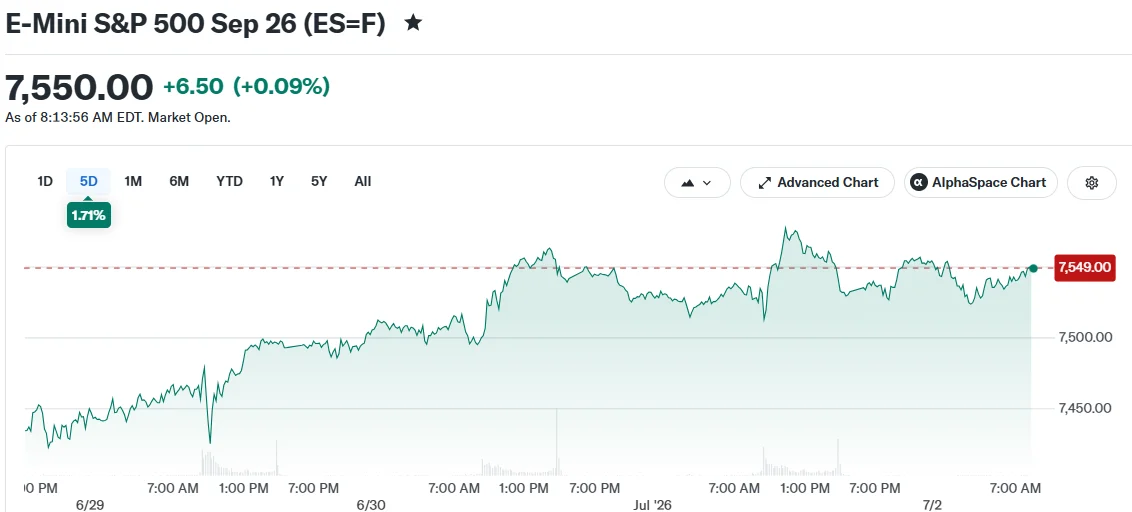
Equity markets posted solid gains Thursday following the release of a disappointing June employment report that suggested the Federal Reserve might maintain its current interest rate stance longer than previously anticipated.
The Dow Jones Industrial Average advanced approximately 370 points, representing a 0.7% increase. The S&P 500 climbed 0.6%, while the Nasdaq Composite posted a 0.5% gain during morning trading hours.
Employment Data Falls Significantly Below Projections
According to the Labor Department’s latest release, the American economy generated 57,000 new positions during June. This figure came in well below the 113,000 jobs economists had projected, marking a considerable deceleration from hiring patterns observed over the prior three-month period.
The unemployment metric registered at 4.2%, representing a slight decline from the 4.3% level analysts had anticipated remaining unchanged.
This softer employment figure marked the end of a robust three-month stretch of strong labor market performance. The unexpected weakness immediately altered market expectations regarding the Federal Reserve’s policy trajectory.

Fed Chairman Kevin Warsh recently advised Wall Street participants to concentrate on incoming economic indicators instead of attempting to interpret central bank communications. Thursday’s employment data provided market participants with tangible information to assess.
Chris Zaccarelli, serving as chief investment officer at Northlight Asset Management, suggested the weaker hiring momentum might cause even the more hawkish Federal Reserve policymakers to reevaluate aggressive rate increase timelines.
According to the CME FedWatch Tool, the probability that interest rates will remain unchanged through year-end increased to 21.7%. However, market participants continue pricing in the possibility of at least one rate increase during 2025.
Treasury markets reacted to the employment data. The 2-year yield declined to 4.15%, while the benchmark 10-year yield increased slightly to 4.49%. The U.S. dollar experienced weakness following the report.
Technology Sector Experiences Headwinds From Semiconductor Weakness
Despite broader market strength, technology stocks encountered resistance. The Nasdaq underperformed relative to both the Dow and S&P 500 during the trading session.
Significant declines among South Korean semiconductor manufacturers dampened technology sector sentiment. The Kospi index plummeted 7.9%. SK Hynix shares tumbled more than 14%, while Samsung Electronics declined over 9%. Both semiconductor giants had recently unveiled substantial artificial intelligence investment initiatives.
Microsoft shares demonstrated resilience within the technology sector, posting gains despite broader weakness among peer companies.
Oil prices declined after Qatar, serving as mediator in U.S.-Iran nuclear negotiations, characterized this week’s diplomatic discussions as constructive. While no formal agreement materialized, the overall tone was interpreted positively.
With U.S. financial markets scheduled to close Friday in observance of Independence Day, some market participants appeared to be adjusting positions in anticipation of the extended holiday weekend.
As of midday trading, the S&P 500 stood at 7,501. The Dow reached 52,757, while the Nasdaq traded at 25,992.
Get 3 Free Stock Ebooks
Discover top-performing stocks in AI, Crypto, and Technology with expert analysis.
- Top 10 AI Stocks - Leading AI companies
- Top 10 Crypto Stocks - Blockchain leaders
- Top 10 Tech Stocks - Tech giants


