


A significant transformation is underway in the online gambling sector. As player demands evolve at an accelerating pace, traditional platforms struggle to keep up, resulting in increased search interest for alternatives to industry giants. FanDuel, a dominant force in the North American market, sits at the epicenter of this shifting landscape. The platform isn’t faltering—rather, players are discovering that newer options now exist offering features previously unavailable. Among these emerging alternatives, ZunaBet stands out as a particularly compelling choice. Launched in 2026, this crypto-centric casino and sportsbook presents a feature portfolio that fundamentally questions the established practices long-standing operators have depended upon.
FanDuel’s Established Market Position
FanDuel requires little introduction to anyone following US gambling markets. The brand represents one of America’s most aggressively marketed betting platforms. Its transformation from a daily fantasy sports pioneer into a comprehensive sportsbook and casino provider represents a textbook industry success narrative. With licenses spanning numerous US jurisdictions and strategic partnerships with leading professional sports leagues, FanDuel maintains exceptional visibility among millions of sports enthusiasts.
From a product perspective, FanDuel delivers consistency. The sportsbook covers extensive ground, including NFL, NBA, MLB, NHL, collegiate competitions, plus various international sporting events and tournaments. Its casino division offers a well-selected range of slot machines, table games, and live dealer options. The mobile application demonstrates polish and solid performance. Support channels remain accessible and typically responsive.
The payment structure follows traditional patterns. Users can utilize bank transfers, debit cards, credit cards, PayPal, Venmo, and similar mainstream methods. While these work adequately for most customers, they incorporate the inherent constraints of conventional financial systems—processing windows, transaction charges, and identity verification protocols that can restrict rapid fund access.
FanDuel has constructed a robust offering for its intended audience. However, the marketplace itself continues shifting, and precisely where FanDuel maintains conventional approaches represents where newer competitors choose to differentiate. Game collection depth, payment velocity, fee structures, and loyalty framework design have emerged as critical competitive dimensions, with recent market entrants demonstrating distinct advantages across these fronts.

ZunaBet’s Market Entry Strategy
When ZunaBet launched in 2026, it signaled clear intentions to establish itself as a major player rather than a niche operator. Strathvale Group Ltd owns the platform, which benefits from a management team possessing over two decades of industry expertise, operating under an Anjouan gaming license. With registration in Belize, the platform was purpose-built to serve an international, cryptocurrency-literate player base.
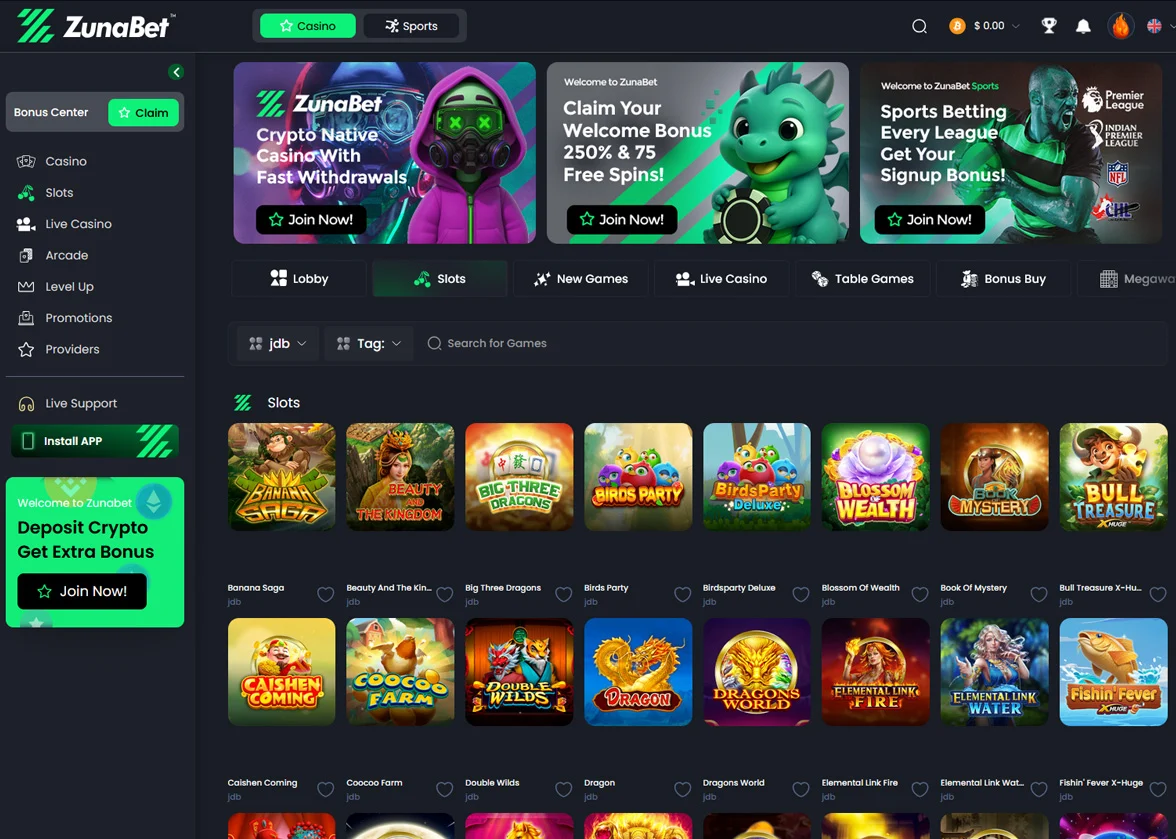
The launch scale proved exceptional for a newcomer. ZunaBet debuted with an impressive catalog of 11,294 games drawn from 63 distinct providers. For perspective, numerous established operators require years to construct libraries approaching these figures. The provider lineup features recognizable industry leaders players trust—Pragmatic Play, Evolution, Hacksaw Gaming, Yggdrasil, and BGaming among many others. The collection encompasses slots, which constitute the library’s core, alongside comprehensive RNG table game selections and live dealer environments. Users can navigate between game categories without encountering gaps in quality or variety.
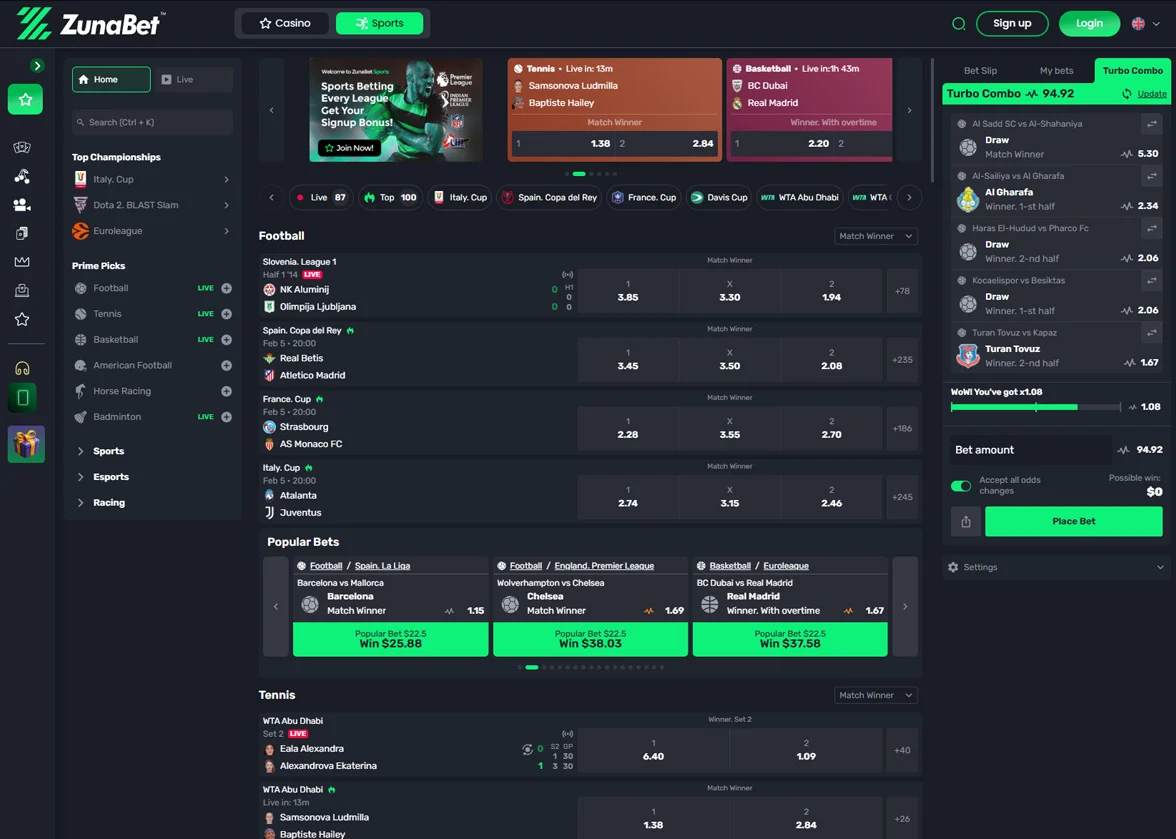
The sportsbook component mirrors the casino’s comprehensive approach. Football, basketball, tennis, NHL, virtual sports, and combat disciplines receive extensive coverage. Notably, esports receives substantial focus with betting markets across CS2, Dota 2, League of Legends, and Valorant. This represents a meaningful strategic choice. The esports betting demographic expands continuously, yet numerous traditional platforms either overlook it completely or provide minimal support. ZunaBet positions esports as a fundamental product category, immediately connecting with younger demographics who prioritize competitive gaming as primary entertainment.
The payment infrastructure constitutes ZunaBet’s most decisive differentiator. The platform accommodates over 20 different cryptocurrencies. Bitcoin, Ethereum, USDT across multiple blockchain networks, Solana, Dogecoin, Cardano, and XRP all receive support. Platform processing fees don’t exist. Withdrawal processing emphasizes speed. The entire financial architecture presumes players prefer cryptocurrency transactions, with every element optimized accordingly. This isn’t a conventional casino retrofitted with crypto capabilities. This platform treats crypto as the primary standard.
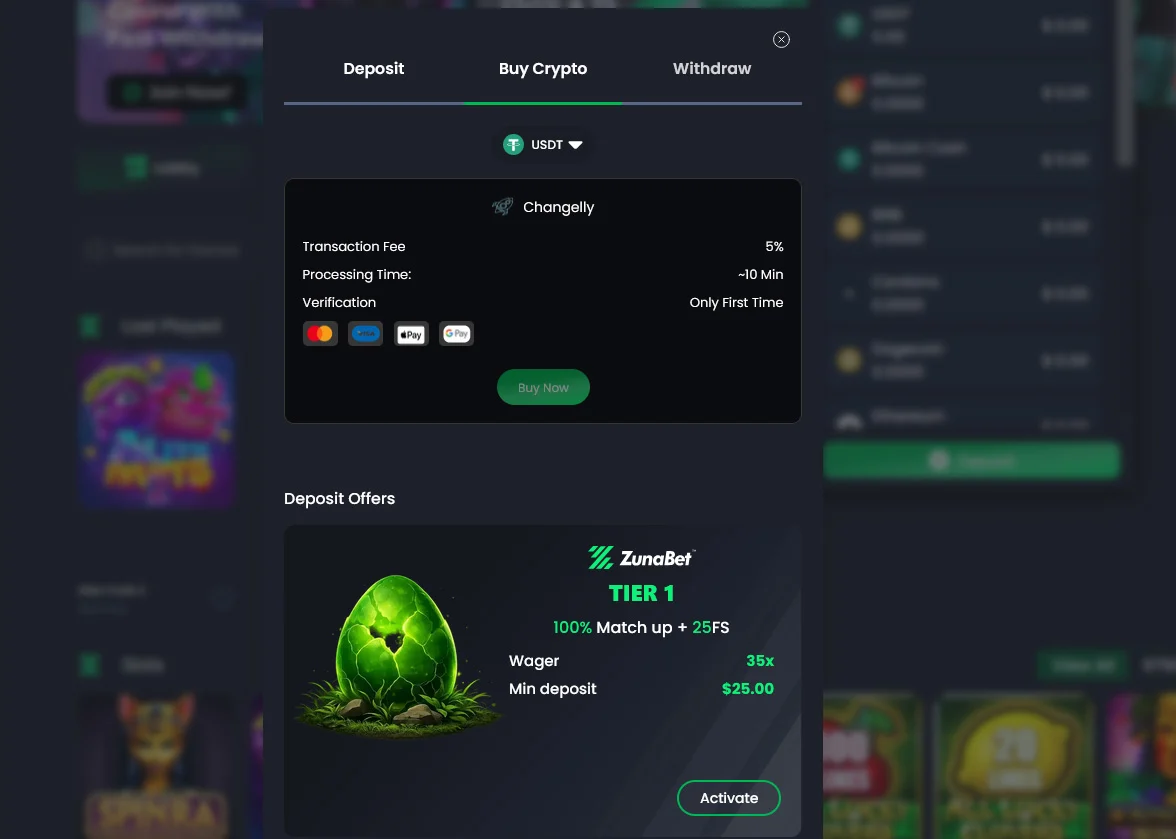
The welcome incentive spreads rewards across three initial deposits instead of concentrating everything into one promotion. The complete package reaches $5,000 plus 75 free spins. The structure unfolds logically—100% match to $2,000 plus 25 spins initially, followed by 50% match to $1,500 plus 25 spins, then 100% match to $1,500 plus 25 spins. This graduated methodology motivates players to return and continue platform exploration rather than claiming a single bonus before departing.
From a technical standpoint, ZunaBet operates on HTML5 technology with a dark-themed interface design, adaptive layout, and rapid loading performance. Native applications exist for iOS, Android, Windows, and MacOS platforms. Live chat assistance functions continuously throughout every day of the year.
How Cryptocurrency Is Reshaping Player Standards
Cryptocurrency’s role in online gambling has progressed far beyond experimental interest. It now represents a functional factor shaping player platform selection.
Traditional payment mechanisms have supported the gambling sector for generations. They provide familiarity, regulatory compliance, and widespread accessibility. They also impose costs and delays that players increasingly reject. Bank withdrawals typically require two to five business days for completion. Credit card deposits may trigger cash advance charges. E-wallet transactions introduce additional cost and delay layers. Every component of traditional payment infrastructure creates friction.
Cryptocurrency eliminates most friction points. Bitcoin or Solana deposits reach player accounts within minutes. Withdrawals return to personal wallets with comparable speed. Banking hours become irrelevant. Intermediary fees disappear from the equation. Transactions occur directly between player and platform, with blockchain technology managing verification automatically and transparently.
ZunaBet’s architecture centers entirely on this paradigm. Because cryptocurrency served as the foundation rather than an afterthought, every payment flow component prioritizes speed and simplicity. No awkward hybrid exists where fiat and crypto systems compete within identical interfaces. The user experience maintains clarity and consistency because the platform never required accommodating traditional banking integration compromises.
This distinction matters practically whenever players deposit or withdraw funds. It also matters strategically as global cryptocurrency adoption continues expanding annually. Platforms designed for crypto today position themselves for mainstream audiences tomorrow as adoption trajectories continue their upward climb.
Loyalty Systems That Actually Captivate Users
Among online gambling components that have resisted meaningful innovation, loyalty programs rank near the top. The formula has remained essentially unchanged for two decades. Players place wagers. They accumulate points. They redeem points for bonuses, free bets, or modest benefits. The framework serves retention purposes but rarely generates authentic excitement. Most users couldn’t identify their current tier or point balance because these systems weren’t designed for memorability.
ZunaBet identified this as a development opportunity and created a loyalty framework that fundamentally differs from industry norms. The dragon evolution program features six progression levels—Squire, Warden, Champion, Divine, Knight, and Ultimate—each delivering escalating rakeback percentages from 1% through 20%. Benefits at each level extend beyond simple cashback. Players unlock free spins scaling to 1,000 at peak tiers, access VIP club privileges, and receive double wheel spin opportunities. A dragon character named Zuno visually represents advancement, transforming in appearance as players ascend through ranks.
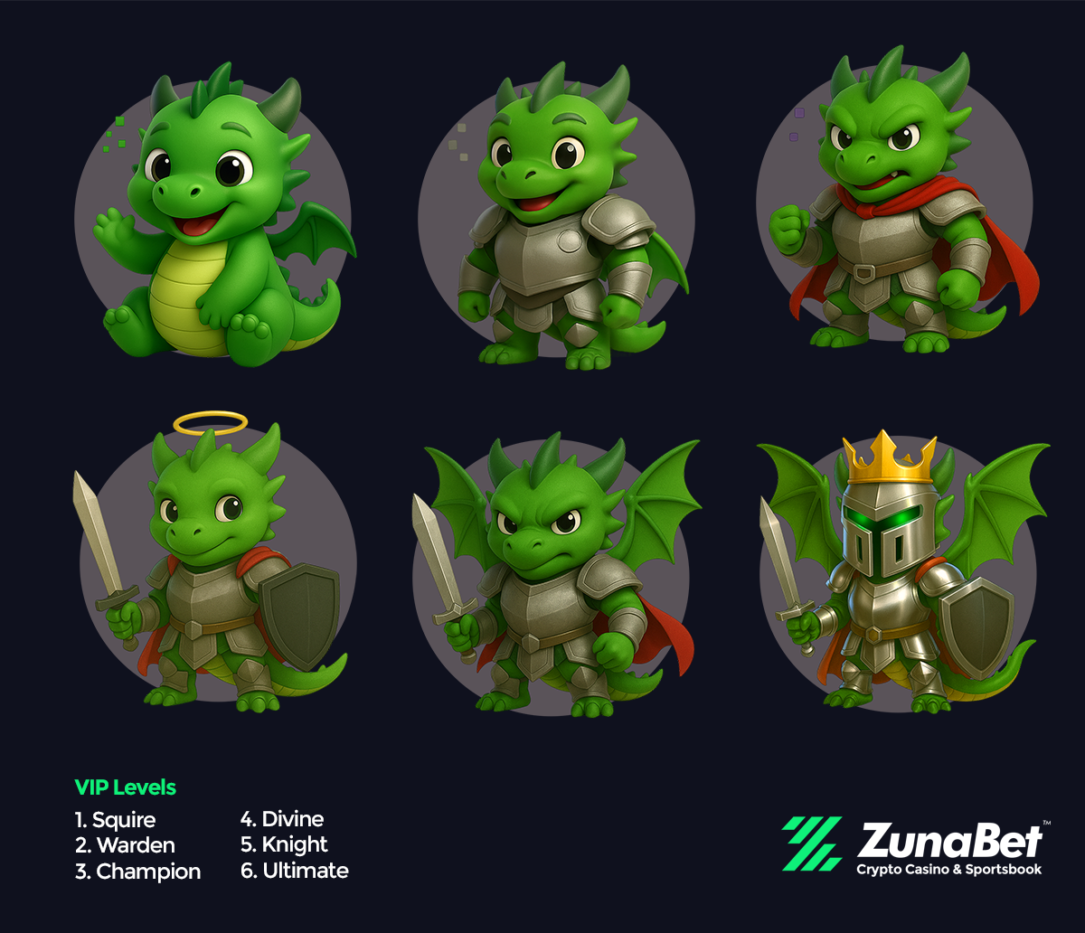
This framework borrows directly from video game design methodology. It employs identical progression mechanics that sustain gamer engagement across decades—transparent advancement, scaling rewards, defined objectives, and personal accomplishment recognition. For players intuitively understanding what progression, content unlocking, and character evolution based on activity means, this approach requires no explanation. It simply resonates.
More critically, it functions distinctly from competitive offerings. Within a landscape where loyalty programs remain largely indistinguishable, possessing one that players genuinely enjoy represents authentic competitive advantage. It transforms retention from a passive function into an active experience component.
Understanding the Broader Industry Movement
Increasing search volume for FanDuel alternatives reflects developments far exceeding any individual platform. The complete online gambling ecosystem experiences generational transition. Players entering the market recently possess fundamentally different behaviors and expectations compared to those joining a decade earlier. They hold cryptocurrency. They anticipate instantaneous transactions. They demand extensive content libraries immediately available. They engage with loyalty frameworks resembling games rather than accounting systems. They follow esports. They transition seamlessly between mobile and desktop devices.
FanDuel was constructed for a different era. It was constructed effectively and continues serving millions of users successfully. However, it wasn’t designed for the emerging market reality. ZunaBet was. Every significant design choice—the crypto-primary payment system, the 11,000-plus game collection, the comprehensive esports sportsbook, the dragon evolution loyalty framework—demonstrates understanding of emerging player priorities.
This alignment between product architecture and audience expectations explains ZunaBet’s recurring appearance in search results. Players aren’t merely seeking FanDuel differentiation. They’re searching for platforms matching their existing lifestyles, transaction preferences, and digital entertainment engagement patterns. ZunaBet was purpose-built to fulfill precisely that requirement, and as discovery accelerates, momentum will intensify accordingly.
Get 3 Free Stock Ebooks
Discover top-performing stocks in AI, Crypto, and Technology with expert analysis.
- Top 10 AI Stocks - Leading AI companies
- Top 10 Crypto Stocks - Blockchain leaders
- Top 10 Tech Stocks - Tech giants


