



Key Highlights
- On July 1, 2026, Arkham Intelligence detected the Winklevoss brothers moving approximately $60M in Bitcoin and $7M in Ethereum to Gemini hot wallets.
- This transfer behavior mirrors previous movements in June ($67.5M) and March ($130M), which Arkham previously connected to potential selling activity.
- Citigroup slashed its Bitcoin 12-month forecast from $112,000 to $82,000, while reducing Ethereum’s target from $3,175 to $2,240.
- Bitcoin dropped to $57,747 briefly, with market analysts cautioning about a possible decline to $50,000 if critical support levels fail; Ethereum posted its weakest monthly close since 2023.
- Blockchain data from analyst Darkfost indicates Bitcoin’s net supply ratio reached -0.075, a metric historically correlated with accumulation zones near market lows.
Blockchain tracking platform Arkham Intelligence disclosed on July 1, 2026, that Cameron and Tyler Winklevoss moved approximately $60 million in Bitcoin alongside $7 million in Ethereum from cold storage wallets to hot wallets associated with Gemini, the cryptocurrency exchange they founded. According to Arkham, this transfer pattern resembles previous activity that preceded liquidation events.
This isn’t the first time the Winklevoss brothers have executed such transfers. A similar movement occurred in June when they moved $67.5 million worth of Bitcoin to Gemini hot wallets. An even larger transfer of $130 million took place in March. Despite these substantial movements, Arkham’s analysis suggests the brothers maintain holdings exceeding $300 million in Bitcoin and have accumulated approximately $1.7 billion in Bitcoin profits dating back to 2015.
Importantly, transferring digital assets from cold storage to hot wallets doesn’t necessarily signal an imminent sale. Institutional holders frequently move cryptocurrency for various operational purposes, such as reorganizing security protocols, facilitating exchange functions, or managing liquidity requirements. No actual sale has been verified at this time.
Bitcoin Encounters Downward Market Forces
These transfers occurred against a backdrop of declining Bitcoin valuations. The cryptocurrency tumbled to $57,747 within the last 24-hour period and hovered around $58,600 as of this report. While trading volume increased by 9%, substantial net outflows totaling $4.5 billion from Bitcoin exchange-traded funds throughout June dampened investor enthusiasm.
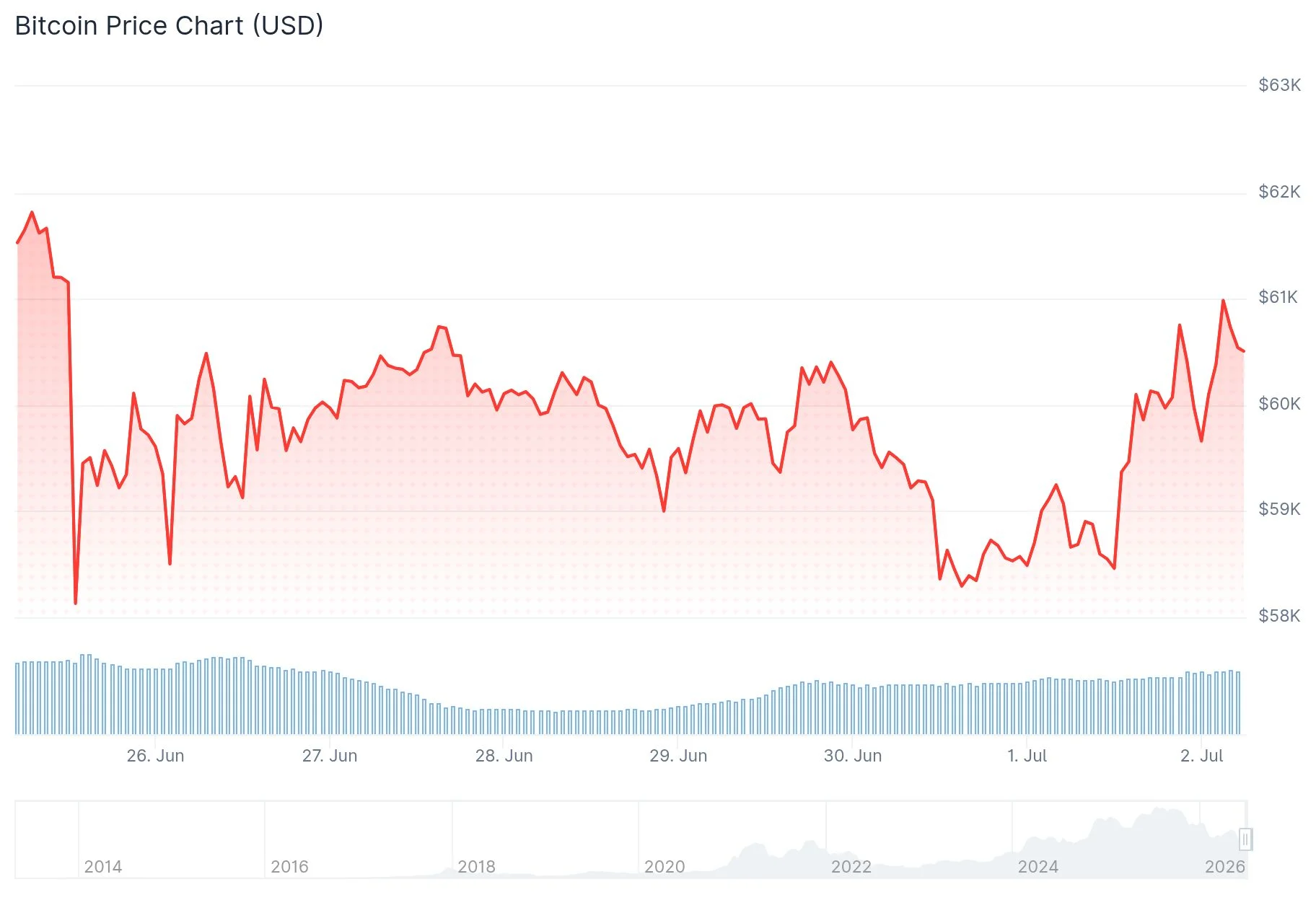
Market analyst Ted Pillows observed that selling pressure continues to dominate the market, highlighting that the Coinbase Bitcoin premium has reached its lowest level during the current market cycle. Pillows cautioned that failure to maintain support between $57,000 and $58,000 could trigger a descent toward $50,000.

Meanwhile, Citigroup revised its cryptocurrency price projections downward. The financial institution reduced its Bitcoin 12-month target from $112,000 to $82,000, while simultaneously cutting its Ethereum projection from $3,175 to $2,240.
Ethereum Performance and Blockchain Metrics
Ethereum declined approximately 1% to trade at $1,572, fluctuating within a daily range of $1,549 to $1,600. Market observer Cheds Trading highlighted that Ethereum closed at its weakest monthly level since 2023. Additionally, the monthly candlestick chart formed a Red Marubozu pattern, traditionally interpreted as a bearish technical indicator.
However, certain blockchain metrics presented a contrarian perspective. Cryptocurrency analyst Darkfost observed that Bitcoin’s net supply ratio, calculated from unspent transaction outputs, declined to -0.075. According to Darkfost, this measurement has historically coincided with favorable accumulation opportunities, with the last comparable reading occurring near the conclusion of the 2022 bear market.
Darkfost acknowledged that Bitcoin might experience additional downside before significant buying interest emerges. Nevertheless, the current metric suggests that selling pressure may be diminishing.
Market analyst Cryptollica provided a comparable assessment regarding Ethereum, emphasizing that the critical question centers on whether existing market structure can maintain support. Should these levels hold, the prevailing low confidence environment could potentially create conditions for a subsequent price recovery.
Get 3 Free Stock Ebooks
Discover top-performing stocks in AI, Crypto, and Technology with expert analysis.
- Top 10 AI Stocks - Leading AI companies
- Top 10 Crypto Stocks - Blockchain leaders
- Top 10 Tech Stocks - Tech giants


