


Key Highlights
- XRP gained approximately 8% over a seven-day period following a rebound from the $1.03 support level
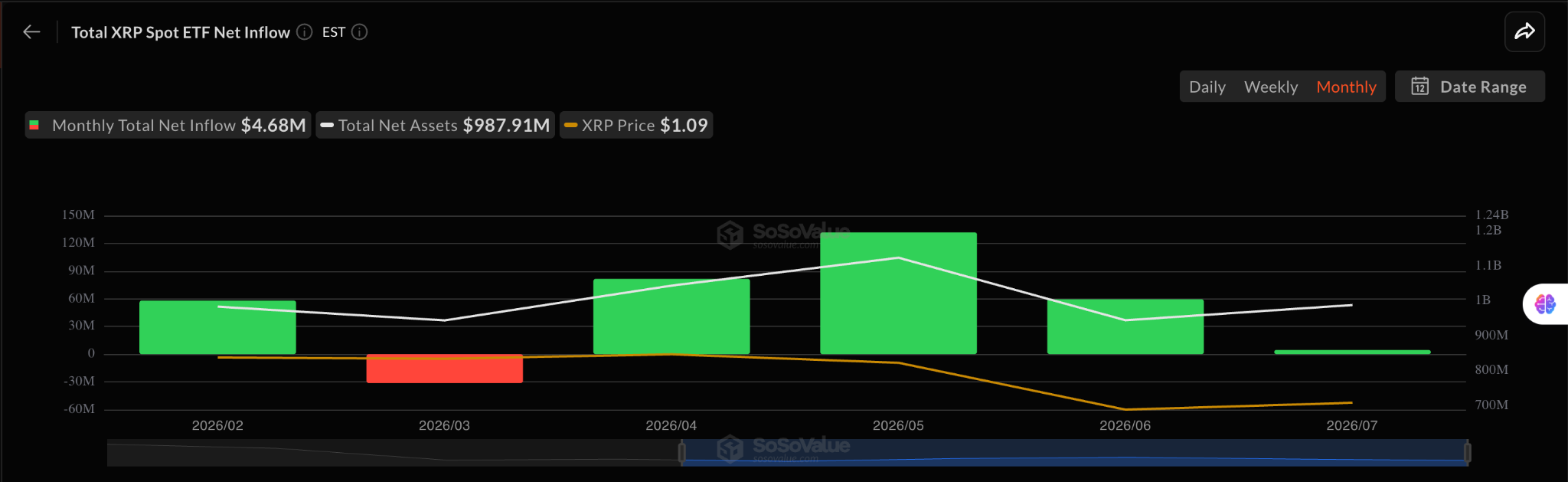
- Spot ETF net inflows decreased by 55% in June, declining from $132 million to $59 million
- The XRP Binance Scarcity Index reached 0.77, marking its highest point in over two years
- XRP reserves on Binance have decreased by 20% since November 2024, currently standing at approximately 2.6 billion tokens
- Critical resistance level identified at $1.20, with upside potential to $1.50 and downside risk to $0.80
XRP has posted an impressive rally of nearly 8% during the last week after establishing strong support at the $1.03 price point. The digital asset is currently exchanging hands above $1.15, successfully reclaiming a threshold that served as a foundation before the June market correction.
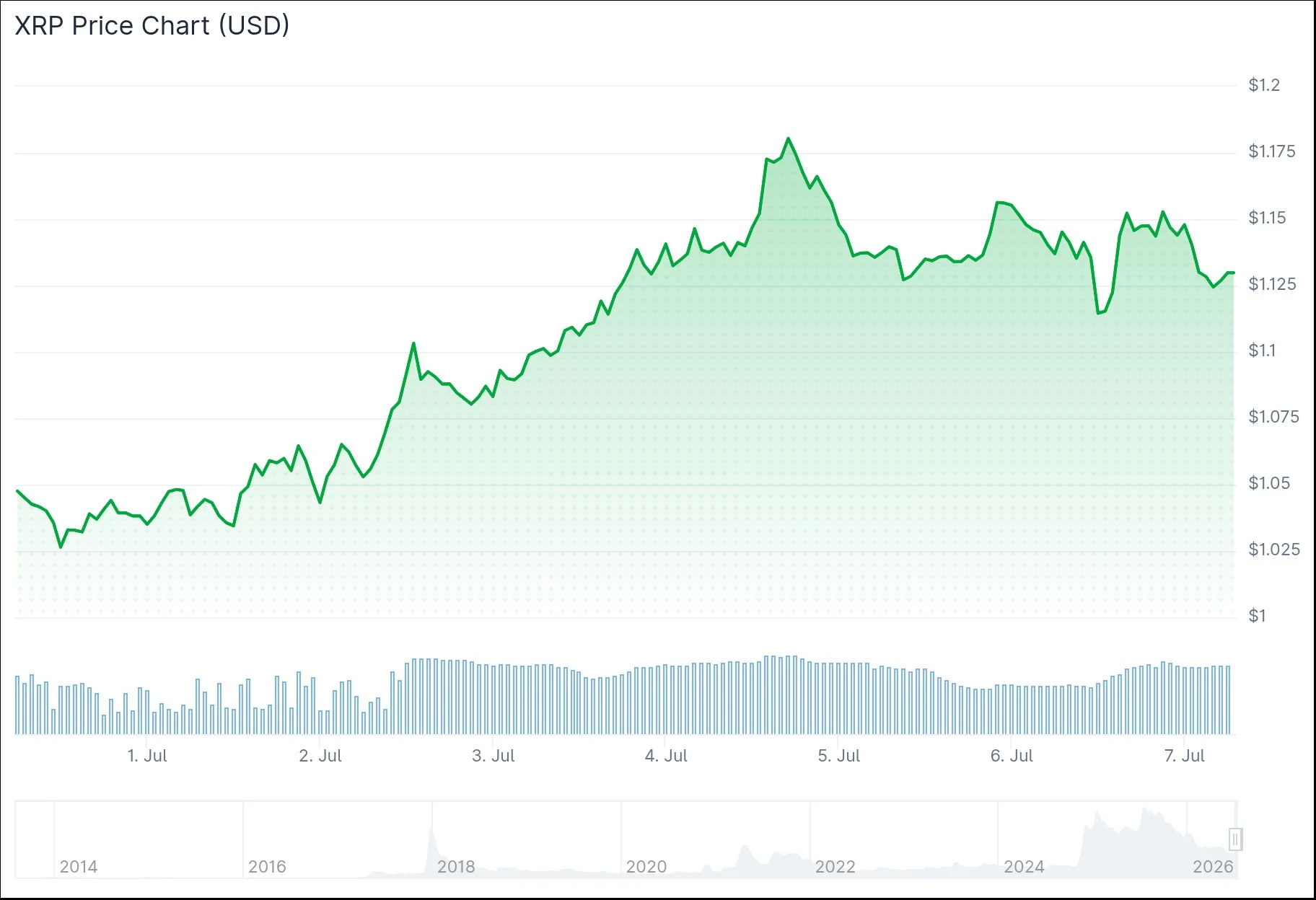
Market activity surged dramatically, with trading volume increasing by approximately 62% within a 24-hour window to reach $1.8 billion. Such substantial volume increases typically indicate heightened trader engagement following periods of market dormancy.
This price recovery follows a challenging June performance. XRP tumbled from levels exceeding $1.55 in February to bottoming out around the $1.00 to $1.04 range by late June, representing the most severe holder drawdown witnessed in twelve years.
Institutional interest reflected caution throughout this period. Net capital flowing into XRP-linked spot exchange-traded funds contracted from $132 million in May to just $59 million in June, representing a 55% month-over-month decline. Traditional finance appetite for the token appeared to diminish even as valuations compressed.
Large Holders Accumulate as Exchange Inventories Decline
Blockchain analytics painted a contrasting picture within the cryptocurrency ecosystem. Daily active addresses on the XRP Ledger jumped to their most elevated level since February, based on Santiment data. That February timeframe coincided with XRP trading within a $1.47 to $1.54 range.

Simultaneously, the XRP Binance Scarcity Index climbed to 0.77 this week, representing its most elevated reading in more than 24 months, according to analysis from CryptoQuant’s ArabxChain. This metric quantifies how limited XRP availability has become on Binance compared to historical benchmarks.

XRP holdings on Binance have contracted by roughly 20% since November 2024, declining from approximately 3.27 billion tokens to about 2.6 billion currently. Inventories slipped from around 2.8 billion in May to 2.6 billion in early July, coinciding precisely with the scarcity index breakout.
Technical analysts at ChartNerd highlighted this configuration on X, characterizing XRP’s “3rd Retest” as a compelling entry opportunity, describing it as “a gift” for chart-focused market participants.
Short Liquidations Appear to Have Catalyzed Initial Price Recovery
Futures market data from Coinglass reveals funding rates turned sharply negative between June 26 and 28, coinciding precisely with the price nadir. This concentration of short positioning created optimal conditions for a squeeze event.
The subsequent rally to $1.13 aligns more closely with forced short liquidations rather than organic fresh capital deployment. Funding rates have since normalized to slightly positive territory, suggesting a healthier positioning landscape.
Immediate resistance is positioned at $1.20, the level that contained the mid-June recovery attempt. A confirmed daily close above this threshold would expose the $1.35–$1.40 area, representing approximately 22% upside from current valuations.
The daily chart’s Relative Strength Index hovers near 55, providing additional runway for upward movement before entering overbought territory.
The 200-day Exponential Moving Average is located at $1.50, which market analysts identify as the primary bullish objective if momentum persists. Conversely, a breakdown below $1.00 would compromise the current recovery framework.
XRP volume recently exceeded Bitcoin on South Korean exchange Upbit, a noteworthy development as market participants evaluate whether demand is expanding organically.
Get 3 Free Stock Ebooks
Discover top-performing stocks in AI, Crypto, and Technology with expert analysis.
- Top 10 AI Stocks - Leading AI companies
- Top 10 Crypto Stocks - Blockchain leaders
- Top 10 Tech Stocks - Tech giants


