


Key Takeaways
- ZEC is currently priced around $388 with approximately $6.7 billion in market capitalization
- Moderate scenario suggests ZEC could reach $600–$1,000 by 2031
- Optimistic projections point to $2,000–$3,500 if privacy features gain mainstream adoption
- Pessimistic outlook forecasts $120–$220 amid potential regulatory crackdowns
- Weighted average target indicates approximately $850 by 2031
Zcash emerged in 2016 with a distinct mission: delivering privacy-centric cryptocurrency transactions. Unlike Bitcoin’s transparent ledger, Zcash enables users to execute confidential transfers through zero-knowledge cryptographic protocols.
This positioning creates a unique value proposition. ZEC isn’t trying to compete with smart contract platforms like Ethereum or Solana. Instead, it represents a thesis on whether transaction privacy will become essential for cryptocurrency users and institutional participants.
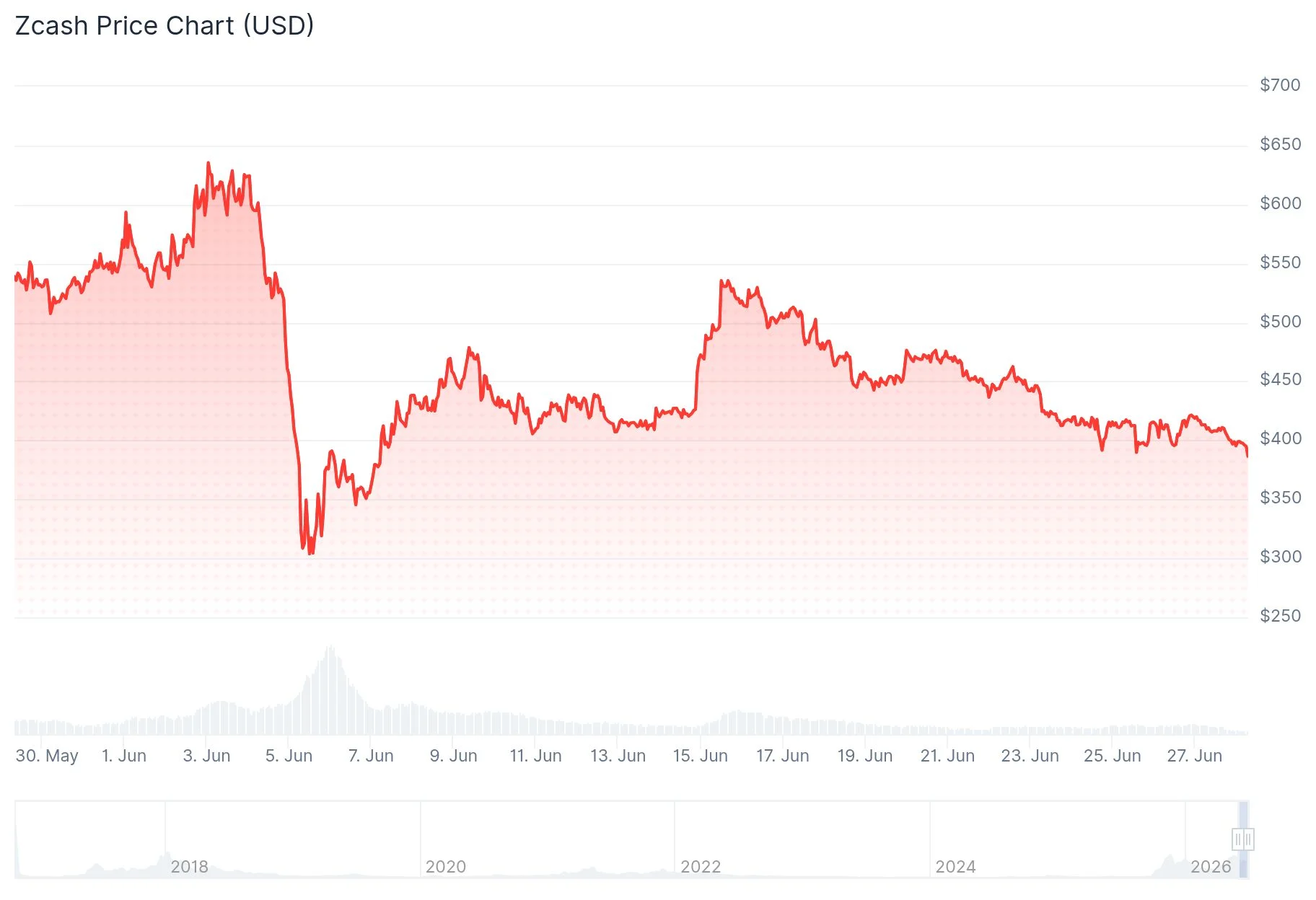
Currently trading near $388, ZEC holds a market capitalization of approximately $6.7 billion. The circulating supply stands at roughly 16.7 million tokens. Following Bitcoin’s model, Zcash maintains a maximum supply of 21 million coins with halving events occurring approximately every four years.
CoinDesk analysts noted that privacy-focused cryptocurrencies such as Zcash and Monero were anticipated to maintain investor interest throughout 2026, despite ongoing challenges including exchange delistings and banking sector restrictions.
Moderate Outlook: $600–$1,000
The moderate projection for ZEC by 2031 establishes a price range of $600 to $1,000. This translates to a market valuation between approximately $12 billion and $20 billion.

This forecast doesn’t depend on Zcash breaking into the top tier of cryptocurrency assets. Rather, it requires maintaining its status as the premier regulated privacy cryptocurrency with selective transparency features.
Three fundamental drivers support this trajectory: increasing demand for transaction privacy, sustained access to major exchanges, and proven technical infrastructure. Zcash’s Bitcoin-inspired tokenomics and proof-of-work consensus mechanism reinforce this scenario.
Optimistic Outlook: $2,000–$3,500
Should privacy emerge as a central theme within cryptocurrency markets, ZEC could climb to $2,000–$3,500. Such valuation would correspond to market capitalization ranging from $40 billion to $70 billion.
This scenario requires widespread utilization of shielded transaction capabilities, significantly improved user interfaces, and renewed institutional capital flowing into privacy-preserving technologies.
Additionally, Zcash would need market recognition as “Bitcoin with privacy” rather than being dismissed as legacy altcoin technology.
Pessimistic Outlook: $120–$220
The downside scenario centers on regulatory intervention. Privacy-oriented tokens already experience delisting pressure across various jurisdictions, and this threat represents a concrete risk rather than speculation.
Should major exchanges restrict or eliminate ZEC trading pairs while liquidity evaporates, valuations could decline to $120–$220 by 2031.
Exchange accessibility represents arguably the most significant risk factor for Zcash’s extended-term valuation prospects.
Balancing these three scenarios with appropriate probability weighting yields an expected price target of approximately $850 by 2031.
Get 3 Free Stock Ebooks
Discover top-performing stocks in AI, Crypto, and Technology with expert analysis.
- Top 10 AI Stocks - Leading AI companies
- Top 10 Crypto Stocks - Blockchain leaders
- Top 10 Tech Stocks - Tech giants


