


Key Takeaways
- Bitcoin dropped under $80,000 on two separate occasions during the weekend, reaching bottoms at $79,200 and $79,300.
- Liquidations totaling $34.63 million in BTC contracts occurred within 24 hours, with long positions accounting for 78%.
- Renewed military action in the Middle East drove oil prices upward and triggered risk-off sentiment during closed equity sessions.
- Large holder deposits to Binance decreased from $5.9 billion to $3.8 billion, as smaller trader inflows climbed.
- Markets await the Federal Reserve’s interest rate announcement scheduled for Wednesday, October 28.
Bitcoin (BTC) breached the $80,000 level on two occasions throughout the weekend, recording lows at $79,200 and $79,300. The decline followed renewed military operations in the Middle East that rattled risk assets globally.
Within a 24-hour window, approximately $34.63 million worth of Bitcoin derivative contracts were liquidated. Long positions represented roughly 78% of that total, meaning bullish traders absorbed the majority of forced exits.
Reports from Al Jazeera English and open-source intelligence tracker OSINT613 verified aerial defense operations, unmanned aircraft strikes, and counterattacks throughout Sunday. Meanwhile, Saudi Arabia, Turkey, and Pakistan convened an emergency security conference centered on Iran.
Round-the-Clock Markets React First
Cryptocurrency markets operate continuously, positioning Bitcoin as one of the earliest assets to respond while traditional equity venues remained closed. Traders liquidated perpetual swaps and reduced spot exposure.
Numerous participants shifted capital into fiat currency and dollar-backed stablecoins. Crude oil valuations also advanced as hostilities raised questions about supply chain stability.

Elevated energy costs can translate into higher consumer price readings. Such developments could complicate Federal Reserve considerations regarding interest rate cuts.
Bitcoin has established a pattern of descending peaks and troughs across the last three weeks. Should declines persist, market observers identify a support range spanning $75,000 to $77,000.
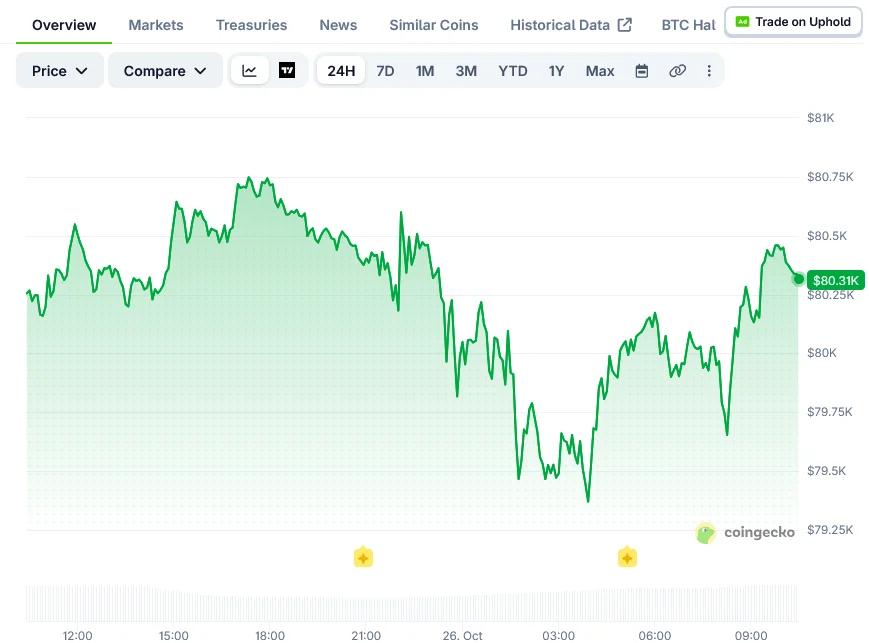
CoinGape identified $82,000 as a pivotal threshold. Bitcoin currently trades beneath that marker, and participants are monitoring whether the asset can reclaim that territory.
Iran has historically collected transit payments from shipping firms in Bitcoin as a mechanism to circumvent sanctions. The U.S. Treasury Department has pursued approximately $1 billion in cryptocurrency holdings connected to Iran through what officials describe as a comprehensive isolation strategy.
Large Holders Maintain Positions While Smaller Traders Deposit Coins
Information from CryptoQuant indicates that spot market average transaction sizes have favored large participant orders in recent weeks. A comparable pattern emerged during July and August, when Bitcoin hovered around $60,000 before rallying in mid-August.
The identical indicator also registered substantial large holder activity earlier this year during pronounced downward trends. Therefore, this signal alone does not confirm an impending reversal.
Cryptocurrency analyst Darkfost presented data revealing divergent behavior between large holders and smaller traders. Beginning in September, the 30-day rolling average of retail deposits to Binance has been climbing.
During the same timeframe, the 30-day rolling average of large holder deposits to Binance contracted from $5.9 billion in late August down to $3.8 billion. According to Darkfost, this pattern suggests major holders are not aggressively offloading positions at present price levels.
The analyst noted that if retail distribution subsides or market sentiment improves, the prior upward trajectory could potentially resume from the $75,000 support area.
The upcoming focal point is the Federal Reserve’s monetary policy announcement on Wednesday, October 28. The FedWatch probability tool indicates a 90.6% likelihood that rates remain within the 3.75% to 4.00% band and a 9.4% probability of an increase.
Get 3 Free Stock Ebooks
Discover top-performing stocks in AI, Crypto, and Technology with expert analysis.
- Top 10 AI Stocks - Leading AI companies
- Top 10 Crypto Stocks - Blockchain leaders
- Top 10 Tech Stocks - Tech giants


