


Key Highlights
- Claude Opus 4.8 represents a significant advancement over version 4.7, delivering enhanced coding capabilities and superior reasoning performance
- The updated model surpasses both OpenAI’s GPT-5.5 and Google’s Gemini 3.1 Pro across multiple industry-standard AI benchmarks
- Users can now customize computational intensity through a novel effort control feature tailored to task complexity
- The latest release demonstrates a 75% reduction in undetected coding errors compared to the previous version
- Token costs remain constant at $5 per million input tokens and $25 per million output tokens under standard settings
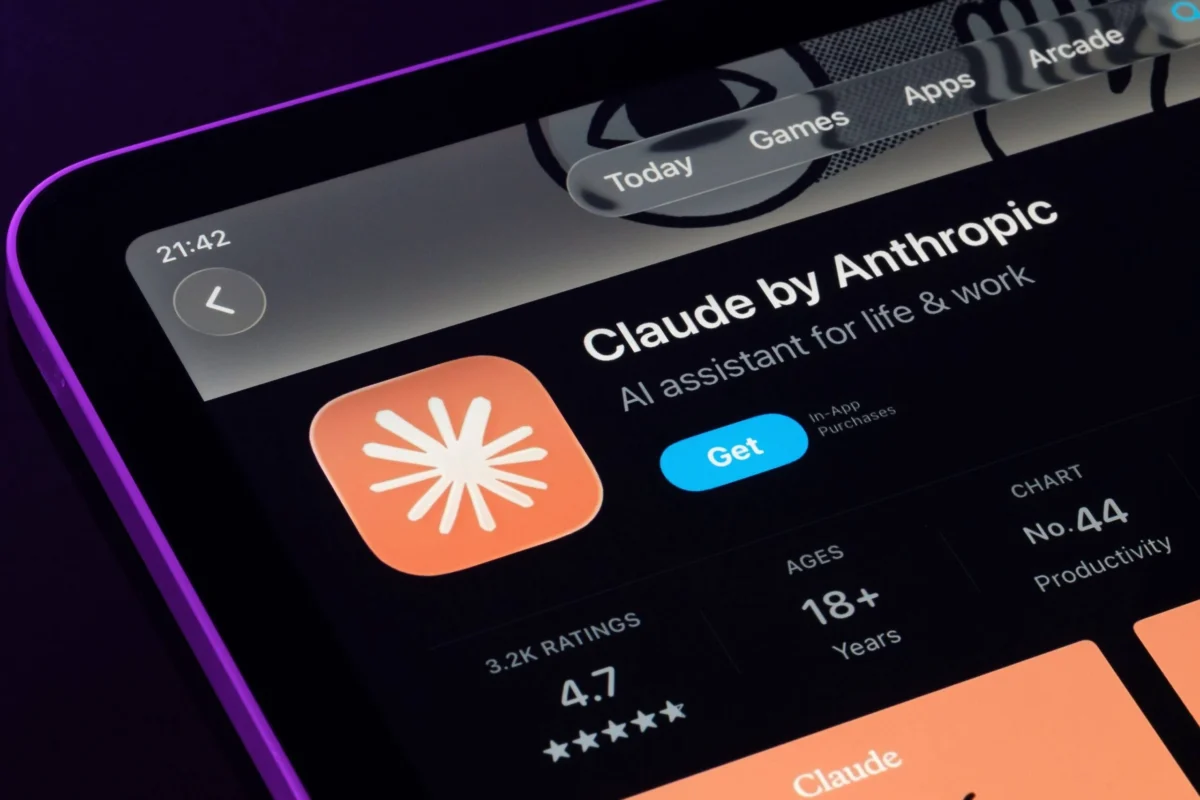
Anthropic has unveiled Claude Opus 4.8, representing the company’s most advanced AI model to date, with global availability beginning immediately. This iteration succeeds Opus 4.7 and delivers measurable enhancements in coding accuracy, logical reasoning, and truthfulness.
Based on Anthropic’s internal testing, Opus 4.8 achieves superior results compared to OpenAI’s GPT-5.5 and Google’s Gemini 3.1 Pro across numerous standardized benchmarks. These performance tests encompass agentic coding tasks, agentic financial assessment, and agentic computer operation.
Agentic AI describes autonomous systems capable of executing complex tasks with minimal human oversight. With enterprises rapidly integrating AI agents into workflows, capabilities in this domain have become increasingly critical.
Introducing Customizable Effort Controls
Among the most notable enhancements is the introduction of an effort control mechanism accessible through Claude.ai and Claude Cowork. This feature empowers users to calibrate the computational resources allocated to individual tasks.
For straightforward, routine queries, users can reduce effort settings to conserve processing time and token consumption. Conversely, challenging assignments benefit from elevated effort levels that produce more comprehensive outputs.
Tokens represent the measurement units AI services employ to quantify input and output data processed by models. Each interaction with an AI system consumes tokens, regardless of whether it involves a basic question or a sophisticated coding request.

Reducing effort settings translates directly to decreased token usage, potentially generating substantial cost savings for organizations with high-volume AI utilization.
Enhanced Code Safety and Business Features
Regarding reliability improvements, Opus 4.8 achieves a four-fold reduction in overlooked coding errors versus Opus 4.7. This represents a substantial quality leap for developers deploying the model in live production systems.
The company is simultaneously introducing a research preview of dynamic workflows within Claude Code. This capability orchestrates hundreds of concurrent subagents to manage extensive codebase migration projects.
The model also exhibits improved transparency. Anthropic reports that it proactively identifies areas of uncertainty in its responses and refrains from presenting unverified information as fact.
Fast mode has received a significant operational cost reduction, now running three times more economically than the prior version, while maintaining user-facing prices at $10 per million input tokens and $50 per million output tokens.
Standard tier pricing continues at $5 per million input tokens and $25 per million output tokens without adjustment.
Public Market Competition With OpenAI
The Opus 4.8 announcement arrives amid reports that Anthropic is finalizing a pre-IPO funding round exceeding $30 billion. This capital raise could establish the company’s valuation above $900 billion.
While Anthropic has not officially announced IPO timing, industry sources suggest a 2026 public debut remains under consideration. This strategic direction parallels similar initiatives by OpenAI and SpaceX, both actively preparing for eventual public listings.
Anthropicwas established by former OpenAI team members and has emerged as a premier competitor in the global artificial intelligence landscape.
Get 3 Free Stock Ebooks
Discover top-performing stocks in AI, Crypto, and Technology with expert analysis.
- Top 10 AI Stocks - Leading AI companies
- Top 10 Crypto Stocks - Blockchain leaders
- Top 10 Tech Stocks - Tech giants


