


Key Highlights
- Chinese President Xi Jinping received an elaborate airport reception from President Trump at Joint Base Andrews on Wednesday night, complete with military honors.
- The airport greeting represents a diplomatic first in over six decades—no US president has personally met a foreign dignitary at arrival since 1962.
- Treasury Secretary Scott Bessent confirmed that Washington and Beijing have extended their ongoing trade ceasefire until January.
- The multiday summit agenda includes discussions on trade barriers, technology restrictions, Taiwan tensions, and the conflict involving Iran.
- Political analysts anticipate potential tariff reductions and truce continuation, though significant progress on contentious matters remains unlikely.
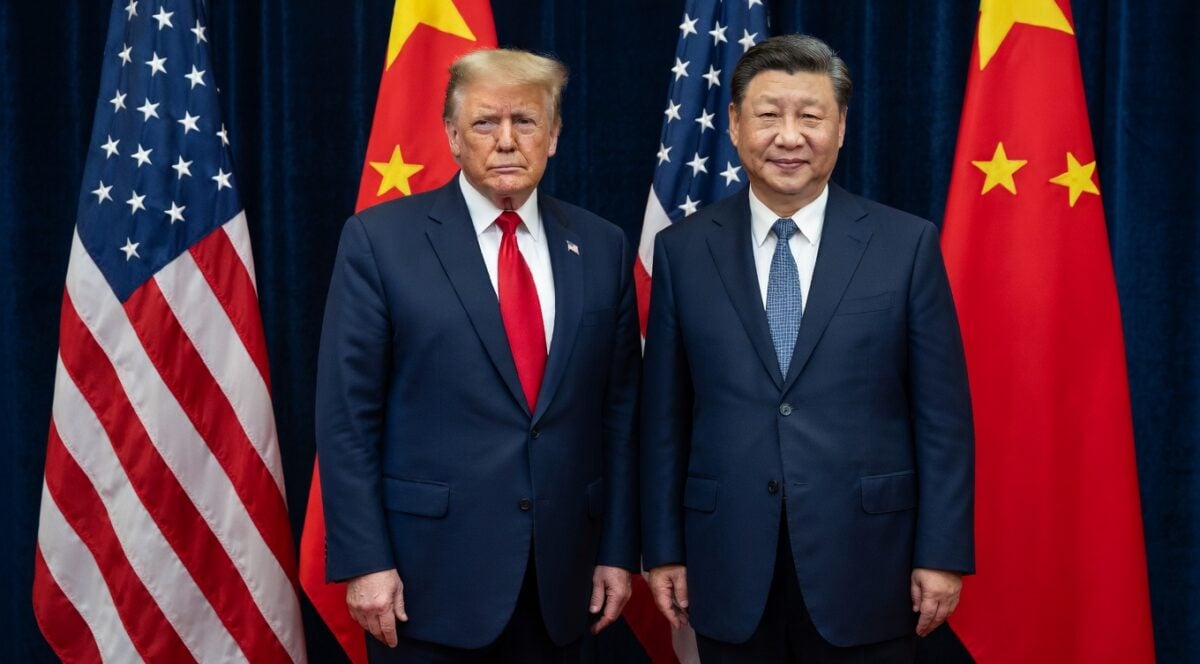
On Wednesday evening, President Donald Trump orchestrated an elaborate reception for Chinese President Xi Jinping at Joint Base Andrews located in Maryland. The ceremonial greeting launched a three-day diplomatic summit scheduled to unfold in the nation’s capital.
The Trump couple—President Trump and First Lady Melania—stood ready to receive Xi alongside his spouse, Peng Liyuan, while an Air Force musical ensemble performed on the runway. Airport personnel had unfurled a crimson carpet stretching 100 feet for the distinguished visitors.
A pair of B-1 bomber aircraft conducted a ceremonial flyover above the military installation while the musicians performed America’s national song. The Chinese leader’s aircraft touched down at precisely 5:39 in the evening, local timezone.
The airport reception ceremony represents unprecedented protocol not witnessed since the early 1960s. President John F. Kennedy established the last precedent in 1962 during his airport greeting of Britain’s Prime Minister Harold Macmillan.
Trade Ceasefire Gets Extended Timeline
On Wednesday, Treasury Secretary Scott Bessent revealed that Washington and Beijing have reached consensus on prolonging their existing trade ceasefire through January. The initial agreement was scheduled to conclude on November 10.
The negotiated arrangement reduced certain American tariff percentages while China reciprocated by relaxing export controls on critical rare earth minerals. Bessent indicated he explored options for a comprehensive commercial agreement during conversations with Chinese Vice Premier He Lifeng.

Data from the Congressional Research Service indicates that by late July, American authorities were imposing a 36.5% tariff rate on Chinese imports. Meanwhile, China maintained a 31% tariff on goods arriving from the United States.
Market observers anticipate both governments will unveil additional tariff reductions throughout the summit proceedings. The proposed framework, informally dubbed “30 by 30” by observers, envisions mutual elimination of tariffs affecting $30 billion in bilateral trade.
Xi’s Statement on Diplomatic Engagement
Through an official statement distributed by Xinhua, China’s government news service, Xi characterized the bilateral relationship by emphasizing that the two powers “should be partners rather than rivals.” He praised both countries as “great” while celebrating their citizens as “great people.”
Xi further expressed that Chinese prosperity and American advancement “can fully coexist, reinforce each other and benefit the world.” He conveyed optimism that the diplomatic engagement would yield positive outcomes.
The Chinese delegation traveling with Xi includes Cai Qi, holding a prominent Communist Party position, alongside Vice Premier He Lifeng and Foreign Minister Wang Yi. Confirmation regarding whether Chinese corporate leaders joined the delegation remained unavailable.
The summit itinerary encompasses private diplomatic sessions and an official state banquet scheduled for Thursday evening. Representatives from prominent American artificial intelligence corporations are anticipated to participate in the dinner event.
American Sentiment Shows Evolution
Recent polling data from the Chicago Council on Global Affairs reveals that 41% of American respondents perceive China’s expansionist objectives as threatening. This figure represents a decline from the 52% recorded in 2022.
The identical survey discovered that 57% of Americans support cooperative engagement with China. This majority encompasses Republicans outside the Maga movement core, alongside most Democratic voters.
Conversely, 63% of Trump’s devoted base prefers constraining diplomatic relations with China. This position creates tension with Trump’s choice to personally orchestrate Xi’s airport welcome ceremony.
Political experts maintain low expectations for significant agreements on complex disputes including Taiwan sovereignty or artificial intelligence technology regulations. Researchers additionally suggest that complete deterioration of the trade truce appears improbable.
First Lady Melania Trump has arranged an excursion with Peng Liyuan to the Smithsonian National Museum of Asian Art. Both presidential couples will additionally tour the National Archives facility before Xi departs on Friday.
Get 3 Free Stock Ebooks
Discover top-performing stocks in AI, Crypto, and Technology with expert analysis.
- Top 10 AI Stocks - Leading AI companies
- Top 10 Crypto Stocks - Blockchain leaders
- Top 10 Tech Stocks - Tech giants


