


TLDRs:
- Tesla shares advanced after unveiling a $16.8 billion Texas semiconductor investment.
- Terafab aims to produce advanced AI chips for robots and autonomous vehicles.
- The project could create thousands of jobs and reshape domestic chip production.
- Residents raised concerns about tax incentives and transparency surrounding the massive development.
Tesla shares moved higher after the company and SpaceX announced a joint $16.8 billion commitment to begin construction of a massive semiconductor facility in Texas, a project designed to support the growing computing demands of artificial intelligence, robotics, autonomous vehicles, and space-based data infrastructure.
The new facility, called Terafab, will be located in Grimes County near Houston. According to the companies, the initial investment marks the first phase of what could become one of the largest advanced chip manufacturing projects ever attempted in the United States.
Elon Musk described the planned complex as an unprecedented industrial undertaking, with more than 100 million square feet of manufacturing space envisioned for the site. The announcement immediately drew attention from investors, who viewed the project as a significant expansion of Tesla’s long-term AI and hardware ambitions.
Massive Texas chip project
Terafab is expected to operate as a vertically integrated semiconductor complex, bringing together chip manufacturing, packaging, and testing in a single location. SpaceX said the facility will focus on advanced logic and memory devices intended for high-performance computing and inference workloads.
The companies estimate that the project will create at least 3,000 jobs in Grimes County and neighboring Brazos County, making it one of the region’s largest planned industrial employers.

Investors appeared to interpret the announcement as a signal that Tesla is seeking greater control over critical computing components rather than relying solely on external chip suppliers.
Chips for AI ambitions
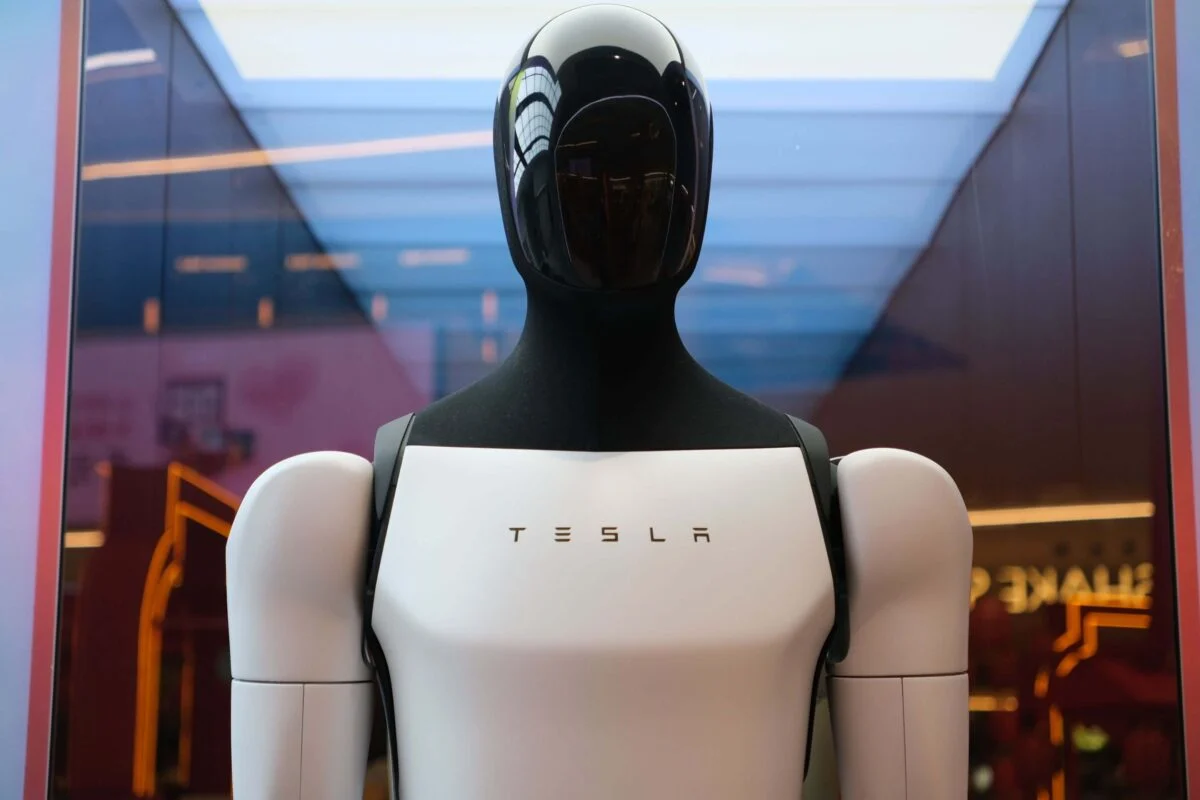
The strategic rationale behind Terafab is closely tied to Musk’s broader vision of an AI-driven future. Tesla is rapidly expanding development of its Optimus humanoid robots, autonomous Cybercabs, and self-driving systems, all of which require enormous amounts of computing power for training and real-time inference.
SpaceX, meanwhile, is pursuing increasingly ambitious data and communications projects that could also demand substantial semiconductor capacity.
The companies said the facility will produce chips optimized for edge AI computing, allowing advanced intelligence to run directly on physical devices such as robots and vehicles. It will also manufacture higher-power processors intended for large-scale computing infrastructure.
By consolidating multiple stages of semiconductor production in one location, the companies argue that they can accelerate design improvements and shorten the time required to deploy new computing hardware.
Intel joins broader effort
Intel has previously indicated that it plans to contribute to the Terafab initiative, although details of its participation have not been fully disclosed. Any involvement from Intel could add manufacturing expertise and strengthen the project’s position within the broader U.S. semiconductor ecosystem.
Industry analysts note that the announcement comes amid continuing efforts to expand domestic chip production and reduce dependence on overseas supply chains. While Tesla and SpaceX have not provided a full construction timeline, the scale of the project suggests a multi-year development process.
Regulatory filings have previously hinted that SpaceX could ultimately invest far more than the initial $16.8 billion, with potential spending spread across several construction phases.
Local concerns emerge
Despite the enthusiasm from investors and state officials, the project has generated controversy locally. Hundreds of residents attended a recent county meeting to question the tax incentives associated with the development and to seek greater transparency about its long-term impact on the community.
Concerns centered on public subsidies, infrastructure demands, and whether local residents will receive proportional economic benefits from the project.
SpaceX said it intends to use water from the Gibbons Creek Reservoir rather than local groundwater supplies, an issue that had drawn particular attention during community discussions.
Local education officials welcomed the potential economic boost, saying the project could expand opportunities for students and workers in the surrounding area.
For Tesla shareholders, however, the immediate takeaway was less about local politics and more about the company’s accelerating push into AI infrastructure. The Terafab announcement suggests that Tesla is positioning itself not only as an electric-vehicle manufacturer, but also as a future supplier and operator of advanced computing systems powering robots, autonomous transportation, and other next-generation technologies.
Get 3 Free Stock Ebooks
Discover top-performing stocks in AI, Crypto, and Technology with expert analysis.
- Top 10 AI Stocks - Leading AI companies
- Top 10 Crypto Stocks - Blockchain leaders
- Top 10 Tech Stocks - Tech giants


