


Key Points
- American intelligence services claim Chinese AI companies engaged in large-scale extraction of capabilities from leading US AI systems, including GPT, Claude, Gemini, and Grok
- Companies identified in the advisory include DeepSeek, Alibaba, Moonshot AI, and Z.ai, with alleged operations conducted with Beijing’s knowledge
- Beijing’s Commerce Ministry dismissed the allegations as baseless and threatened “resolute countermeasures” against any punitive US actions
- Chinese officials argued that model distillation represents standard industry practice globally, hinting that US firms may engage in similar activities with Chinese models
- The confrontation emerges just before scheduled Trump-Xi discussions later this month, where AI regulation is anticipated as a central agenda item
Three major American security organizations—the FBI, NSA, and CISA—released a coordinated statement Tuesday alleging that Chinese AI companies have been systematically harvesting technical capabilities from premier American AI platforms on a massive commercial scale. The operations reportedly targeted prominent systems from Anthropic, OpenAI, Google, and xAI, with documented evidence dating to the final months of 2024.
The official warning specifically identified six companies: DeepSeek, Alibaba, Moonshot AI, MiniMax, StepFun, and Z.ai. According to US intelligence officials, these operations were conducted “likely with Chinese government awareness” and employed sophisticated routing mechanisms through various channels to circumvent platform usage agreements.
American officials further alleged that Chinese companies orchestrated mass acquisitions of premium service tiers, distributing access credentials among development personnel to minimize expenses during these systematic extraction efforts.
Beijing Issues Strong Denial
China’s Commerce Ministry strongly disputed the allegations Wednesday, characterizing them as without foundation. Officials emphasized that distillation represents routine methodology employed by artificial intelligence developers globally, including American enterprises. The ministry characterized the accusations as evidence of American “anxiety and double standards.”
“If the US suppresses Chinese AI companies under the pretext of targeting distillation, China will take resolute countermeasures,” the ministry said in a statement.
China’s Foreign Affairs Ministry similarly urged Washington to cease making “unfounded accusations.” Ministry spokesperson Mao Ning attributed China’s artificial intelligence achievements to domestic innovation efforts and advocated for international collaboration.
Officials expressed Beijing’s readiness to engage in “constructive and professional discussions” with Washington regarding AI development, contingent on principles of equality and reciprocal advantage. However, they emphasized that any American measures targeting Chinese enterprises would trigger an appropriate response.

Technology Tensions Before Presidential Meeting
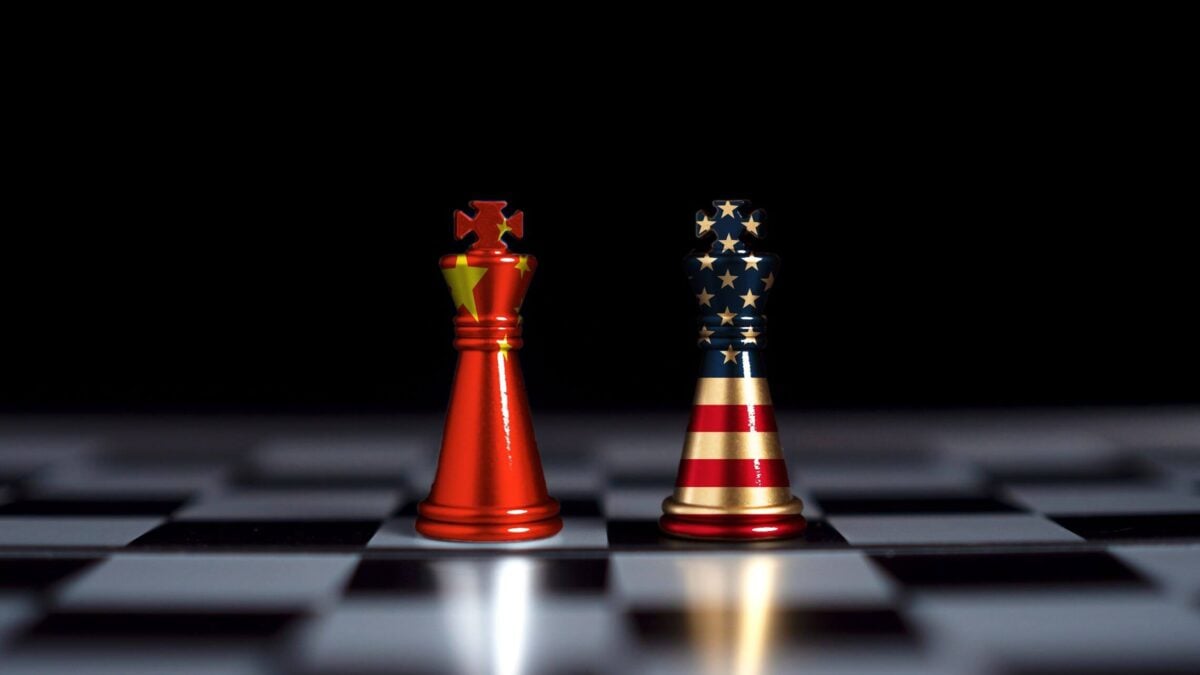
This controversy unfolds just weeks ahead of an anticipated meeting between President Donald Trump and Chinese President Xi Jinping at the White House—their second face-to-face encounter this year. Artificial intelligence regulation is projected to feature prominently in discussions.
Treasury Secretary Scott Bessent entered the debate Tuesday during remarks at Southern Methodist University, asserting that China “can never get ahead” of America in artificial intelligence development.
“The Chinese distill our models and they can never get ahead of us,” Bessent said.
The controversy underscores the intensifying technological rivalry between Washington and Beijing. Chinese systems such as Moonshot’s Kimi K3 have established market presence in the United States, with some viewing them as more cost-effective and performant alternatives to domestic offerings.
Both OpenAI and Anthropic have independently raised comparable concerns regarding Chinese developers previously. Tuesday’s joint intelligence assessment offered substantially greater specificity than prior public statements, detailing which American platforms were allegedly targeted and describing the methodologies employed.
All six Chinese companies named in the advisory declined to provide comment when contacted.
Get 3 Free Stock Ebooks
Discover top-performing stocks in AI, Crypto, and Technology with expert analysis.
- Top 10 AI Stocks - Leading AI companies
- Top 10 Crypto Stocks - Blockchain leaders
- Top 10 Tech Stocks - Tech giants


