


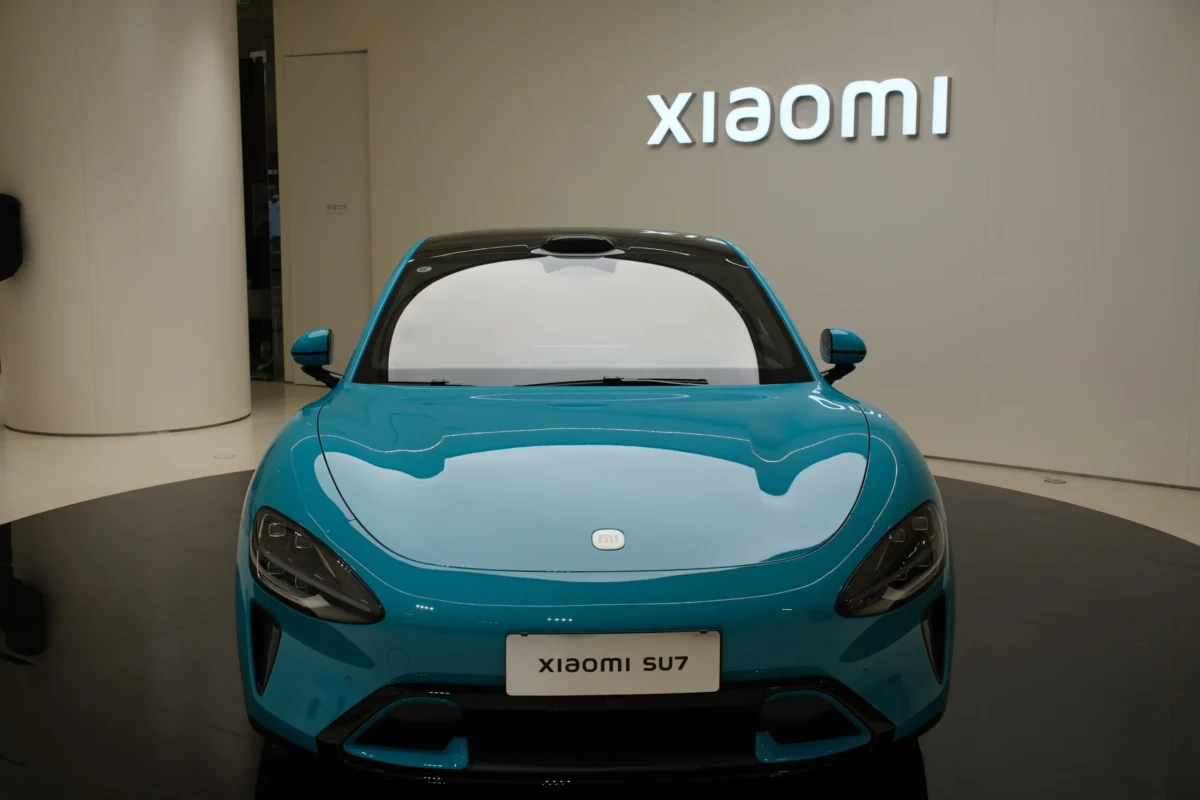
Key Highlights
- Shares of Xiaomi rallied 5.6% to reach HK$27.64 after the company reported second-quarter 2026 financial results
- Second-quarter revenue reached RMB 108.9 billion ($16.15 billion), representing a 6.1% decline year-over-year but surpassing analyst projections
- The smartphone division achieved record-high average selling prices, with an 8.5% gross margin that exceeded forecasts despite elevated memory component expenses
- The company’s electric vehicle division shipped 104,199 units in Q2; worldwide monthly active users reached an all-time high of 766.5 million
- Executives indicated that memory component price increases are moderating, while advance orders for the newly launched Pengcheng EV exceeded company projections
Shares of Xiaomi climbed 5.6% to HK$27.64 during Tuesday trading following the release of second-quarter 2026 financial results that exceeded Wall Street expectations, alleviating investor worries about escalating component expenses and weakening smartphone market conditions.
The company reported second-quarter revenue of RMB 108.9 billion, equivalent to approximately $16.15 billion. While this represented a 6.1% decrease compared to the prior-year period, revenue climbed 9.9% sequentially from the first quarter of 2026 and exceeded consensus analyst estimates.
Gross profit declined 17.2% year-over-year to RMB 21.6 billion. Operating profit decreased 19.1% annually, coming in at RMB 10.9 billion. The annual declines underscore the impact of elevated memory component expenses and intensifying competitive dynamics that the company previously highlighted.
The company’s adjusted net profit for the quarter totaled RMB 6.2 billion, representing a 2.4% increase from the first quarter of 2026.

While year-over-year comparisons showed weakness, market participants concentrated on the sequential growth trends and forward-looking commentary from company leadership regarding the cost environment.
Mobile Phone Division Shows Resilience
The smartphone business emerged as a highlight in the quarterly results. Average selling prices reached an all-time high during the period, while the division’s gross margin of 8.5% exceeded market forecasts, despite memory component costs remaining at historically elevated levels.
Worldwide smartphone shipments reached 31.2 million units in the second quarter, declining 6% compared to the corresponding quarter in 2025.
The company’s global monthly active user base hit a record 766.5 million, representing a 4.8% year-over-year increase. The internet services division maintained a robust gross margin of 76.8%.
Electric Vehicle Division Maintains Growth Trajectory
Xiaomi’s electric vehicle and smart EV division shipped 104,199 vehicles throughout the quarter. This represents a continuation of the company’s expansion momentum since launching its automotive business.
Advance purchase orders for the newly introduced Pengcheng EV model surpassed the company’s internal forecasts, providing market participants with additional confidence regarding the division’s short-term growth prospects.
Company leadership emphasized that the rate of memory component cost inflation is transitioning to a more moderate pace. This commentary served as an important signal to investors, particularly since memory pricing had represented one of the primary concerns weighing on the stock.
The company acknowledged that geopolitical tensions, rising component expenses, and fierce competitive pressures all persisted as headwinds during the quarter. Artificial intelligence development was identified as an emerging factor influencing the broader industry environment.
The shares stood out as one of the few significant gainers in Hong Kong trading on Tuesday, as the broader Hang Seng index remained relatively unchanged.
The company’s adjusted net profit of RMB 6.2 billion in the second quarter of 2026 reflected a sequential improvement of 2.4% compared to the first quarter of 2026.
Get 3 Free Stock Ebooks
Discover top-performing stocks in AI, Crypto, and Technology with expert analysis.
- Top 10 AI Stocks - Leading AI companies
- Top 10 Crypto Stocks - Blockchain leaders
- Top 10 Tech Stocks - Tech giants


