


TLDR
- Anthropic CEO Dario Amodei used a November 25 post on X to reject claims that he backs giving AI control over society.
- He separated AI doing specific jobs, which he supports, from AI governing, which he opposes.
- He named AI helping to build stronger AI as a key risk. That risk is already relevant at Anthropic, where Claude writes most merged code.
- He accused rival AI leaders, including those at OpenAI and Meta, of using human-control messaging that their products don’t match.
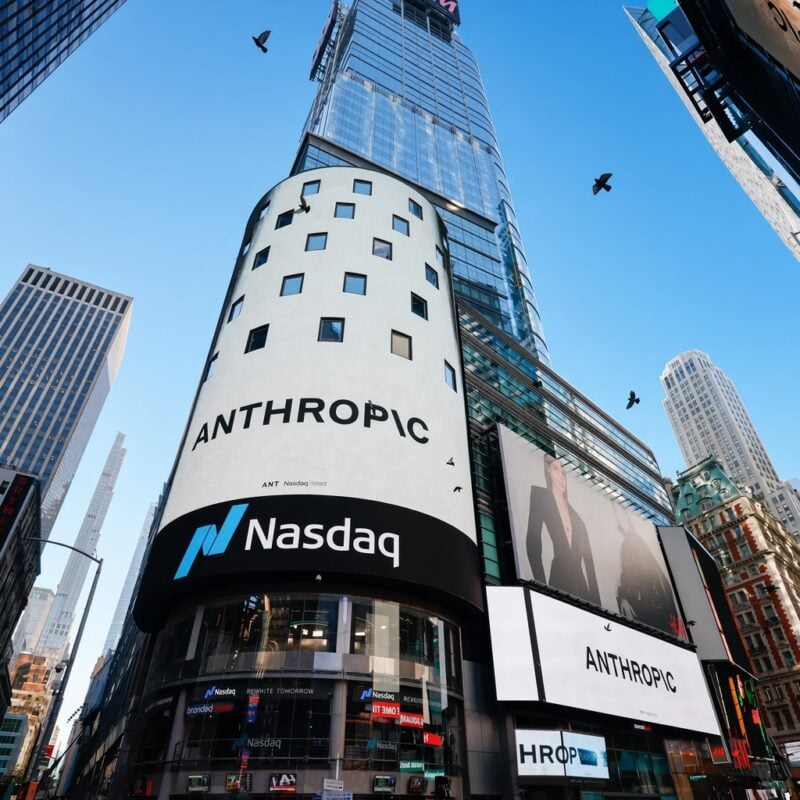
- The dispute comes one week after Anthropic’s November 19 stock market debut.
Dario Amodei says AI should serve democracies, not replace them. But the most concrete form of the debate he joined this week isn’t about governments or elections. It’s about what happens inside AI labs, including his own, when software does much of the work of building its successor.
In a long post on X on November 25, the Anthropic chief executive rejected suggestions that he favours giving AI control over political or social decisions. According to Axios, the post followed reporting that some Anthropic employees think capable AI should eventually take on more decision-making.
His core argument is that people’s right to govern themselves matters more than efficiency, even when a machine might make the more accurate call.
Doing tasks versus running things
Amodei’s argument rests on a distinction. Letting AI handle defined jobs, such as driving, drug discovery or writing software, is one thing. Giving it authority over how society is run is another. He supports the first and rejects the second. TechCrunch reported that he pointed to his essays Machines of Loving Grace (2024) and The Adolescence of Technology as a record of that position.
The line is easier to state than to hold. Few people think a self-driving car threatens democracy. But Amodei himself flagged a risk where the two can blur: recursive self-improvement, in which AI systems help build more capable versions of themselves.
Where the line is being tested
For Anthropic, that is not a distant scenario. The company says Claude already plays a large role in its engineering and AI research. It has also said Claude wrote more than 80% of the code merged into its codebase.
The Associated Press reported that independent researchers found Anthropic’s AI development speeding up, partly because of AI-assisted research.
Amodei’s warning targets this loop. If models build each new generation with little human oversight, progress could outpace society’s ability to steer it. Anthropic’s Responsible Scaling Policy has included thresholds tied to AI’s ability to automate AI research, and crossing them is meant to trigger stronger safeguards. Reporting on the post did not say how close the company believes its systems are to those thresholds, or how much AI-written research code humans review. Those answers would let outsiders check the principle against practice.
A rivalry over who means it
Amodei also went after competitors. Business Insider reported that he accused rival AI leaders of promoting human control in public while their products grow more independent. His comments followed warnings from Meta chief AI officer Alexandr Wang against AI systems taking control of society. OpenAI CEO Sam Altman has also stressed protecting human agency.
Leaders at all three companies now say humans should stay in charge. The real dispute is over whose products match the message.
The shareholder test
The timing raises the stakes. Anthropic began trading on November 19 in an IPO that coverage described as a record. Amodei also acknowledged that some AI rollouts may need to be delayed or limited to ease job disruption. That is a notable concession from the head of a newly listed company competing with OpenAI and Google for business customers.
Anthropic has been organised as a public benefit corporation. That legal structure lets directors weigh a stated mission alongside profit. Public markets have not yet tested how much room it gives Amodei to hold products back once quarterly earnings arrive.
What to watch
Three things are worth watching. The first is whether Anthropic publishes clearer rules for human review of AI-built AI. The second is whether OpenAI or Meta respond directly. The third is whether the company’s first reports to shareholders address these risks.


