Key Takeaways
- A Trust Wallet user reports that 3,830 USDT vanished from his account without any approval prompt or advance notice.
- The user provided a transaction hash and claims to have operated the wallet securely for approximately five years.
- Another user reported wallet drainage after engaging with a fraudulent support representative on NEAR Protocol’s Discord channel.
- Previous exploits have leveraged permit signatures that grant attackers authority to transfer tokens without requiring fresh approval.
- On November 4, Trust Wallet Support responded to a different user experiencing token swap issues.
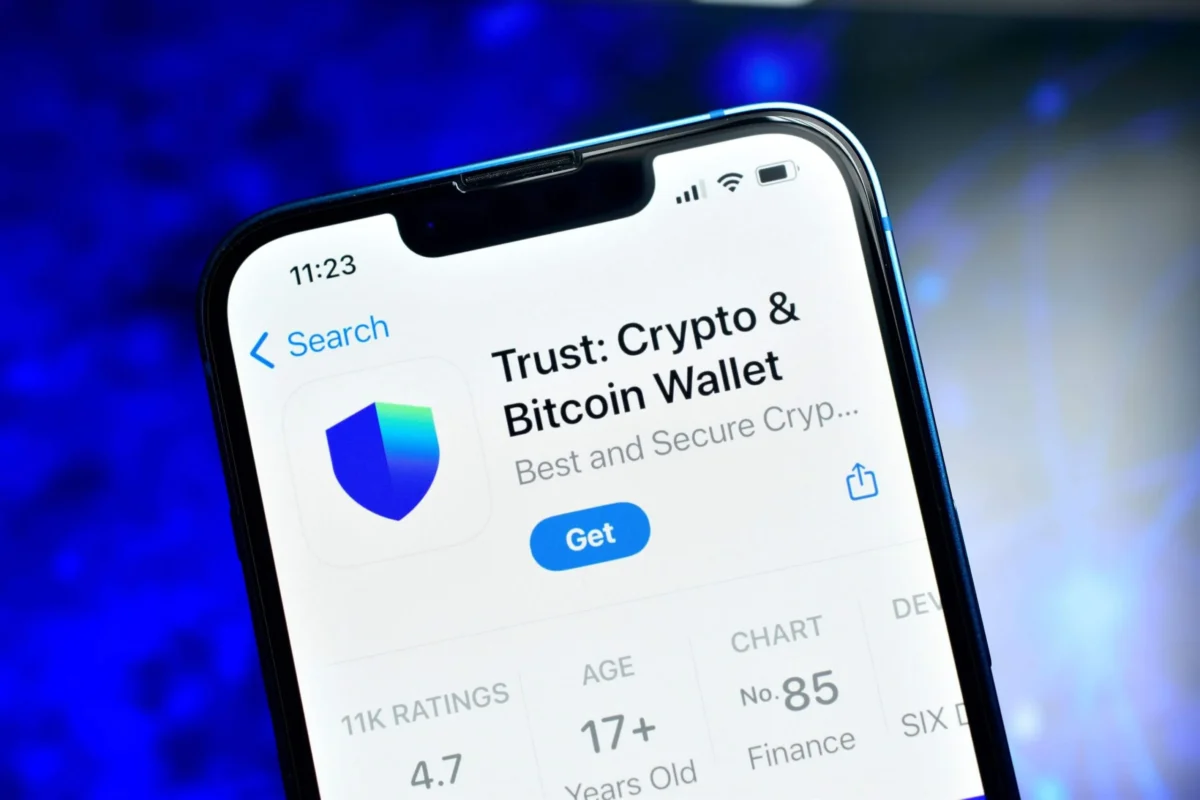
A Trust Wallet account holder claims to have lost 3,830 USDT in an unauthorized withdrawal. The November 3 post on X has accumulated over 166,000 views. The underlying cause of the fund transfer remains unconfirmed.
Iaroslav Dubovoi, posting under the handle @noirvox_studio, stated that he discovered the missing funds upon opening his application. According to his account, no warning appeared and no transaction confirmation was requested. He appealed to Trust Wallet for clarification and requested that others amplify his message.
Account Holder’s Description of Events
Dubovoi reported that blockchain records confirmed the fund movement, though he could not determine the mechanism. He subsequently shared a transaction hash associated with the missing USDT.
According to his statements, he had maintained the wallet for roughly five years and consistently implemented security measures to safeguard his cryptocurrency assets.
His social media posts did not specify the blockchain network involved, the destination address, or comprehensive transfer details. The transaction hash offers a trace route for investigators tracking the fund flow.
Trust Wallet operates as a self-custody solution. Account holders maintain control of the private keys required for transaction authorization, contrasting with centralized exchanges where the platform controls customer assets.

Mechanisms Behind Approval-Free Fund Transfers
Unauthorized withdrawals can occur through multiple vectors, including compromised private keys, malicious smart contract authorizations, and deceptive transaction signature requests.
Certain techniques eliminate the need for real-time approval when funds depart. In October, blockchain security company Salus identified malicious USDG permit signatures that granted attackers withdrawal authority over victims’ holdings.
In such instances, attackers exploited previously acquired permissions to transfer tokens without requiring the victim’s approval for individual transactions.
Trust Wallet recently issued warnings about a counterfeit website impersonating its crypto card offering. The fraudulent site was designed to deceive users into wallet connections and potentially signing harmful transactions, which can authorize token movements without accessing the recovery phrase.
In December 2025, Trust Wallet acknowledged that version 2.68 of its Chrome extension contained vulnerabilities allowing attackers to extract funds without transaction confirmations. Blockchain investigator ZachXBT initially identified the suspicious activity following user withdrawal reports.
Attackers had infiltrated the extension’s source code and distributed a compromised version via the Chrome Web Store. Total losses approximated $7 million, with former Binance CEO Changpeng Zhao confirming compensation plans for affected parties.
Also on November 3, an X user identified as Mister Tee, posting as @meeyatariq, reported wallet drainage following communication with an individual impersonating support staff on NEAR Protocol’s Discord server. His documentation showed outbound transfers of ETH, BTC, BNB and NEAR, including 3 NEAR valued at approximately $11.49.
In contrast to Mister Tee’s experience, Dubovoi did not attribute his loss to any external interaction. He maintains that he authorized no transactions prior to the fund disappearance.
Trust Wallet has counseled users against disclosing recovery phrases or private keys and emphasized relying exclusively on official support channels when investigating suspicious activity.
A different user, Abdul, posting as @HasbullahAbdulH, raised concerns on X regarding token swap difficulties. The verified Trust Wallet Support account responded on November 4, directing him to documentation addressing failed swaps, pending transactions, and incorrect received amounts.
Get 3 Free Stock Ebooks
Discover top-performing stocks in AI, Crypto, and Technology with expert analysis.
- Top 10 AI Stocks - Leading AI companies
- Top 10 Crypto Stocks - Blockchain leaders
- Top 10 Tech Stocks - Tech giants